

Real Touch Flowers







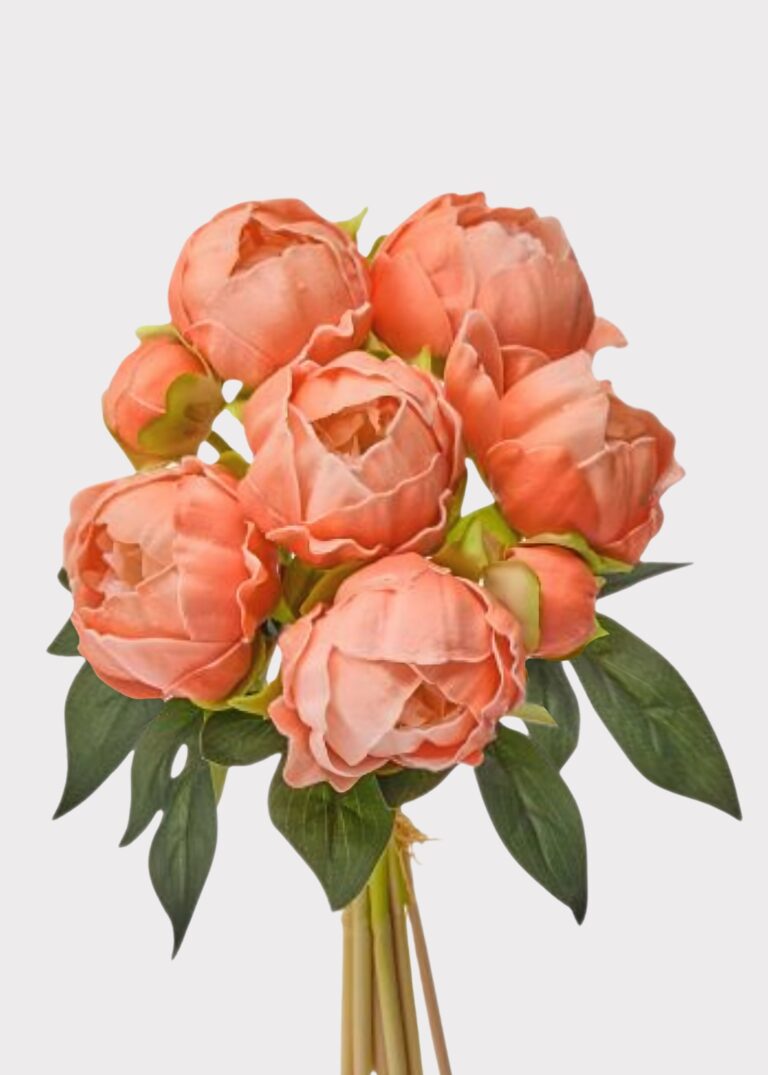


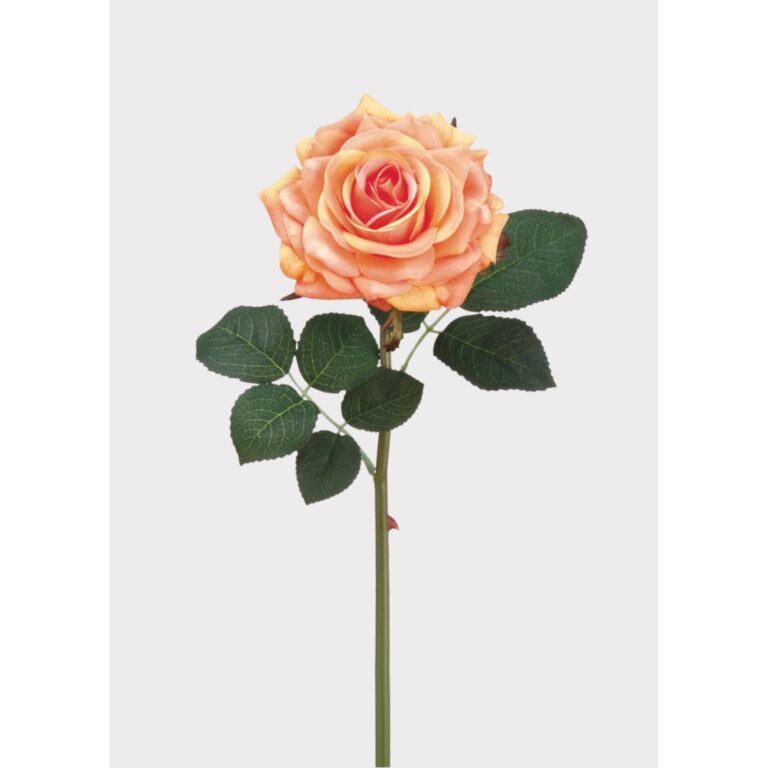








Real touch flowers — the branch of artificial florals built from latex-touch polymer petals over foam or fabric cores rather than woven silk, with surfaces that mimic the give and light behavior of live blooms. Sold by stem and by arrangement, with petal, greenery and stem materials stated separately on every listing.
Quick answer: Real touch is a material class, not a brand: petals of latex-touch polymer over foam or fabric cores that read convincing at hand-shake distance, where silk builds hold to three-to-five feet. Prices run from $9 single stems to $58–180 finished arrangements, bunches $18–42 (as of October 2026, USD). Care is dust-only — no water, no direct heat, no alcohol-based sprays.
What "Real Touch" Actually Is
The term names a material system, the way "silk" names the fabric family — it is a line, not a grade promise. Standard artificial petals are silk-type: woven polyester fabric cut and shaped over wire. Real touch petals carry a soft latex-touch polymer coating formed over a foam or fabric core, so the surface has the smoothness, the slight give under a fingertip, and the translucent light behavior of a live petal rather than the fabric grain of silk. Held, the difference is immediate; photographed at bouquet distance, both read as flowers; at the handshake-to-arm's-length band where guests, fingers and cameras actually go, real touch is the material that closes the gap. That is why this page sells the coated line only — a mixed shelf would blur exactly the choice you came here to make — and why every listing states its petal, greenery and stem materials separately, so the close-range choice is made on the card, not hoped for after unboxing.
Silk, real touch, plastic — the three-tier honesty table
The artificial-floral market runs three material tiers, and knowing which one a listing is selling is most of the buying decision. The table below is the honest version — including what each tier costs and where each one fails. Rule of thumb: across the room, buy fabric (it costs less); close enough to touch, buy coated.
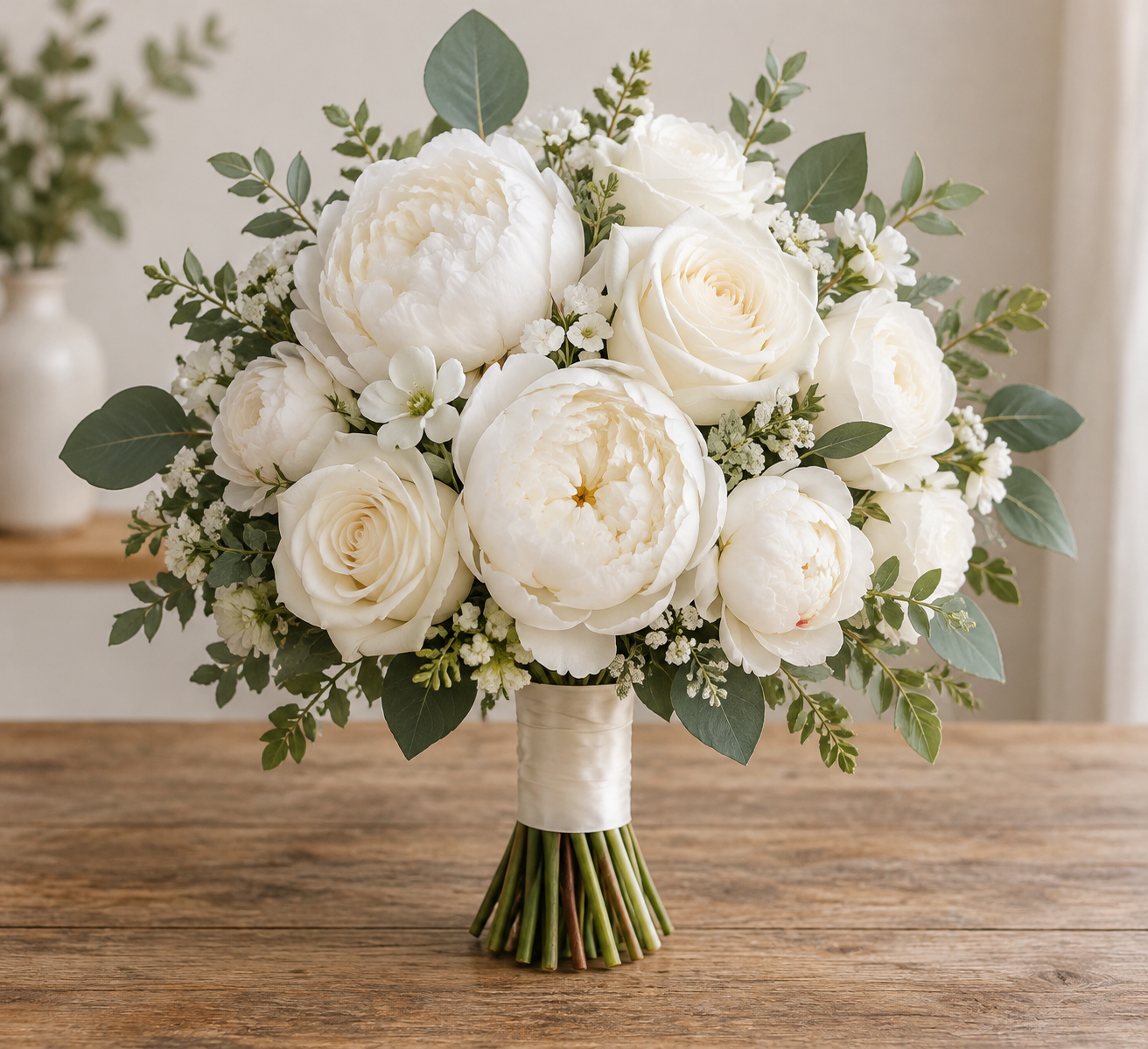
The practical split: real touch for what guests hold and photograph close (bridal bouquets, corsages), silk-type for everything at room scale (centerpieces, garlands), basic poly for outdoor fill nobody approaches. Then the format decision: coated stems at $9–18 drop into vessels you already own and let you rebuild a look each season, while finished coated arrangements at $58–180 ship composed and styled as photographed, with the vessel included where the listing says so. Home pieces live in the with-vase collection; wedding pieces sit in the wedding line, where the coated material is standard for held and carried work.
Care — Different Rules From Silk
Coated petals are more lifelike and more particular than silk. The four rules that matter: dust with a soft brush or cool hair-dryer blast weekly rather than wiping (formed surfaces grab dust and rubbing works it into the texture); for marks, a barely damp cloth wiped and air-dried immediately is the limit; keep them away from direct heat — radiators, hot cars, the dashboard of a wedding-day van — because formed petals take a permanent set at temperatures silk merely shrugs off; and never use alcohol-based sprays or cleaners, which cloud the surface. Water is the one instinct to unlearn entirely: the coating is a dry system, water sits on the polymer and dulls the finish, and it can seep into the foam core where it never fully dries. Stored cool, dry and boxed, real touch stems last for years.
The rest of the artificial line — silk-type arrangements at room scale — runs through the artificial flowers hub.
Frequently Asked Questions
What are real touch flowers made of?
Petals with a soft latex-touch polymer coating over a foam or fabric core, set on wired stems that hold a bend. "Real touch" names that coating system — not a brand, and not a quality claim on its own. Every product card here lists its petal, greenery and stem materials separately, with close-up photography where the coating is visible in the petal edge shots.
What is the difference between real touch and silk flowers?
The petal build. Silk-family flowers use woven fabric (today mostly polyester blends) — crisp, matte, excellent from across a room, lower in price. Real touch adds a soft polymer coating over a foam or fabric core, which gives petals a slight give and warmth that holds up at arm's length, where fabric reads flatter. Rule of thumb: across the room, buy fabric; close enough to touch, buy coated. The material comparison guide shows petal, price and care differences side by side.
Are real touch flowers worth the extra cost?
For pieces guests hold and photograph close — the bridal bouquet above all, corsages second — yes; that arm's-length band is exactly where the material earns its price. For room-scale pieces (centerpieces, garlands, arch work) the extra spend buys nothing a camera can see, and silk-type is the correct buy. The one place to skip real touch entirely: outdoor fill like bush inserts, where basic poly at curbside convincingness is the economical spec.
Do real touch flowers need water?
Never. The coating is a dry system: water sits on the polymer, dulls the finish, and can seep into the foam core, where it never fully dries. Display them dry, dust them dry, and if a mark needs more, a barely damp cloth wiped and air-dried immediately is the limit. This is the one care rule that differs sharply from every instinct fresh-flower owners bring — the care card in every box says the same.
How do I clean real touch flower petals?
Dust, don't wipe: a soft brush or a cool blast from a hair-dryer lifts dust off formed latex and PU surfaces, while rubbing works dust into the texture and dulls it. Two hard rules: no direct heat sources (radiators, hot cars — formed petals take a permanent set where silk merely recovers) and no alcohol-based sprays or cleaners, which cloud the formed surface. Stored cool, dry and boxed, the stems hold their finish for years.
Are real touch flowers a good choice for weddings?
For the pieces held and carried closest — bouquets, boutonnieres, corsages — the coated line is the standard choice: it handles hours of holding, passing and close photography without wilting, and it can be shaped once and left alone. Table and arch pieces read fine in the fabric line at lower cost. The wedding bouquet collection carries the coated pieces directly.
Can real touch flowers go outside?
Under cover — a porch or an overhang — coated pieces hold up to a season of display. Full exposure is a different job: sustained direct sun degrades the formed surface faster than it fades silk, and rain spots the finish. The pieces built for that are the UV-stable UV-resistant artificial flowers collection, which trade the hand-feel of real touch for the weathering specs outdoor placement actually demands. Treat an exposed coated piece like a seasonal flag and it still lasts for years.
Do real touch flowers feel like real flowers?
To a fingertip, remarkably close — the soft give, the smooth surface, the absence of fabric grain are the material's entire point. Nose-to-petal, no artificial flower passes: scent, cellular texture and the micro-imperfections of a living petal remain fresh's territory (it is not fresh, it carries no scent, and it never takes water). The honest framing is distance-based — real touch at hand-shake range, silk at room range, plastic at curb range — and every listing here states which band it is selling.