
Artificial Flowers With Vase






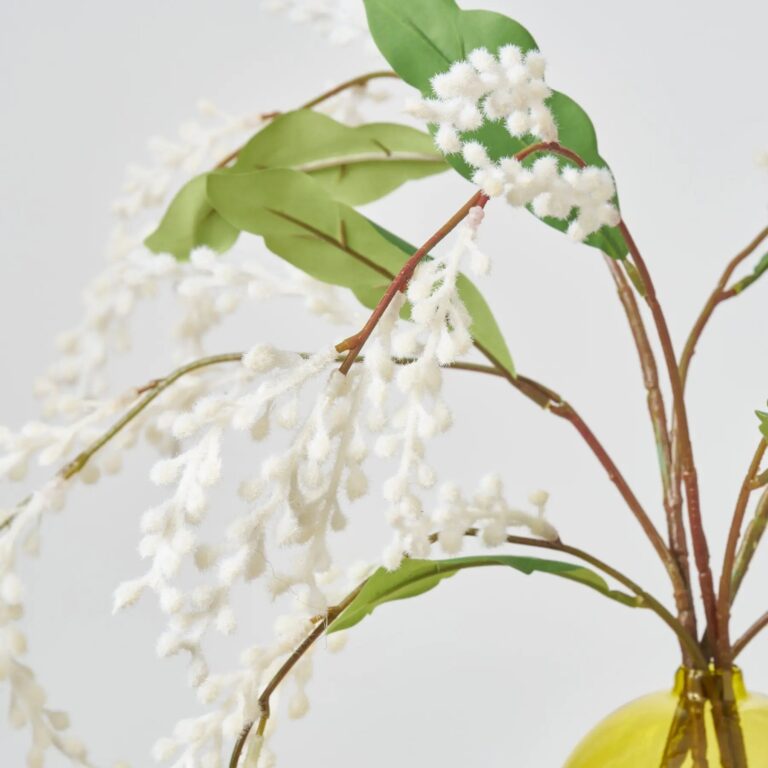
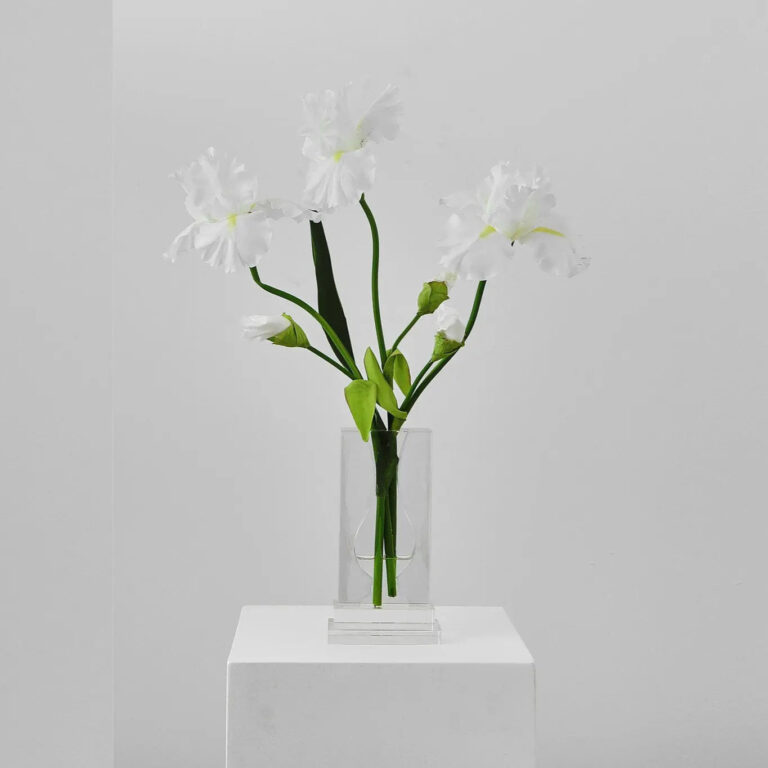

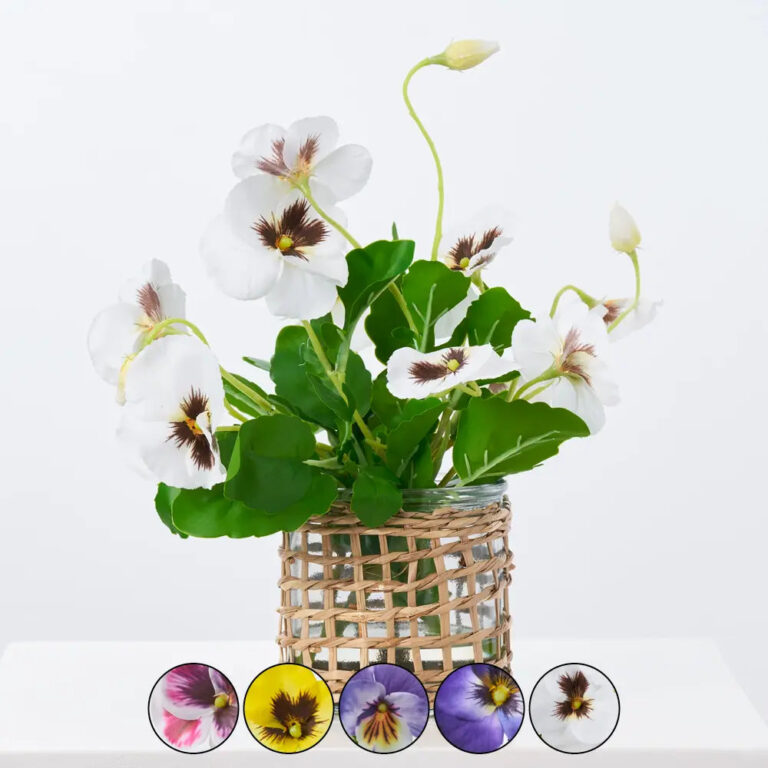

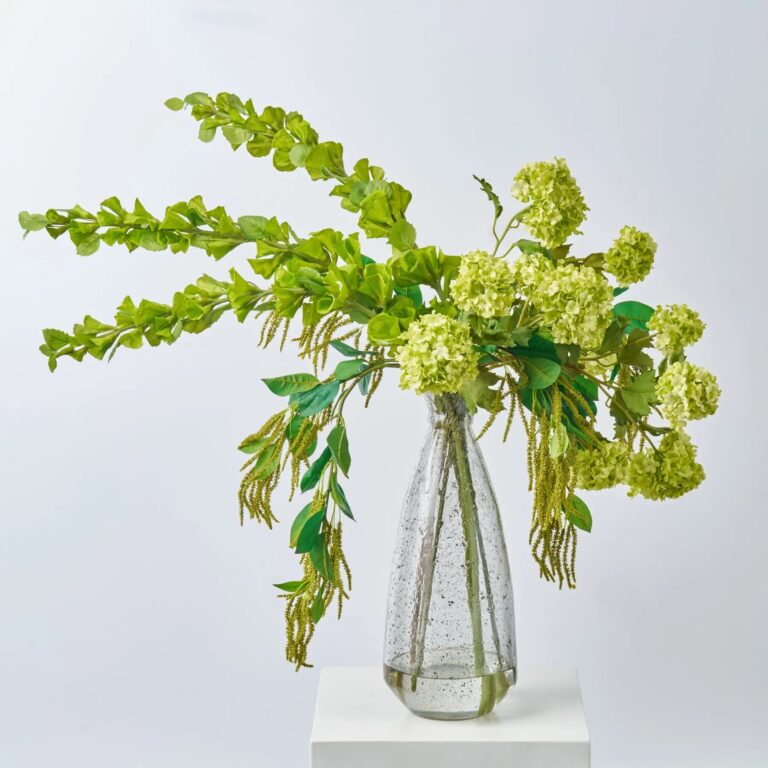
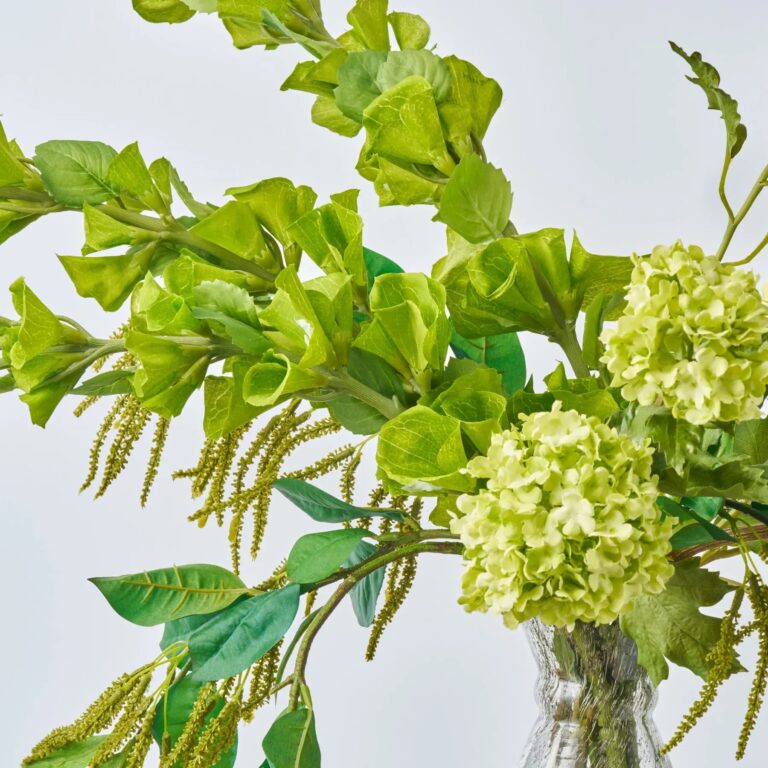

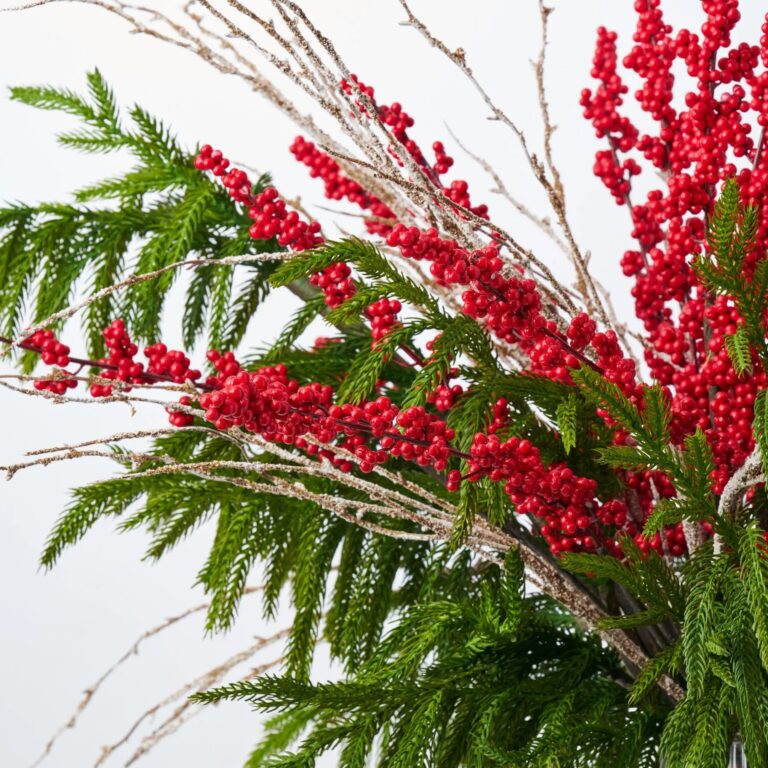

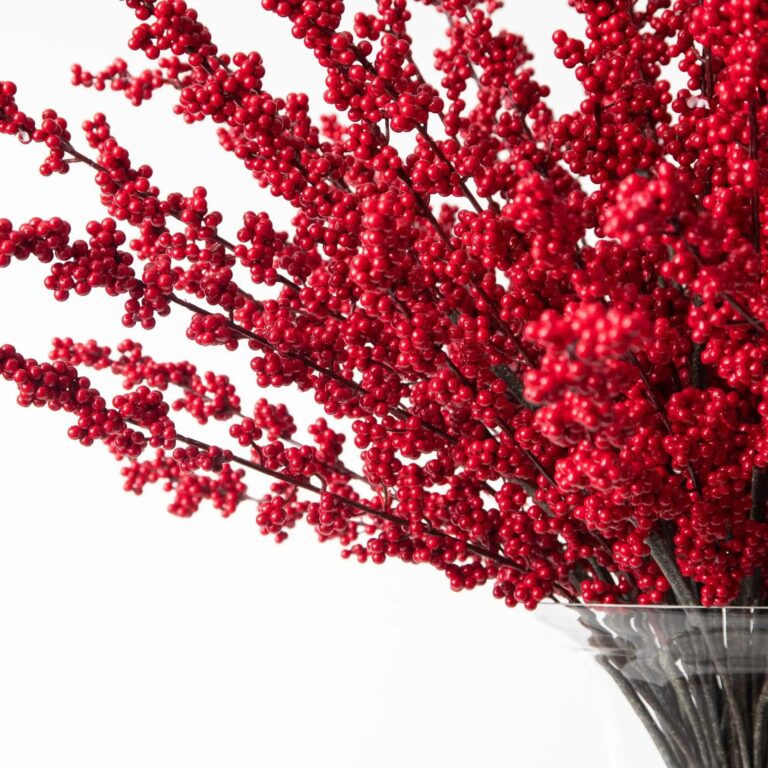
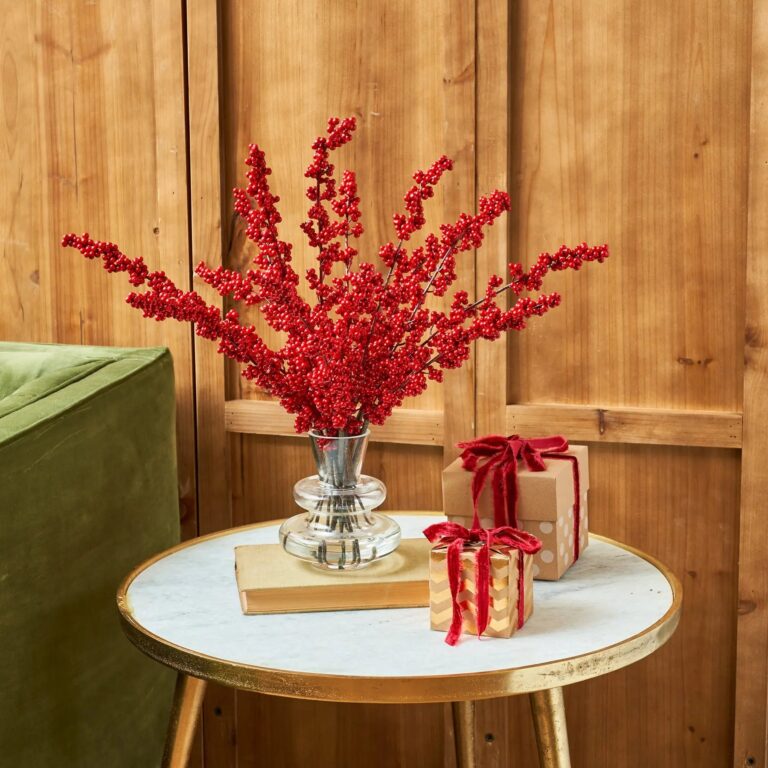

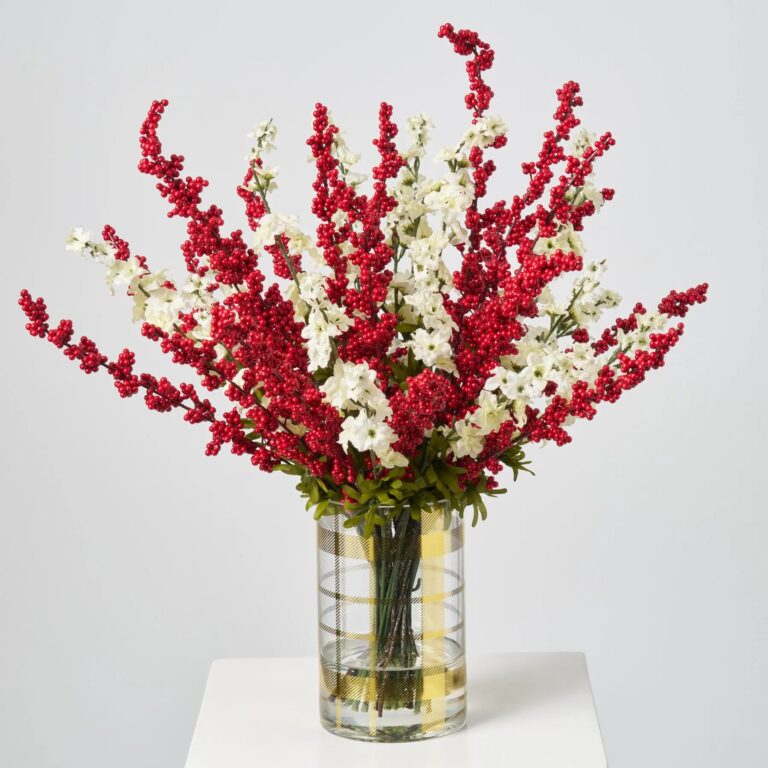

Faux arrangements that arrive already set in their vase — one listing, one price, flowers and vessel together. Choose from desk-side posies in ceramic to grand floor statements. Every product states the vase material, the total height and the exact stem count in the photo, so what you order is what lands on your table.
Quick answer: a with-vase arrangement arrives as one finished unit — blooms pre-arranged in a fixed vessel — promise: 1-3 minutes of fluffing, no water or trimming. Size to the surface: 10–14 inch builds for coffee tables, 16–24 for consoles, 36-inch-plus floor scale. As of October 2026, table builds run $30–60 and floor builds $150–300 (USD); a "liquid illusion" piece (faux-water resin) reads closest to fresh.
The 30-Second Vase-Pairing Pick
- Where it lives: side tables and shelves take 8–12 in pieces; dining tables and mantels 15–20 in; entryways 26 in and up — heights are total, vase included, on every card.
- What's inside: each listing = arrangement + the exact vase photographed, lifted out as one foam-set block if you ever want to swap vessels.
- Vase materials: ceramic, stoneware, glazed, glass, frosted glass, terracotta — stated per product; no unstated "decorator" vessels.
- Price band as of October 2026 (USD): $39–$58 entry, $92–$138 statement, $198–$288 grand; free US shipping over $200.
Why the With-Vase Format Wins
Buying flowers and vase together removes the two failure points of assembling your own: proportion mismatch (stems too short for the vessel, or a head size that drowns in the mouth) and the blank-engineering problem (fake stems need foam, gravel, or a grid to stand the way the photo shows). Factory-built units solve both — the vessel is sized to the build, the stems are fixed in a base, and the arrangement holds its shape out of the box. The fluffing expectation is stated plainly on listings: one to three minutes bending wired stems outward and turning heads before the piece photographs right, and that is the entire setup.
Build grade across the collection: greenery and filler specified at the same material grade as the focal blooms — the inner leaves and base foliage are not a cheaper afterthought, which is where low-grade units fail at handshake distance. Piece counts state what ships: one vase, one arrangement, exact bloom count in the title.
Liquid illusion, honestly described
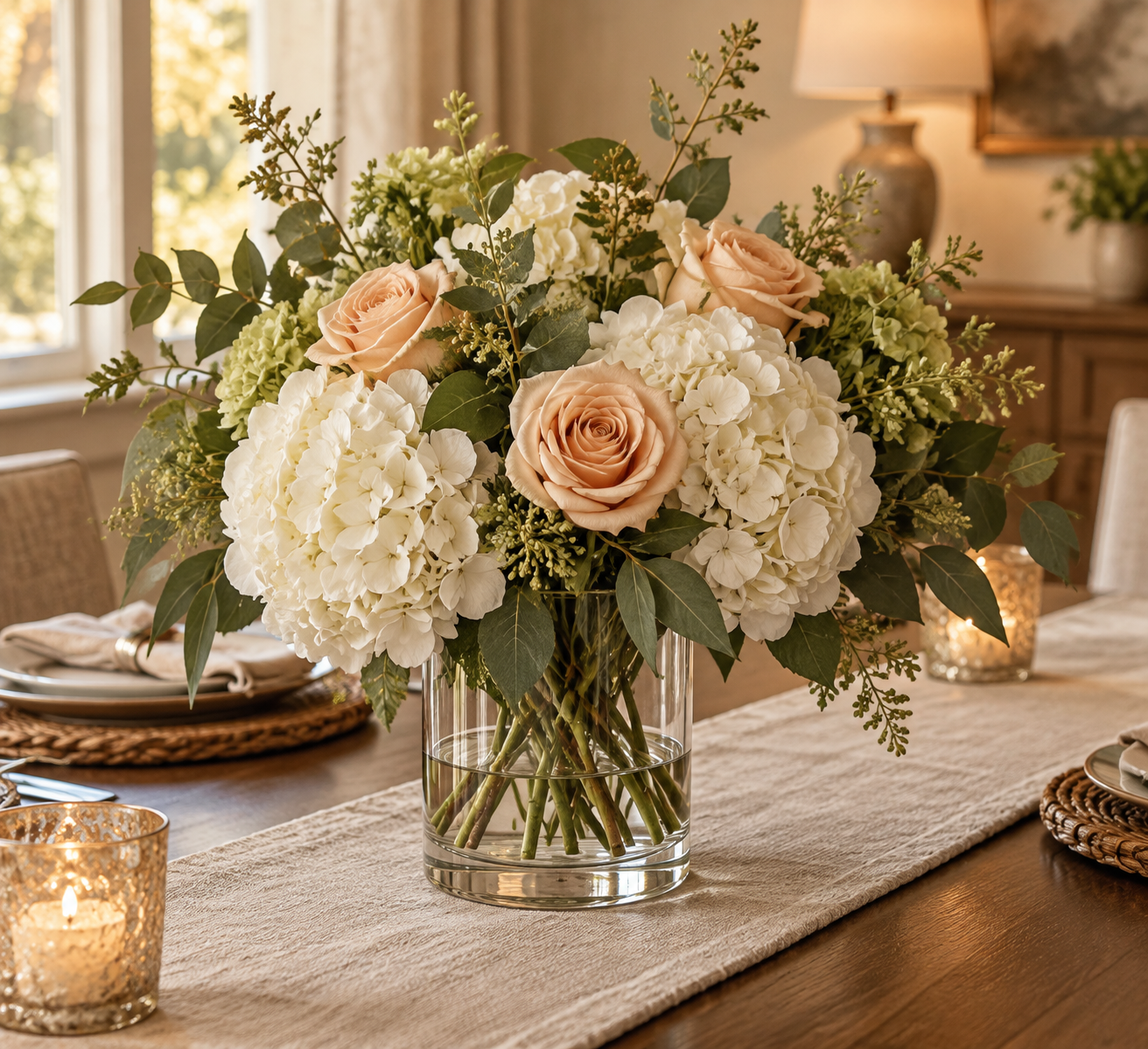
"Liquid illusion" is the industry term for faux water — a clear resin poured into the vase that reads as water from across the room and locks the stems at their arranged angles permanently. What it does: makes glass vessels look freshly filled and stops stems from shifting in transit. What it does not do: move, empty, or refresh — the resin is set, so a liquid-illusion piece is a fixed sculpture, not a re-arrangeable one. Dry-set builds (stems in foam or gravel) trade the water illusion for re-workability: stems re-bend, builds restyle season to season. Listings here state which construction ships, because it changes what the piece can become later.
Size by Surface: The Pairing Chart
The proportion rule that the factory pairing enforces: total arrangement height runs about 1.5 times the vessel height — a build that measures 18 inches typically sits in a 10-to-12-inch vase. If you later move blooms to your own vessel, keep that ratio or the piece reads off-balance.
How to Choose an Arrangement That Comes with Its Vase
Five decisions, in order — each one answered by data printed on the product card rather than by adjectives.
- Pick the surface, then the size band.
Total height is stated per product, vase included: 10–14 in for coffee tables and counters, 16–24 in for dining tables and mantels (leave 10 in of sightline above a table piece), 26 in and up for floor positions. Height mismatch is the number-one return reason in this category — the most common mistake is a 20-inch statement on a 14-inch table.
- Choose fixed or re-workable.
Liquid illusion for the finished-sculpture look; dry-set for builds you will restyle. The construction type is stated on each listing precisely so this decision gets made before checkout.
- Match the vessel to the room.
Ceramic and stoneware read warm and traditional; glass and frosted glass keep small rooms light and read airy; terracotta is unglazed and best indoors or covered. The vessel is half the look — each card names its vessel's material and opening width.
- "With vase" or "in vase" — same listing, both covered.
Searchers type both phrases for the same product; on this site every arrangement in this collection ships with the exact vessel photographed, together in a single shipment, at one price. There is no separate vase upsell and no "vase sold separately" fine print — if a listing ever ships without its vessel, that's stated on the card, not discovered at unboxing.
- Check bloom count and plan the light.
Titles state the exact stem count, and same-grade filler is the collection standard. Off sunny sills and heat vents; quarter-turn the piece every few months so any fade comes on evenly. If a gift deadline matters, order a week ahead — arrangements arrive arranged but not instant.
No water means the care math inverts
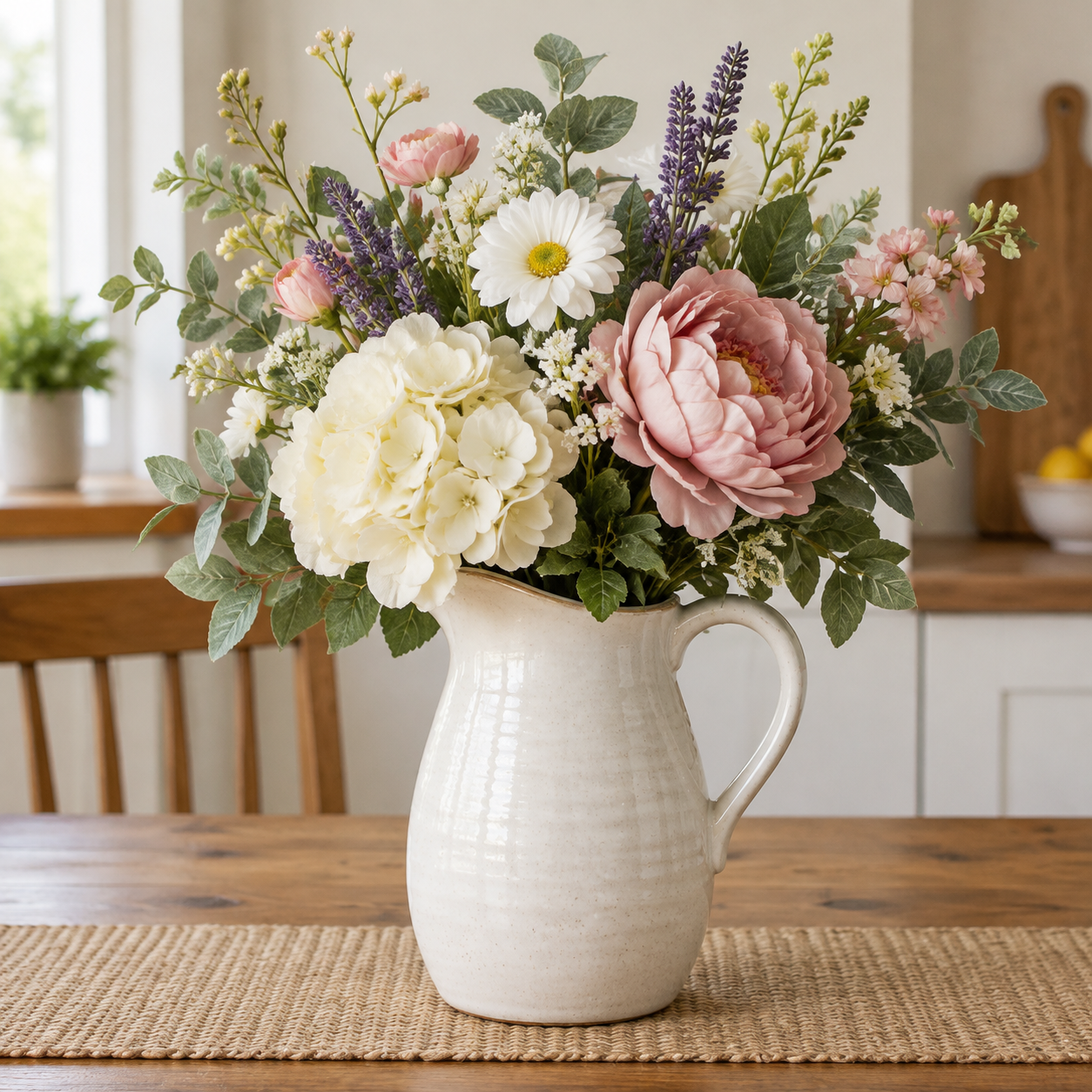
The maintenance ledger of a with-vase build is short: dust monthly (feather duster or a cool hair-dryer pass), keep the piece out of direct sun through glass and off radiator drafts, and quarter-turn it every few months so any light fade comes on evenly. There is no water to change, no cloudy vase to scrub, no stem to re-cut — which is the quiet reason the format beats fresh for offices, vacation homes, and any surface you do not walk past daily. Colors soften first in strong window light, typically over a couple of seasons; materials outlast the color by years.
Frequently Asked Questions
What is the difference between "flowers with vase" and "flowers in vase"?
Nothing in practice — shoppers use both phrasings for the same thing: faux stems that arrive already set in a vessel. Every product in this collection is one listing that includes both the arrangement and the vase shown, at one price, so there is no separate vase purchase to make.
Do artificial flowers with vase look like fresh arrangements?
At the distances guests actually view a surface — across a room, down a hallway — a well-graded with-vase build reads convincingly, and the liquid-illusion versions (clear resin standing in for water) close most of the remaining gap in glass vessels. Up close, at arm's length, the material tells the truth, as with any artificial botanical. The spec points that do the work — focal blooms at center, filler cut at the same grade as the blooms, a vessel proportioned to the build — are factory decisions in this format, which is exactly why it outperforms home-assembled faux stems in a random vase.
What is liquid illusion in fake flower arrangements?
Liquid illusion is faux water: a clear resin poured into the vessel around the stems, reading as water from viewing distance and locking every stem at its arranged angle. It makes glass vases look freshly filled and survives shipping without the arrangement shifting. The trade is permanence — the resin sets, so the piece cannot be emptied, re-cut, or restyled; it is a fixed sculpture. Dry-set builds (stems in foam or gravel) are the re-workable counterpart, and listings here state which construction each piece uses so the choice is deliberate.
How tall should flowers in a vase be for my table?
Match the build to the surface: 10–14 inches for coffee tables and counters, 16–24 inches for consoles and nightstands, 26–34 inches for entry tables and sideboards, 36 inches and up for floor staging. Two ratios keep it balanced — total height about 1.5 times the vessel's height (the factory pairing enforces this), and on dining tables specifically, stay under 12 inches so sightlines cross. Width should span roughly half the surface's shorter side; wider reads as a centerpiece, narrower as an accent.
Can I take the flowers out and use the vase for real stems?
Dry-set builds, yes — stems are set in fixed foam inside the vase, not glued, and lift out as one block: pull it, wash the vessel, and you have a normal vase (the vases collection holds the pairing rules with fresh stems). Liquid-illusion builds, no: the resin locks stems and vessel together as one object, and separating them cracks the set. If a two-purpose vessel is the plan, choose a dry-set piece from the start.
How do I clean artificial flowers that come in a vase?
Dust is the only real maintenance: a feather duster weekly on visible pieces, or a hair-dryer on its coolest setting held a foot away monthly blows the fine film out of petal creases — do not use heat, it relaxes fabric petal shapes. For set-in grime, lift the arrangement out as one block and wipe fabric petals with a damp microfiber and a drop of dish soap, then air-dry fully before returning it. Avoid submerging liquid-illusion pieces (the resin seam is not a soak-proof joint) and avoid spray polish, which leaves a sheen that reads artificial faster than dust does. The full method is in our cleaning guide.
Will the vase arrive intact?
Ceramic and glass vessels ship double-boxed with the arrangement block removed and wrapped separately inside — the packing method is shown on each product page. If a vessel arrives chipped or scratched, the replacement ships before the return arrives, no photos required.
How much do artificial flowers with a vase cost?
Market bands as of October 2026 (USD): 10–14 inch table builds run $30–60; 16–24 inch console builds run $50–120; 26–34 inch entry builds run $90–180; 36-inch-plus floor builds run $150–300, with liquid-illusion and real-touch pieces at the top of each band. Against fresh: a florist arrangement in a keepsake vase starts near $60 and lasts ten days — the with-vase artificial piece crosses under it per month of display within its first season, which is the honest comparison for surfaces styled year-round.