A Halloween garland is an October strand — black, orange and purple botanicals, candy-colored blooms, felt bats and pumpkins, or flocked dark eucalyptus on a wired spine — sold by measured length for mantels, stair rails and porch posts. This page covers the spooky-side builds in 6, 9 and 12 foot sections, how they split from the general autumn strand, and the install arithmetic for the places Halloween actually gets decorated: the entry, the stairs and the party table.
Quick answer: Halloween garlands and fall garlands share a spine and split on palette — spooky builds run black, orange and purple against autumn's rust and cream. Buy at 110-120 percent of the run: a 6-foot mantel takes 7-9 feet, a 10-foot stair rail takes about 15 (run × 1.5). Market bands as of October 2026, USD: plain spooky-leaf runs $25-60 per 9 feet, character builds with bats and candy $50-130 — and the September search peak (33,100 monthly lookups) clears stock before October begins.
Halloween Garlands, Explained
What a Halloween garland is
A Halloween garland is the October half of the autumn strand line — the same wired-spine construction as the fall garland, dressed in the holiday vocabulary instead of the harvest one. The palette is the fastest tell: Halloween runs black, orange and purple (with white accents), while general autumn runs burnt orange, red, cream and sage. The builds range from restyled botanical pieces — black-dyed eucalyptus, purple maple, orange marigold — to character strands with felt bats, ghosts, candy corn and mini pumpkins wired in at intervals. The search behavior mirrors the split: "halloween garlands" runs 6,600 lookups a month and spikes to 33,100 in September — households buy in the last two weeks of September, ahead of the general-autumn crowd, and the good character builds are gone by the first week of October.
Every listing states its measured length — 6, 9 and 12 feet are the standard sections — and the photo shows exactly one garland unless the title says a set. The paired-strand photo trick is common in this category at every price level: two looped strands shot to look like one, and a mantel planned around that photo arrives half-dressed.
Spooky versus harvest: the line, and straddling it
The practical question in every October house is whether one strand can carry both Halloweens and harvest — and the answer is a two-palette decision made once. A black-and-purple strand reads Halloween, full stop; it comes down November 1st and cannot restyle. An orange marigold-and-pumpkin strand reads both: October's holiday vocabulary and November's harvest table. So the household that decorates once builds on an orange base and adds the spooky layer — a short black-eucalyptus accent woven through the swags, bats on clips, a purple pick every few feet — that pulls out in one motion after the trick-or-treaters. The household that styles hard for Halloween treats the spooky strand as a two-week install and accepts the teardown; those are also, reliably, the households that buy a second character strand the following year, because the first one became the porch memory.
The Halloween builds, side by side
Build
What's on it
Reads as
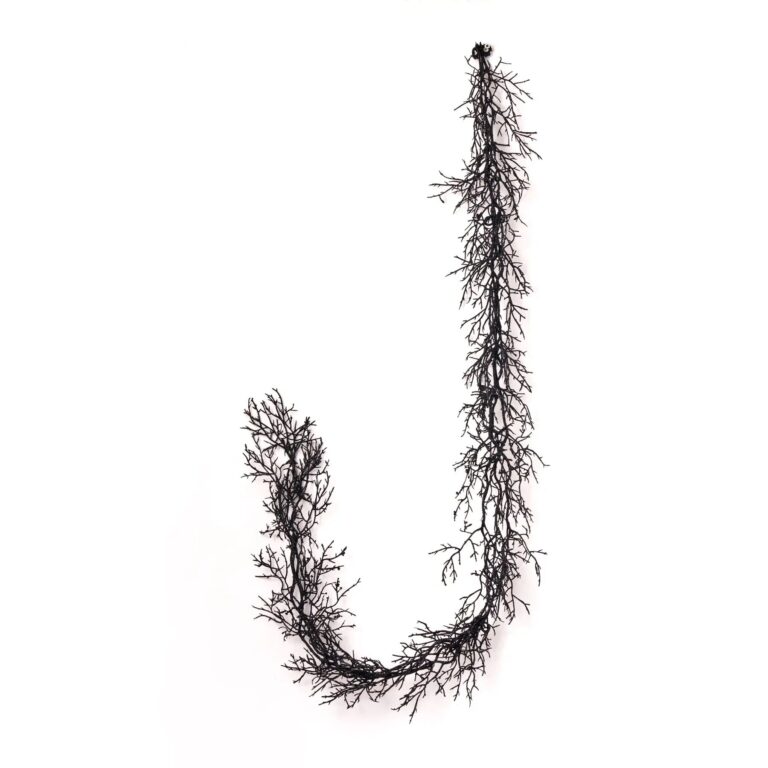
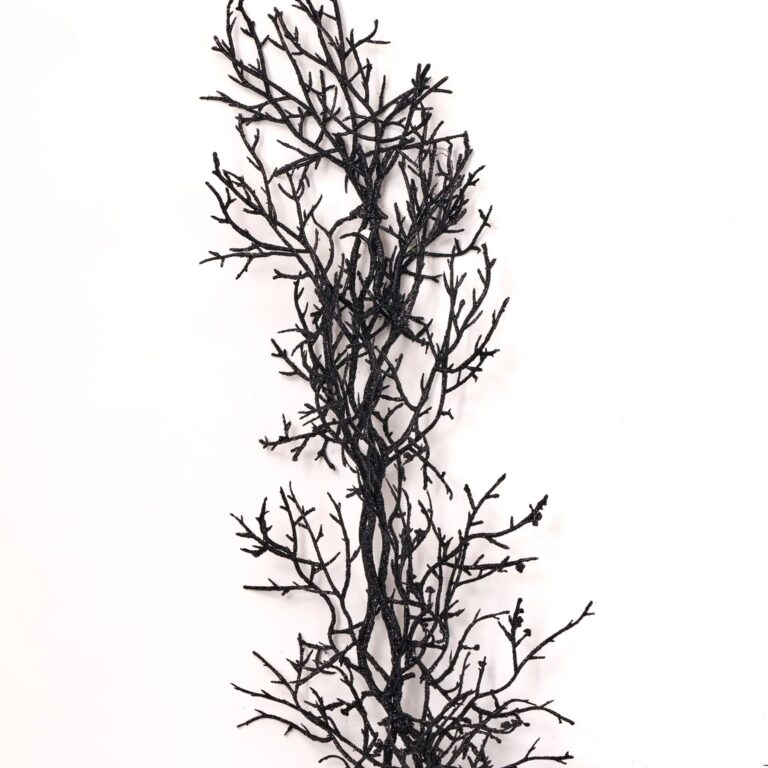
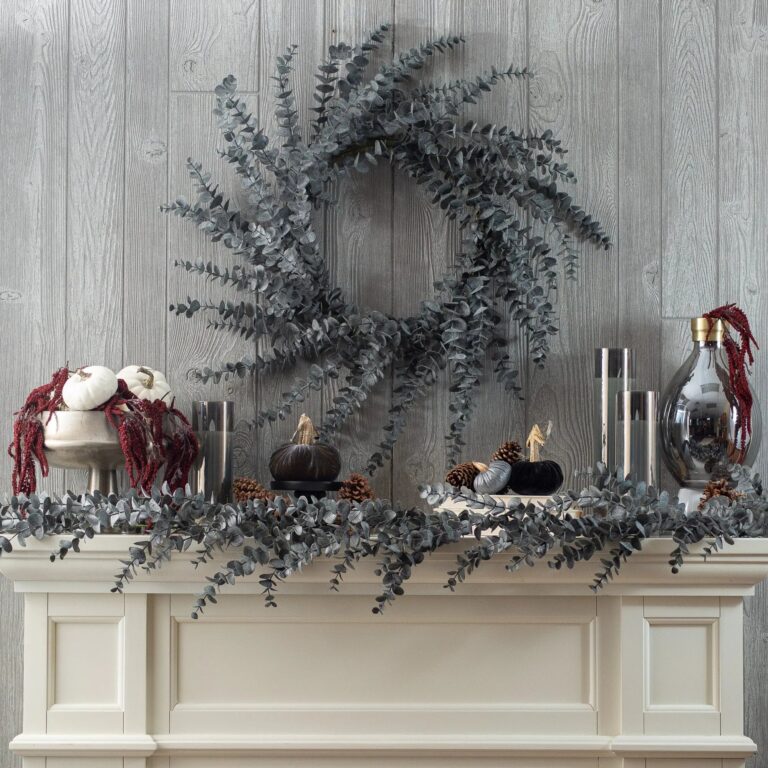
Black eucalyptus / flocked dark
Dark-dyed or flocked eucalyptus on a wired spine, sometimes dusted glitter
Elegant-spooky — the grown-up Halloween mantel
Purple-and-orange leaf run
Dyed maple in the two holiday colors, wired spine
The classic October strand — stairs and door frames
Marigold-and-pumpkin
Orange bloom heads and mini pumpkins over a leaf base
Holiday-to-harvest crossover — survives to Thanksgiving
Character strand
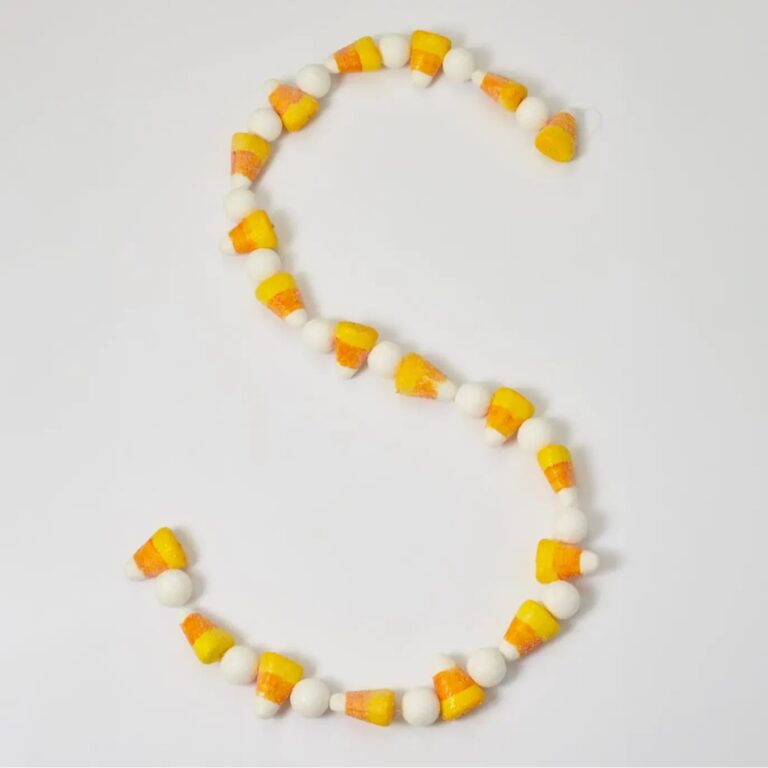
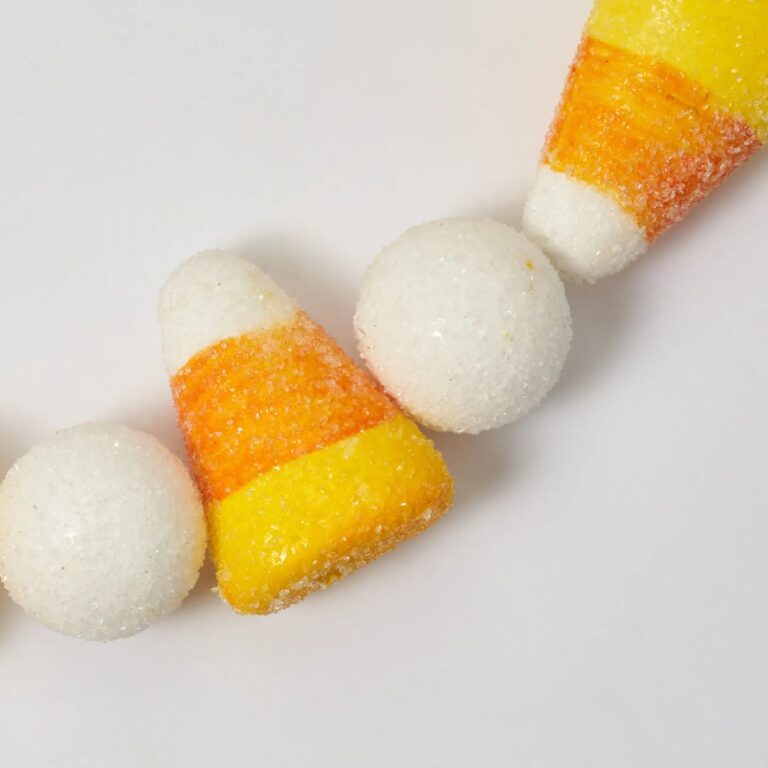
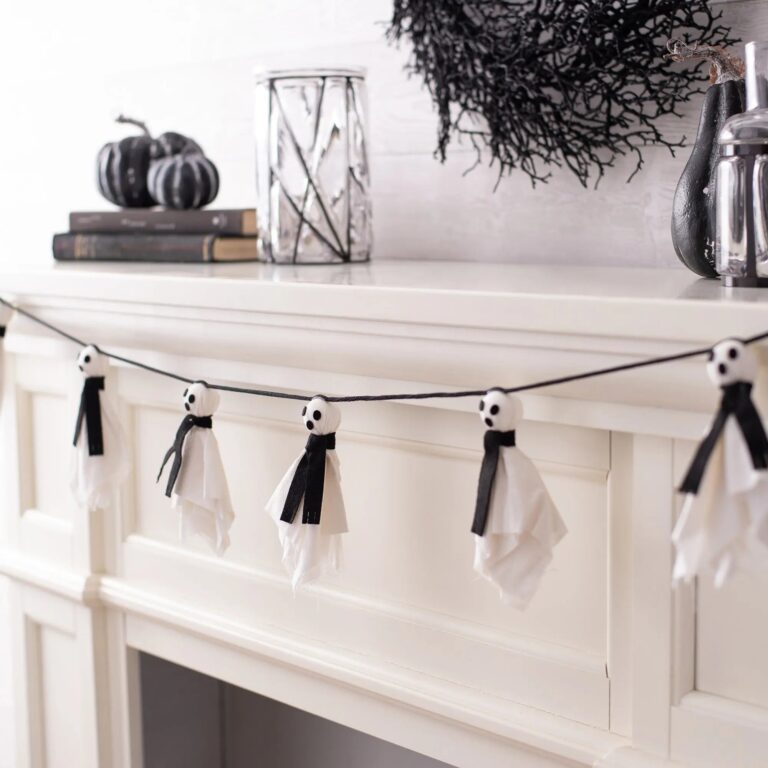
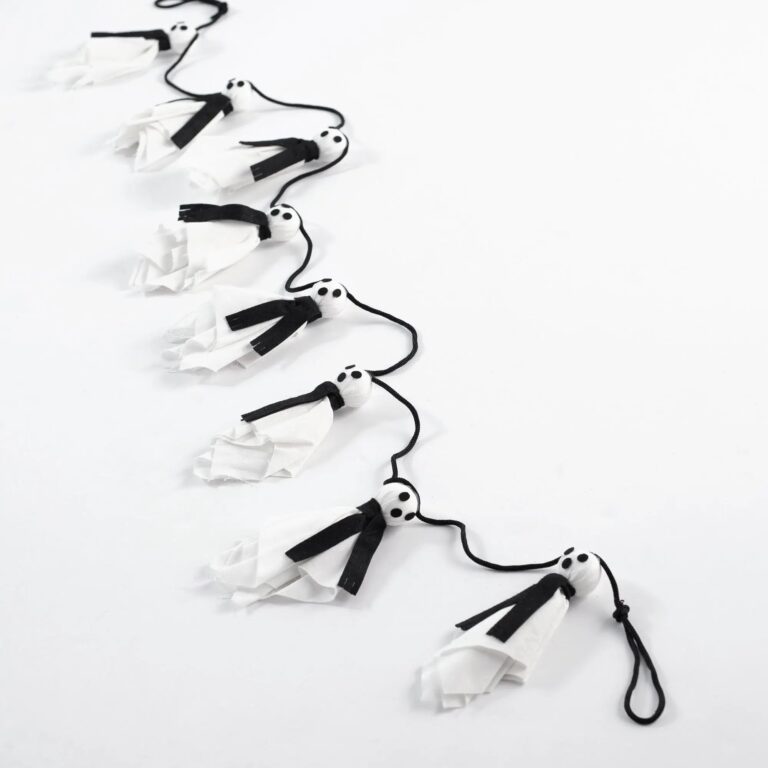
Felt bats, ghosts, candy corn, black cats wired at intervals
The trick-or-treater strand — party tables and kids' doors
Berry-and-branch dark
Black or deep-purple berry sprays on branch spines
Texture layer under lights — the goth-elegant base
Where Halloween garlands actually go
Three placements carry the month. The entry — door frame wound once (8-10 feet covers a standard 36-inch frame) or wrapped full-frame with drops down both sides (12-14 feet, the calculation is top width plus both side drops plus 10 percent for the swag), paired with the Halloween wreath on the door itself in the same palette. The stair rail — run × 1.5 for the spiral, a 10-foot rail taking about 15 feet from two overlapped 9-foot pieces, and the strand that trick-or-treaters actually walk past, so the swag bottoms are where the character pieces belong. And the party table or mantel — 6 feet down a buffet, 7-9 feet across a standard mantel — where the black-eucalyptus builds live under string lights and beside candles. Porch posts join the list in houses that go all-in: a 6-foot spiral down each post flanking the door, zip-tied top and bottom.
Lighting, and the one safety paragraph
Halloween garlands and lights are inseparable in practice, and the strand choice either plans for that or fights it. Unlit spooky strands — the majority — take woven string lights in any color; orange and purple micro-LEDs on battery are the standard move, because the packs tuck into the swags where a plug would dangle visibly. Pre-lit Halloween strands exist at the upper band and state their bulb count per length. The safety paragraph, once: silk and felt are combustible materials, so candles never join a garland directly — pillar candles on the mantel sit in front of the strand, never inside it, and battery LED tealights replace flame inside a swag. Every listing here follows the same rule the rest of the line does: stated length, one garland per photo, and component pieces (bats, pumpkins) pull-tested before boxing.
What the market charges
The bands as of October 2026, USD: plain dyed-leaf spooky runs $25-60 per 9 feet; character and decorated builds $50-130; pre-lit Halloween strands at the top of the decorated band. The fresh comparison barely exists here — fresh Halloween garland is not a real retail category, so the honest comparison is against decor-store character garlands that shed glitter and felt for one season. A silk-based spooky strand boxed dry in November comes back for four or five Octobers, which is the whole arithmetic. And the timing note repeats because it is the one that bites: the September peak (33,100 lookups, five times the off-season base) means the black-eucalyptus and character builds sell through before the calendar says October.
Teardown, and the November handoff
November 1st is teardown day for the spooky layer — and the design of a good Halloween install makes that a ten-minute job. Accent pieces on clips and picks pull out of the base run in one pass; the black-dyed strands box dry, coiled loose in a tote away from the heat, and the orange marigold-and-pumpkin base stays up and restyles straight into harvest, then Thanksgiving, with the wheat and cotton layers moved in. The full November side of that handoff — the harvest-table runner specs and the two-palette carry-through — is on the Thanksgiving garlands page.
How to Choose a Halloween Garland
Decide spooky-only or crossover first.
Black-and-purple strands are two-week installs; orange marigold-and-pumpkin strands carry October into Thanksgiving. The choice determines everything downstream, including how much you spend — a crossover base plus a clipped spooky layer costs less than two full strands.
Run the placement arithmetic.
Door frame 8-10 feet wound once, 12-14 for the full wrap; stair rail run × 1.5; mantel width plus 1-2 feet per side; table 6 feet with drop ends. Buy at 110-120 percent of the measured run.
Plan the lighting at purchase.
Unlit strands take woven battery micro-LEDs (packs hide in the swags); pre-lit states its bulb count. Flame never goes inside a strand — candles in front, LED tealights inside.
Match the audience to the build.
Black eucalyptus for the adult mantel, character strands for trick-or-treat routes and kids' doors, purple-and-orange leaf runs for the stairs everyone photographs. Bats and candy pieces on clips come off in one motion November 1st.
Buy in September.
The 33,100-lookup September peak clears the character and black-eucalyptus builds by the first week of October. Verify length and piece count at checkout — one garland per photo unless the title says a set.
Frequently Asked Questions
What is the difference between a Halloween garland and a fall garland?
Palette and lifespan. Both are wired-spine autumn strands sold by measured length, and the construction grades overlap — Halloween runs black, orange and purple, fall runs burnt orange, cream, rust and sage. The practical difference is the calendar: a black-and-purple strand comes down November 1st, while an orange marigold-and-pumpkin strand restyles straight through harvest into Thanksgiving. Households decorating once usually build on the crossover orange base and clip the spooky layer on for the last two weeks of October.
How long should a Halloween garland be for a stair rail?
Railing run × 1.5, because the spiral wrap around the rail eats the extra — a 10-foot rail needs about 15 feet, which in practice is two 9-foot pieces overlapped and zip-tied where the joint hides in a swag. Start from the top so the splice lands at the bottom turn, anchor every 12-18 inches, and put the character pieces (bats, ghosts, candy) on the swag bottoms where trick-or-treaters walk past them at eye level.
Can Halloween garlands go outside?
Covered porches and entries with an overhang, yes — the whole October run. Open exposure is harder on any artificial botanical: October weather is mild in most of the US, but sustained direct sun fades dyed fabric over a season or two (UV-stable grades stretch that — slower, not never) and rain storms soak felt pieces that then need a dry-out day. The working pattern: zip-tie rather than wire anchors so rescue is fast, bring character strands in during storms, and take everything down November 1st regardless — the teardown was scheduled anyway.
How do I hang a Halloween garland on a door frame?
Two installs, two lengths. The single wind — once around the frame's face — takes 8-10 feet on a standard 36-inch door. The full wrap — across the top and down both sides with swag bottoms — takes 12-14 feet, calculated as top width plus both side drops plus 10 percent for the swag. Attach with removable hooks on painted surfaces and zip ties on rails; skip nails and staples. If the door itself carries a Halloween wreath, keep the garland palette matched or deliberately split — black eucalyptus frame with an orange wreath reads as a decision; two accidental oranges read as a miss.
Do Halloween garlands come with lights?
Both ways. Unlit is the majority of the line and the more flexible choice — weave your own battery micro-LEDs in orange or purple, hide the packs inside the swags, and change the color scheme next year without re-buying the strand. Pre-lit Halloween strands exist at the top of the decorated band and state their bulb count per length; on stair runs and porch work, battery power beats cords on both safety and looks. Either way, flame does not go inside a silk or felt strand — candles sit in front of the garland, and battery tealights replace flame inside a swag.
How much does a Halloween garland cost?
Market bands as of October 2026, USD: plain dyed-leaf spooky runs $25-60 per 9 feet; character builds with felt bats, ghosts and candy corn $50-130; pre-lit strands at the top of that band. There is no meaningful fresh comparison — fresh Halloween garland is not a retail category — so the honest math is against one-season decor-store pieces: a silk-based strand boxed dry in November returns for four or five Octobers at the cost of about one-and-a-half throwaway seasons.
When should I put up and take down a Halloween garland?
Put up in the last two weeks of September — the search peak (33,100 monthly lookups in September against a 6,600 baseline) tracks exactly that buying window, and stock at the good builds clears with it. Take down the spooky layer November 1st: clips and pulls come off the base run in one motion, black-dyed strands box dry and loose, and the orange crossover base stays up to restyle into harvest. The whole teardown-as-designed takes about ten minutes when the accent layer was clipped on rather than wired.
Can I use the same strand for Halloween and Christmas?
Not the same strand, but the same rail and often the same anchors. A black or purple Halloween strand has no December restyle in it — the palettes do not bridge. What does carry is the infrastructure: the zip-tie points, rail hooks and swag positions laid in October get reused by the December greenery three weeks later, and households who run a stair spiral every year install the anchors once and swap strands season to season. The December line — pre-lit and plain pine in 6, 9 and 12 foot sections with the same length arithmetic — is on the Christmas garlands page.