
Outdoor Artificial Flowers

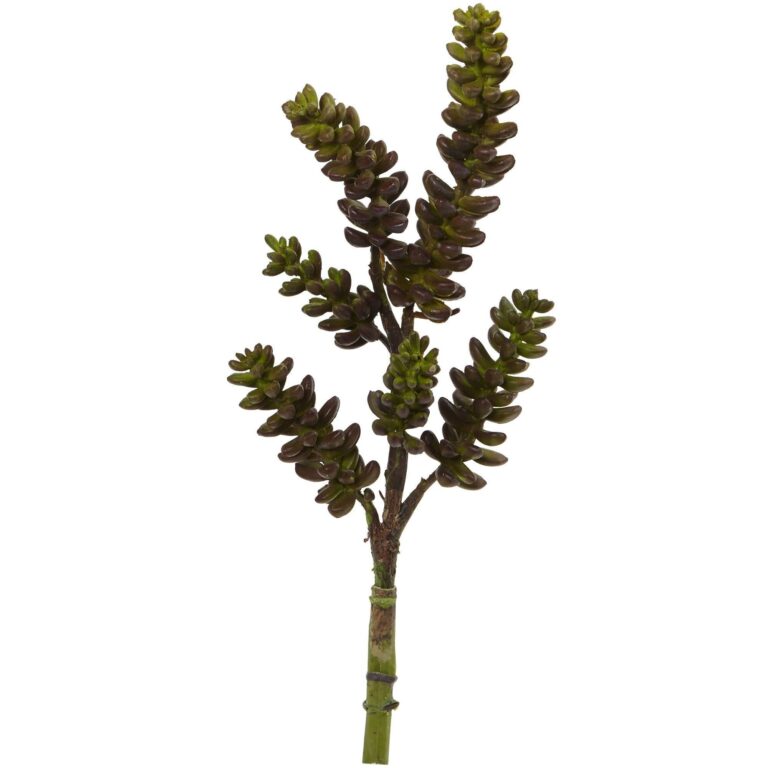


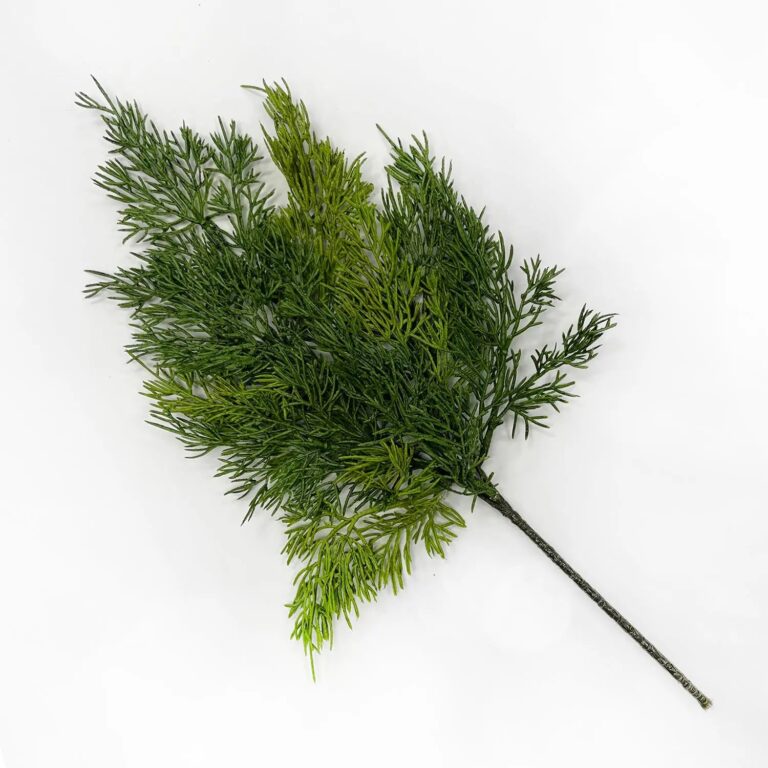
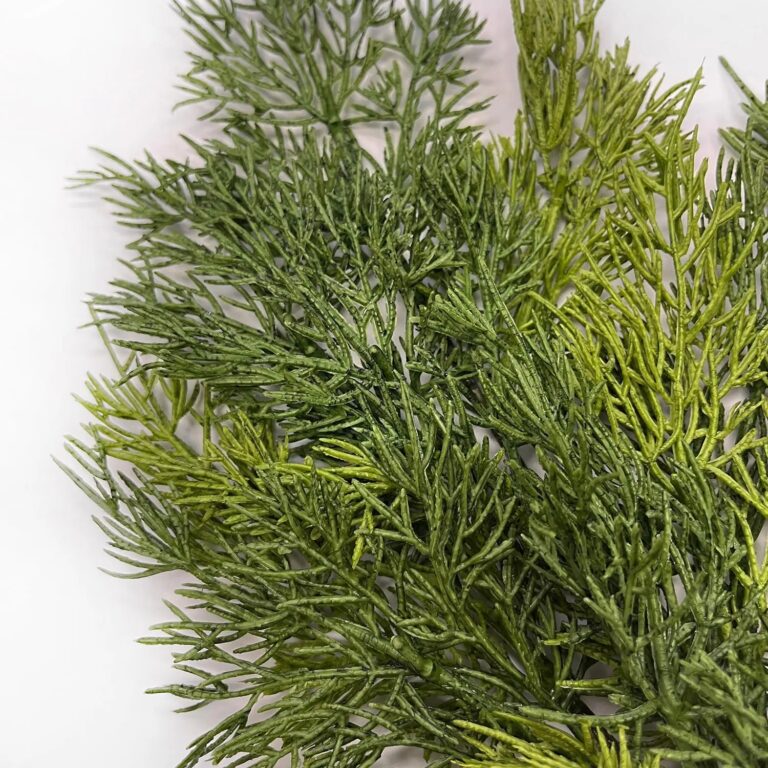
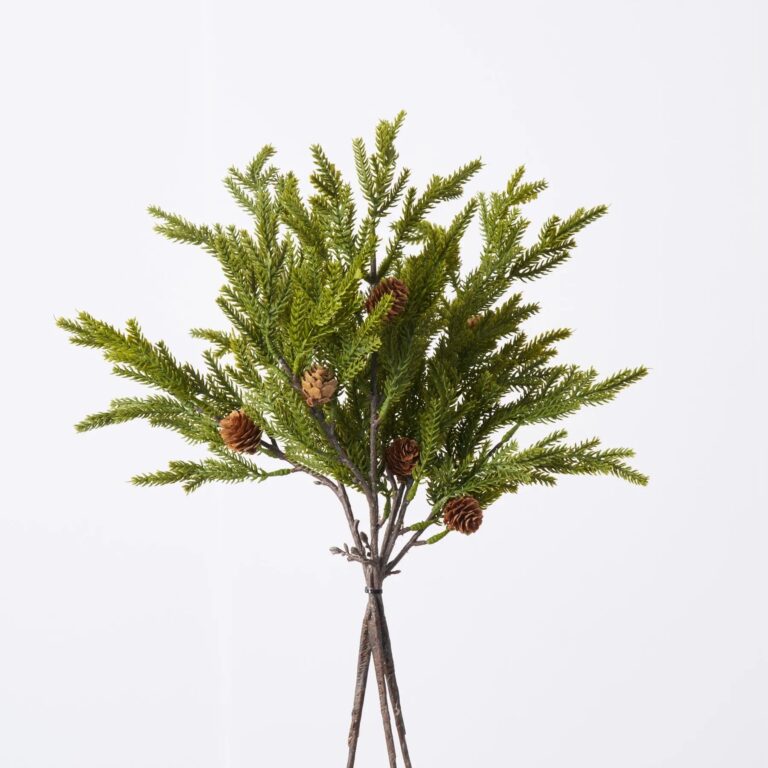
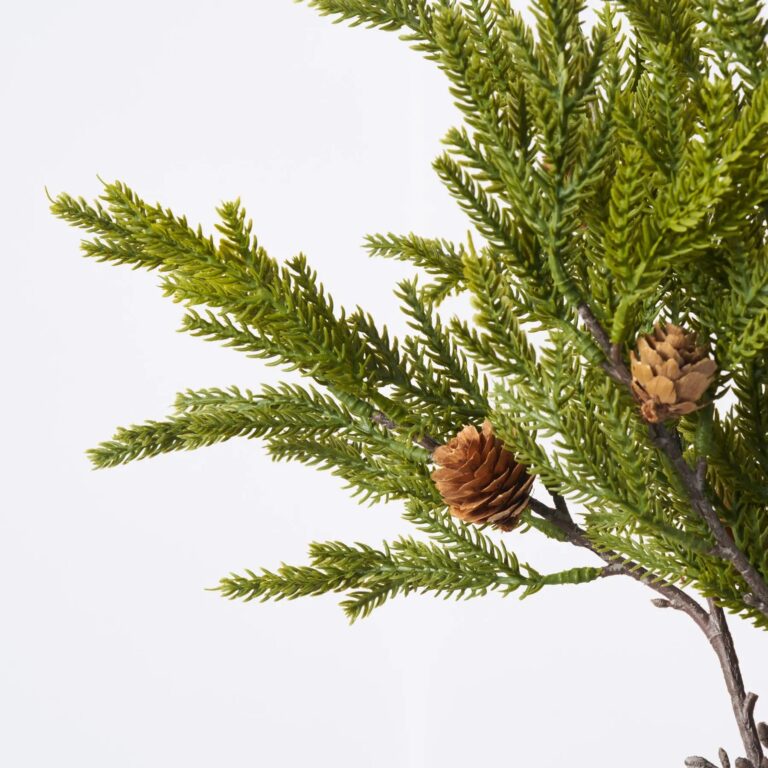


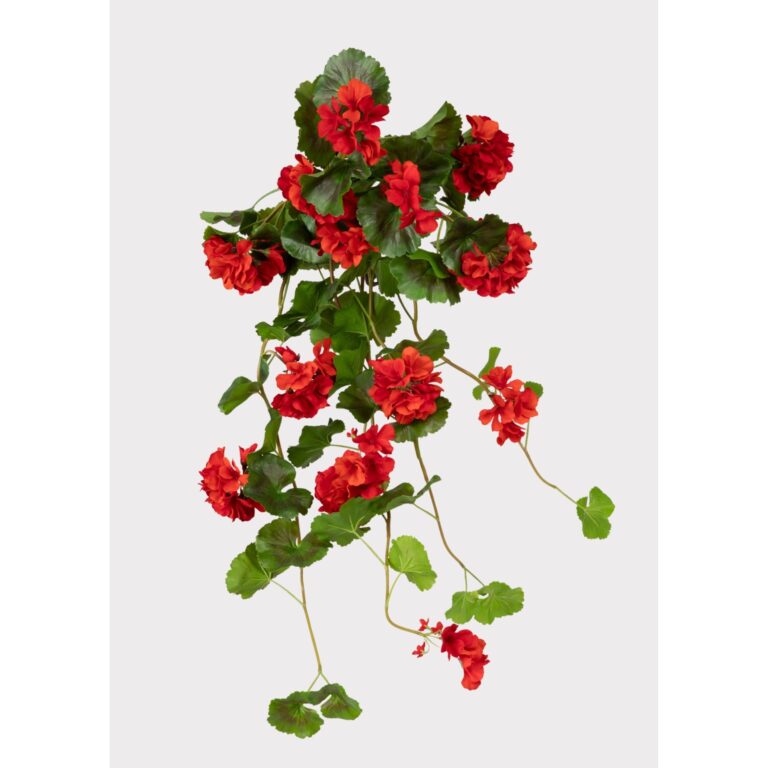

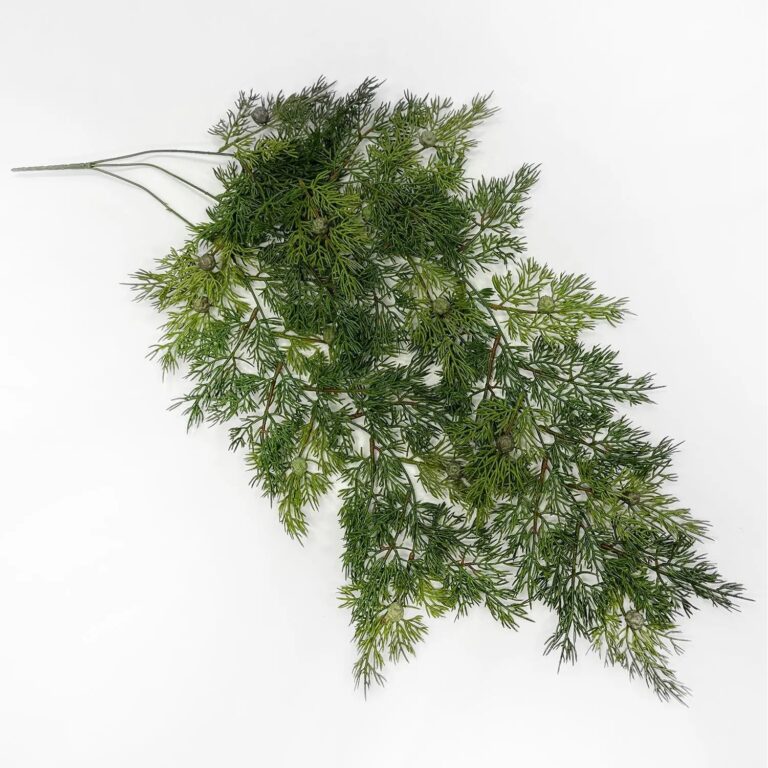


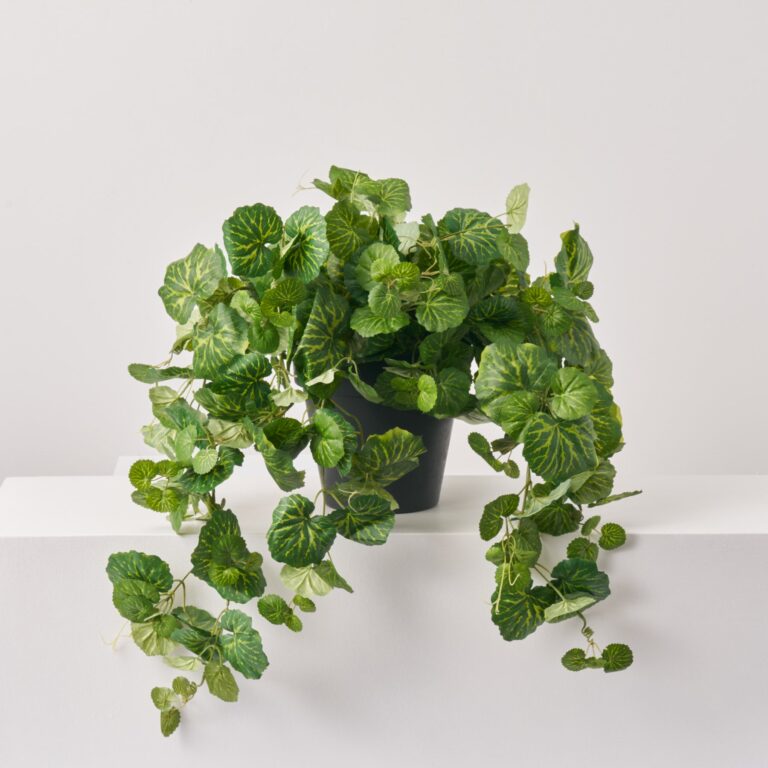
Fill every outdoor spot that refuses real plants — a covered porch that fries afternoon plants, a patio rail with no soil, a garden bed you stop weeding every July. This collection gathers outdoor-safe bushes, hanging baskets, window box mixes and entrance pairs for porches, patios and gardens, sorted by the sunlight each spot actually gets.
Quick answer: Outdoor artificial flowers age by exposure tier, not brand: UV-treated builds keep color for years on covered porches, hold through half-day sun, and fade within 1–2 seasons in full south/west exposure. A UV-treated planting runs $50–150 once (as of October 2026, USD) against $40–120 per container per year for real annuals — cost crosses below live planting in year two.
About Outdoor Artificial Flowers
Every yard has a spot where real plants simply refuse to cooperate: the porch that bakes at 3 p.m., the deck rail with no soil within reach, the bed by the mailbox that dries out the moment you stop watering in July. Outdoor artificial flowers exist for exactly those spots. Today's outdoor-safe designs read clearly from the curb, hold their shape through weather that would flatten a nursery flat, and ask for nothing back — no watering schedule, no deadheading, no seasonal replanting budget.
Start from the spot, not the flower
The single biggest satisfaction lever is matching the piece to its placement. On a covered porch, shelter lets you use cascading and delicate forms — hanging baskets, Boston ferns, trailing petunias — that would crisp in open sun. On a patio or deck, planter inserts and bush forms drop straight into your existing containers and read beautifully at conversation distance. In a garden bed or along a walkway, dense bush forms like geraniums, azaleas and daisies carry the view from ten feet away, which is how beds are actually seen.
The exposure rule: where you hang it decides how it ages
Outdoor placement falls into three exposure tiers, and the tier matters more than the brand. Tier one is sheltered — covered porches, entries with overhangs, spots under eaves — where UV-treated flowers keep their color for years and even untreated builds hold a full season or two. Tier two is partial — half-day sun, dappled shade under a tree — where UV-treated pieces still perform and untreated ones fade noticeably within a season. Tier three is full exposure — south- and west-facing walls, open railing, full sun through summer — where sun, rain and wind are hard on any artificial botanical, treated or not. The honest phrasing used across this collection: UV treatment makes fading slower, not never.
What UV treatment actually is
An inhibitor compounded into the petal and leaf material during molding, slowing the photochemistry that breaks colorants down. It is in the plastic, not a spray coating, so it does not rub off or wear out in one wash — but neither is it a shield. A red geranium in Tucson afternoon sun will still read softer in its second summer than its first. Buyers who plan around that reality — saturated colors in sheltered spots, greens and whites where sun is hardest — get the longest run from each piece. Pieces built with UV-rated materials carry a UV Resistant badge and can be filtered directly; the full story on ratings and materials lives on our dedicated UV Resistant Flowers page.
The container formats
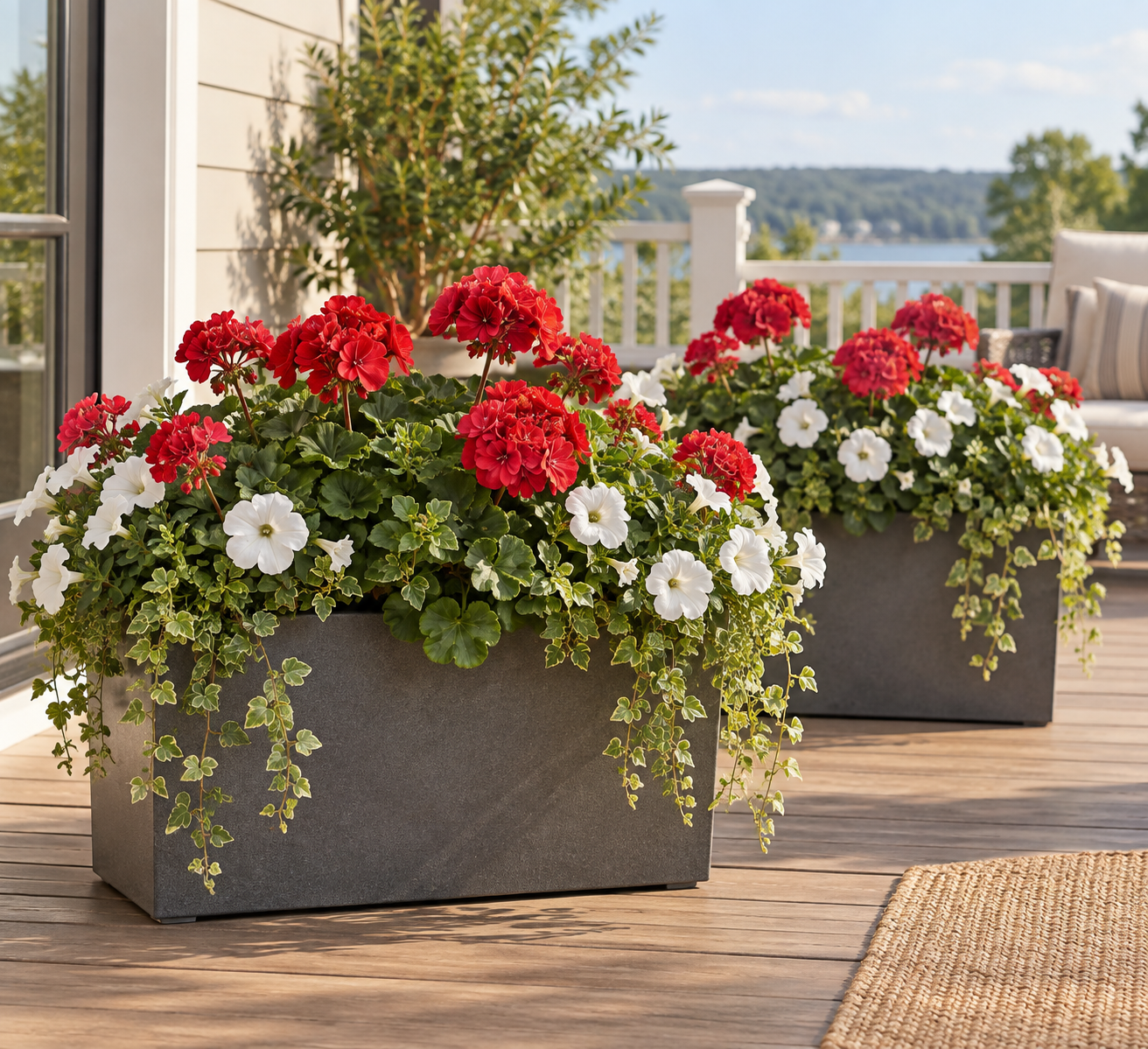
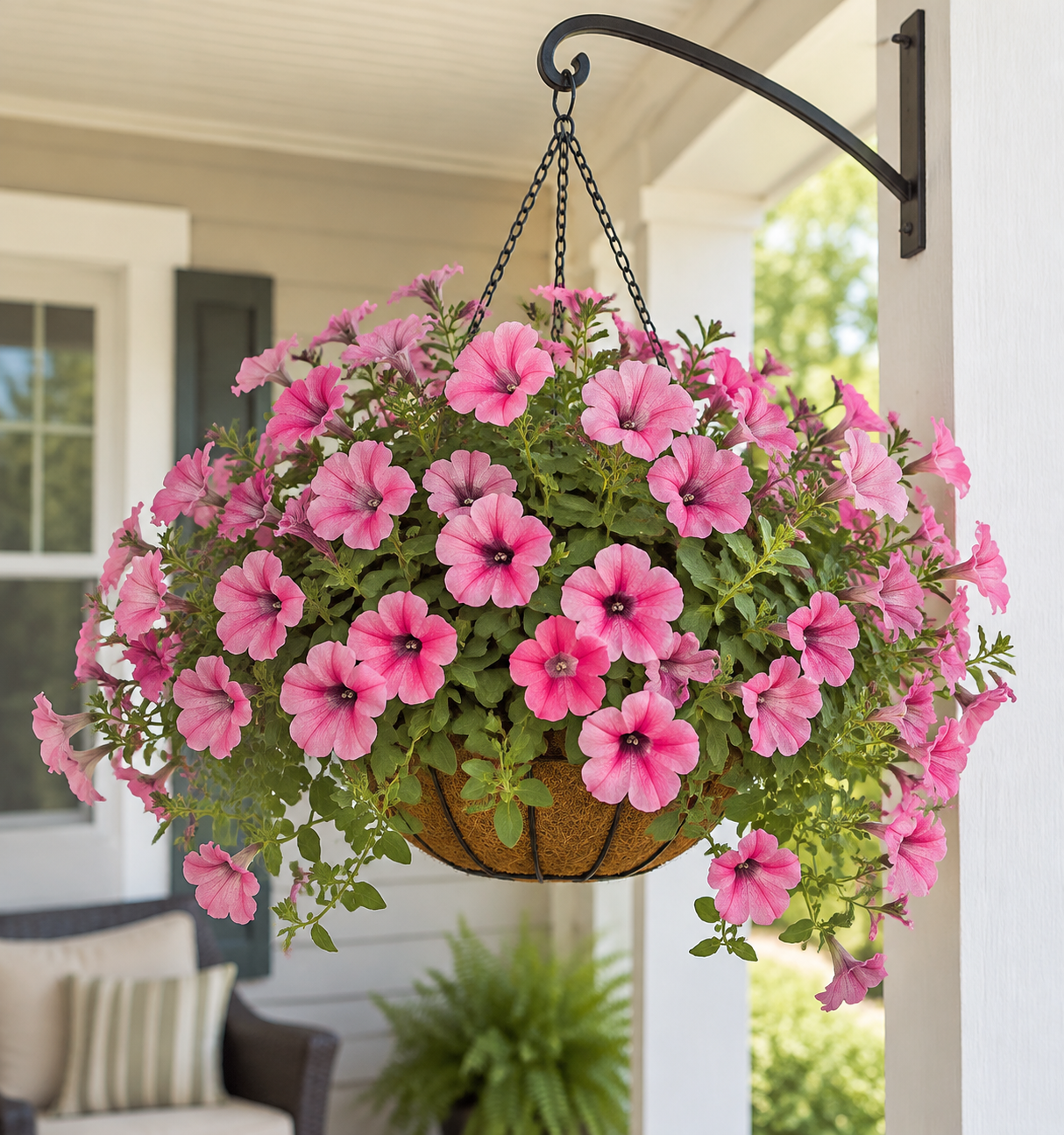
Outdoor artificial flowers ship in three working formats. Pre-potted pieces arrive in a basic nursery pot you drop into your own planter — foam or gravel under the stems keeps them upright, and a topped layer of moss or river stone reads finished. Window-box builds are the strongest use case in the category: a 36-inch box of UV-treated geraniums or petunias installs once and never needs the weekly watering that kills most real window boxes by August. Hanging baskets — trailing pothos, philodendron and ivy at 16 to 42 inches — do the same for porch ceilings and bracket hooks, and they survive the wind that snaps real trailers at the hanger. On build grade: greenery and filler in this collection are specified at the same material grade as the main blooms, and each listing states exactly what ships — pot included or stems only, piece count included, so a "trailing basket, 42-inch" states whether that span is one plant or a set.
The Economics: Outdoor Faux vs. Planting Real Every Season
The outdoor comparison is sharper than the indoor one, because outdoor annuals die every year by design. A real flower window box or porch planter in most US zones means buying six-packs or flats each spring — $40–120 per container per year at 2026 garden-center prices, as of October 2026 — weekly watering all summer, and compost in October. A UV-treated artificial planting at $50–150 installs once; on a covered porch it runs multiple seasons, and the per-season cost drops below the live-planting habit in year two. The trade, stated plainly: no scent, no pollinators, and a texture that reads as botanical from across the yard rather than at arm's length. For second-story window boxes and vacation homes — anywhere watering is the failure mode — the artificial version is not the compromise; it is the version that actually survives. When a piece does fade past its best, the replacement math still favors faux: one $40–60 refresh beats a dead $40–120 flat of real annuals every single year.
Wind, Winter, and the Off-Season
Wind breaks outdoor faux before sun does: check that brackets and hooks are rated above the planted weight, and favor low-profile arrangements on exposed railings. Winter is a choice — in mild zones, evergreen builds stay out year-round; where snow and freeze hit, box the flowers dry in November and re-hang in March, which is also when you rotate anything that has faded. In-season maintenance is the five-minute monthly routine: rinse dust off with a hose on low pressure, wipe grime with a damp cloth, let pieces air-dry in shade, and a two-minute rinse-and-shake in spring resets the look for the season. In extreme summer heat, giving full-sun planters a few weeks under cover simply extends their life — the same instinct you already have for garden cushions.
How to Choose Outdoor Artificial Flowers — Five Decisions
- Grade the exposure first.
Sheltered / partial / full — it decides every later choice.
- Pick the container format.
Pre-potted for planters, box builds for window boxes, trailing sets for baskets.
- Choose colors that age well in your tier.
Saturated colors for sheltered spots; greens and whites where sun is hardest.
- Verify UV treatment and count.
Listings state UV rating and exactly what ships — pot, stems, and piece count.
- Plan the wind and winter routine.
Rated hardware for exposed spots; box dry before freeze.
Frequently Asked Questions
Can artificial flowers really survive outdoors?
Yes — when the right piece goes in the right spot. Sheltered tiers (covered porches, overhang entries) carry any outdoor-safe design for years; partial tiers want UV-treated builds; fully exposed beds and railings call for dense UV-rated pieces with a rotation plan. Every listing here carries a placement tag — covered, partial or full sun — so you can match the flower to the spot instead of gambling on it.
What does UV resistant actually mean for artificial flowers?
It means an ultraviolet inhibitor is compounded into the petal and leaf material during molding, slowing the photochemistry that breaks colorants down. It is in the plastic, not a spray coating, so it does not rub off or wear out in one wash — but neither is it a shield. Treated pieces outlast untreated ones by a wide margin in the same spot, and no artificial flower, treated or not, holds factory color forever in all-day sun. Any listing here that claims a UV rating states it as material spec, not as a lifetime promise.
Can artificial flowers survive outside in full sun?
UV-treated builds handle full sun better than untreated ones, and the honest boundary is: slower, not never. In sheltered spots UV builds keep color for years; in full south- or west-facing exposure, expect the palette to soften within one to two seasons even on treated pieces — greens, whites and creams show it least, saturated reds and pinks show it first. The practical pattern: reserve the boldest colors for covered porches and run sun-hardened palettes on exposed walls, rotating pieces before the fade reads from the street.
Do outdoor artificial flowers look convincing from the street?
From the viewing distances that matter outdoors — across a yard, from the sidewalk, from a passing car — a dense UV build in a real container reads convincingly, which is why the format works for porch and curb staging. Up close, at arm's length, the texture tells the truth, the same as any artificial botanical. The styling that closes the gap: plant in real soil-topped or moss-topped containers, mix heights and a trailing component, and keep the boldest colors where viewers stand farthest away.
How do I keep outdoor artificial flowers from fading?
You slow fading rather than prevent it: put saturated colors in sheltered and partial exposure, favor greens and whites on the harshest walls, rinse dust off once or twice a season (grit accelerates surface breakdown), and rotate pieces between hot and sheltered spots between years. When a piece does fade past its best, the replacement math still favors faux — one $40–60 refresh beats a dead $40–120 flat of real annuals every year.
Can I leave outdoor artificial flowers out all winter?
In mild zones, dense evergreen builds and UV greens stay out year-round without issue. Where hard freeze, snow load or winter wind hits, the better routine is to take the plantings down in November, box them dry, and re-hang in March — cold itself does not hurt the materials, but frozen wind and weeks of low sun continue the fade, and boxed pieces skip both. Either way, a two-minute rinse-and-shake in spring resets the look for the season.
Are outdoor artificial flowers worth it compared to planting real annuals?
Wherever watering is the failure mode — second-story window boxes, vacation homes, full-sun railings that bake — they are worth it outright. Real container annuals cost $40–120 per container per year (2026 garden-center prices, as of October 2026) and die by October; a $50–150 UV build runs multiple seasons in sheltered exposure, so per-season cost crosses below live plantings in year two. The trade is real: no scent, no pollinators, no arm's-length texture. For the porch you see every day, many households run both — real pots at the door, faux where the hose cannot reach.
How do I clean outdoor artificial flowers?
Once a month, rinse dust off with a garden hose on low pressure and let the piece air-dry in shade. For pollen or grime, wipe leaves with a damp cloth and mild soap. Avoid harsh cleaners and pressure washers. A five-minute monthly routine keeps colors reading clearly from the curb — our full cleaning guide walks through each flower type.