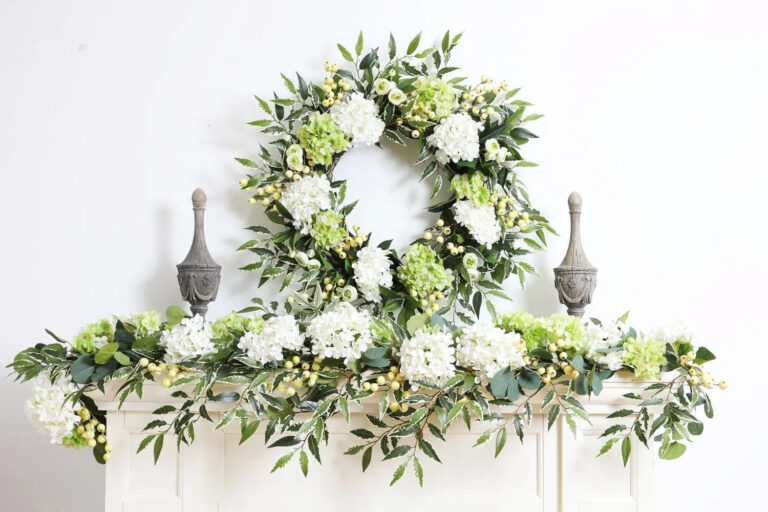
A spring garland is the season's botanical strand — cherry blossom, tulips, lavender, forsythia, ranunculus and fresh green eucalyptus on a wired spine — sold by measured length for mantels, stair rails, entry tables and spring weddings. This page covers the March-through-May builds in 6, 9 and 12 foot sections: the flowered runs that carry the season, the greenery bases that carry every year after, and where the strand meets the spring wedding calendar.
Quick answer: The spring line splits by job: greenery runs (eucalyptus, ivy, fern) are the multi-year base, flowered runs (blossom, tulip, ranunculus) are the season's statement layered on top — or solo, for two months of color. Buy at 110-120 percent of the run: a 6-foot mantel takes 7-9 feet, a stair rail takes its run × 1.5. Market bands as of October 2026, USD: greenery runs $25-60 per 9 feet, flowered builds $50-130 — with the March search peak (9,900 monthly lookups against a 2,400 baseline) and the spring-wedding calendar stacking on the same stock.
Spring Garlands, Explained
What a spring garland is
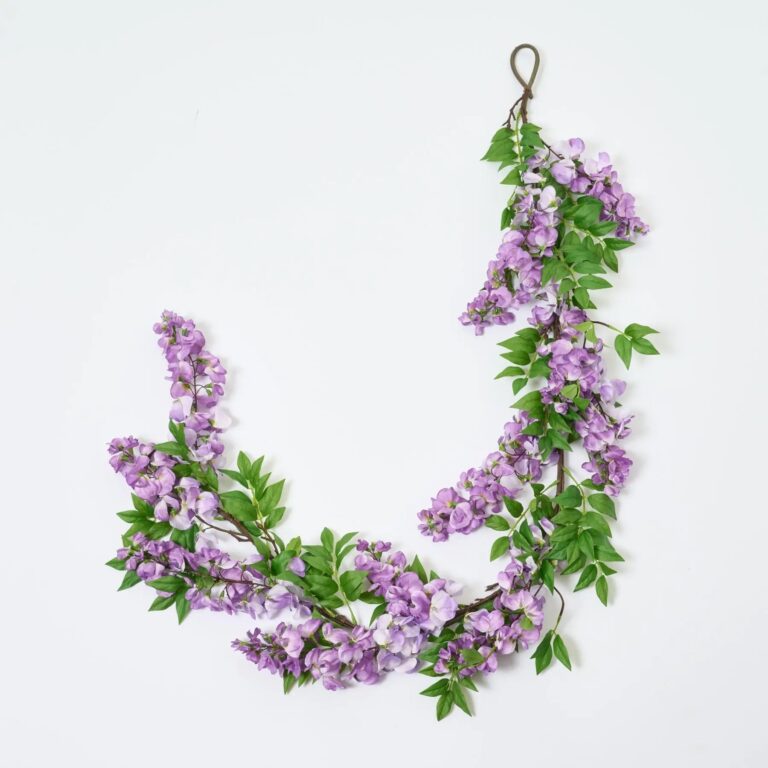
A spring garland is the wired-spine strand dressed in the season's vocabulary: cherry blossom sprays in soft pink, tulips in blush and butter yellow, lavender and hyacinth in the purple tones, forsythia in yellow, ranunculus in peach and cream, all over fresh-tone greenery — eucalyptus, ivy, ruscus, fern. It is the longest-working seasonal strand in the line: where an Easter build reads for two weeks and a Thanksgiving strand for one, the spring botanical run carries from the March thaw to Memorial Day, ten weeks of the year's most-welcomed decorating. The searches track the calendar rather than a holiday — "spring garlands" runs 2,400 lookups a month and peaks at 9,900 in March as the season opens, without a spike-and-crash pattern anywhere in it.
Every listing states its measured length — 6, 9 and 12 feet are the standard sections — and the photo shows exactly one garland unless the title says a set.
Greenery base, flowered statement: the two-layer spring
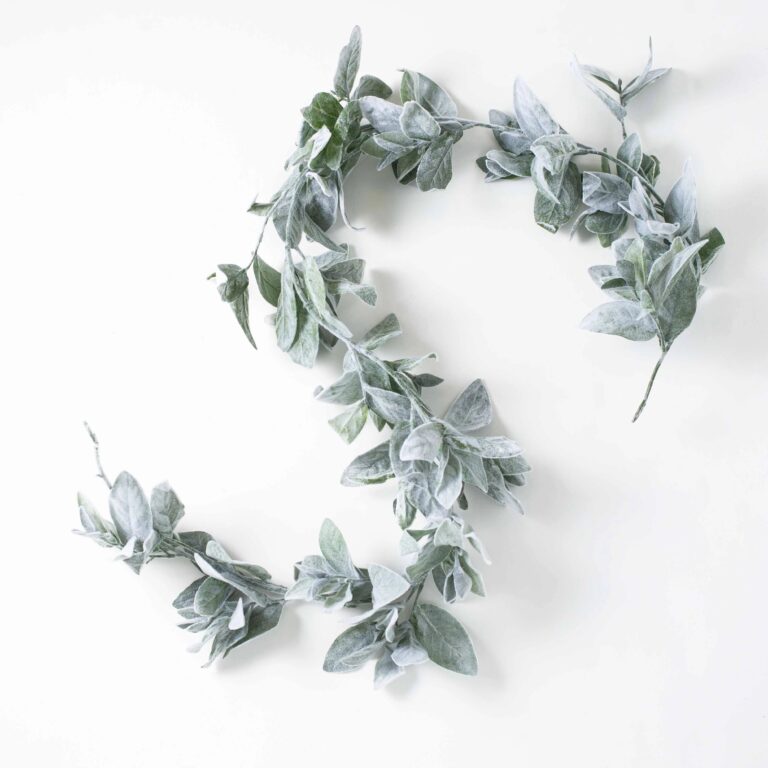
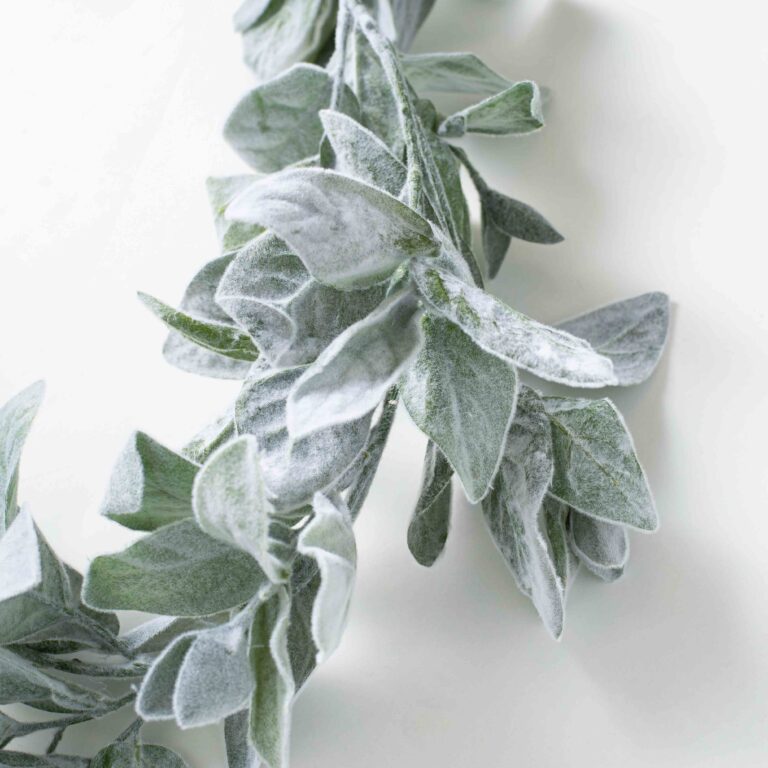
The spring line works best bought as two layers with different lifespans. The greenery run — seeded eucalyptus in sage, ivy, ruscus — is the multi-year base: it reads as spring against the dark woods of a winter room, carries summer and fall restyles on top of it, and boxes and returns for five seasons and more. The flowered run — blossom, tulip, ranunculus — is the statement: two to three seasons of peak color before the silk petals tire, and the layer that defines the room as spring. Bought as a pair, the base run takes the length arithmetic seriously (it is the permanent install) and the flowered layer can be shorter, dressing the visible swag crowns rather than the whole run. Bought solo, a flowered garland carries the season alone and boxes alone — which works, and costs more per visible year than the layered approach.
The spring builds, side by side
Build
What's on it
Best placement
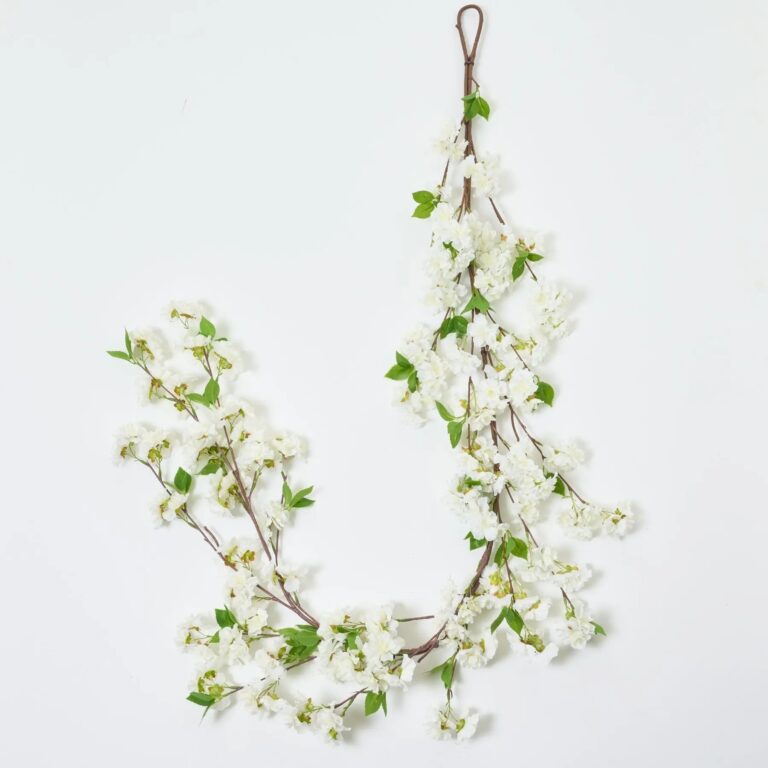
Cherry blossom
Soft-pink blossom sprays on branching stems
Mantels and entry tables — the airy statement
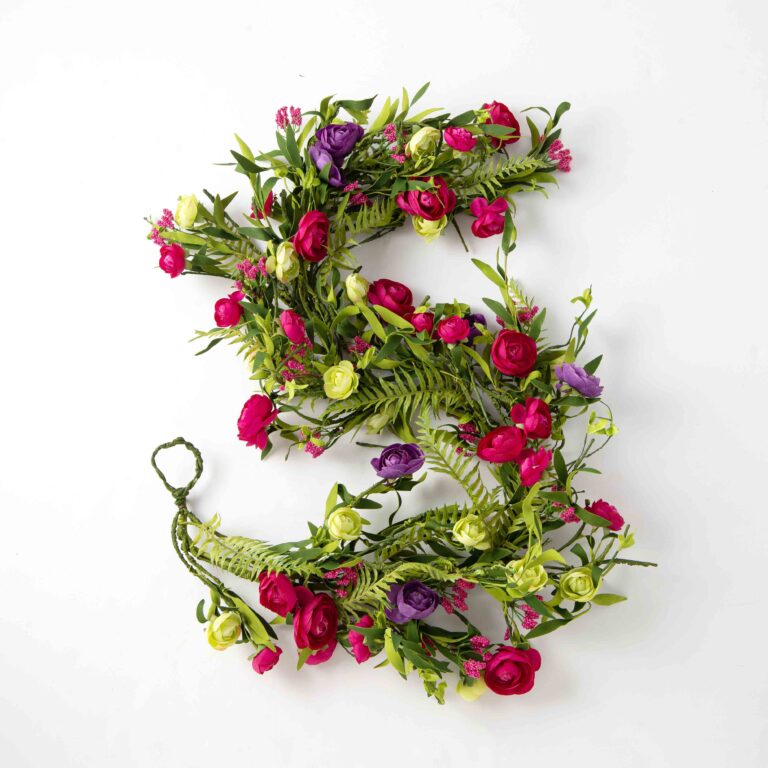
Tulip run
Blush, yellow, lavender tulip heads on greenery
Brunch tables and spring mantels — full color
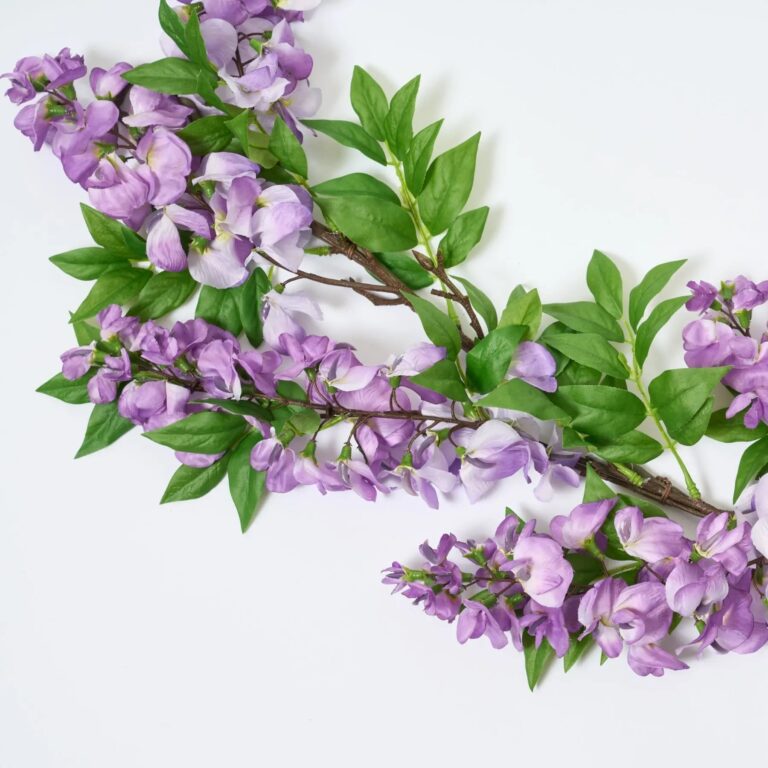
Lavender / purple
Lavender stems or hyacinth tones, dense and low
Kitchen shelves and stair rails — the scent-memory look
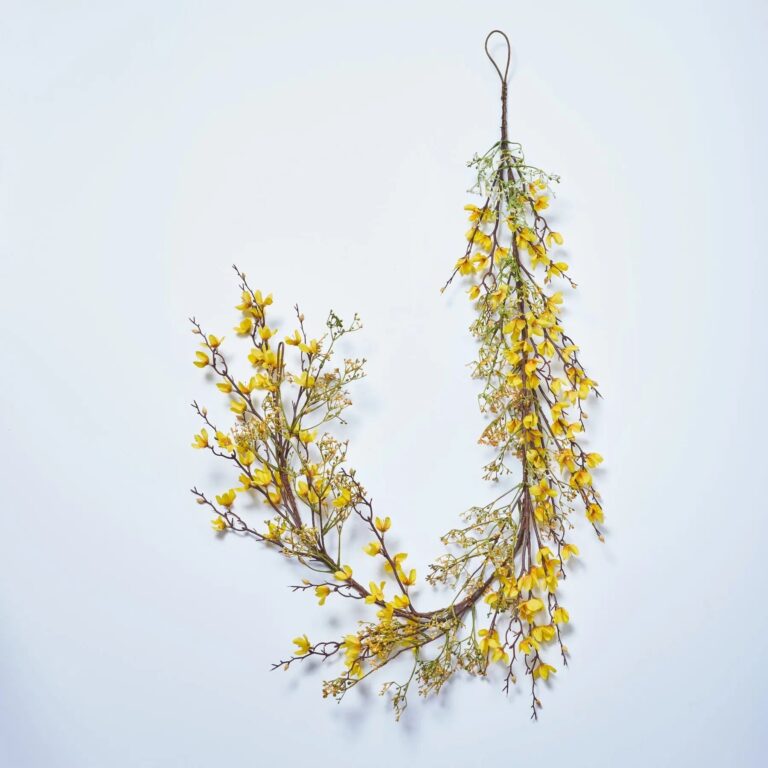
Forsythia / yellow branch
Bright-yellow blooms on bare stems
Early March — yellow before anything blooms
Seeded eucalyptus base
Sage foliage with seed pods on a wired spine
Everywhere, every season — the multi-year base layer
Where spring garlands go
The season's placements follow the light. Mantels first — width plus 1 to 2 feet of drape per side, the blossom runs living there against winter-dark wood. Entry tables and consoles — 6-foot runs, layered with a vase of the same blossom. Stair rails — run × 1.5 for the spiral, 15 feet on a 10-foot rail from two overlapped 9-foot pieces, with lavender and tulip builds reading warmer on rails than the airy blossom does. Windows — 6-foot swags wired to sashes with removable hooks, catching the first real light of the year. And kitchens — shelf-edge runs in lavender and green, the placement that survives longest because it never fights the season's traffic. The spring line also crosses into the wedding calendar: greenery and blossom strands are the building blocks of head-table runs and arch swags, and the garland collection's wedding program uses the same 6/9/12-foot sections brides measure tables with.
Color: the spring palette has a discipline too
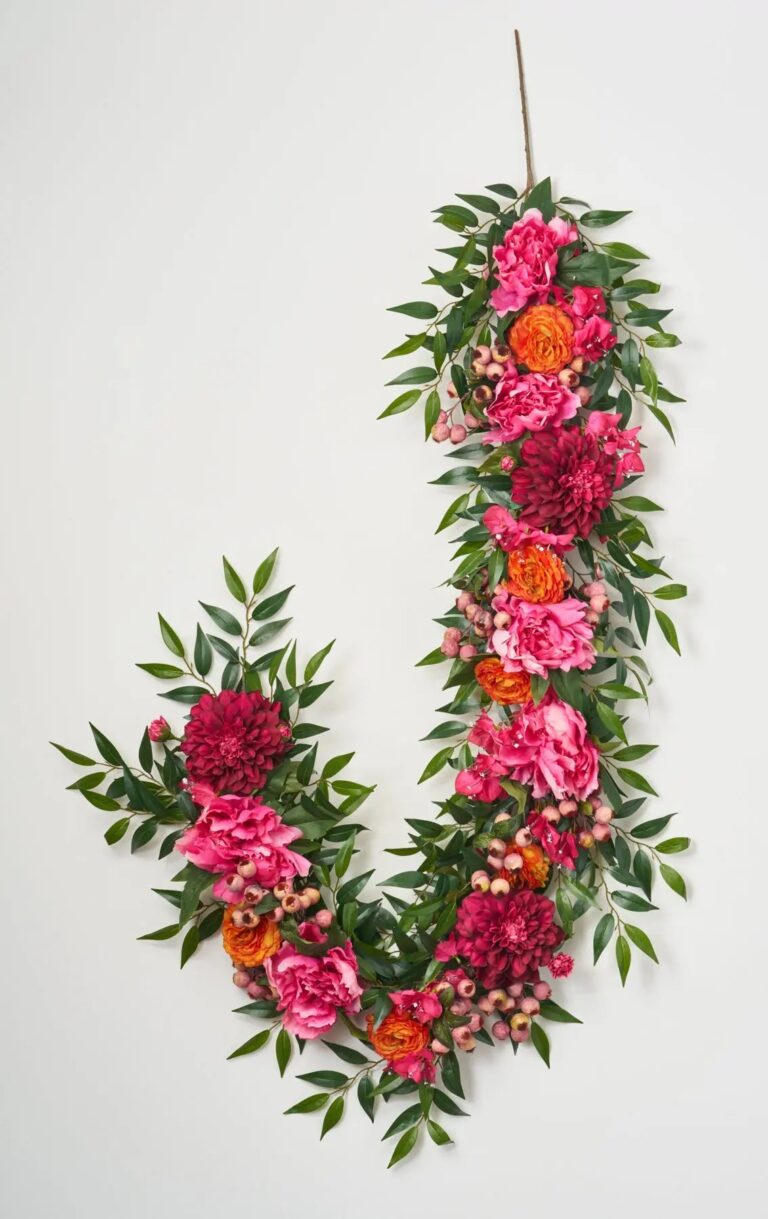
Spring's palette runs blush, butter yellow, lavender, peach and white over fresh sage green — and its failure mode is the same as every seasonal palette: too many tones on one strand read as a catalog and not as a house. Two tones plus green is the working rule (blush blossom and white; lavender and cream; yellow forsythia alone against green). Silk dye lots vary slightly by batch — pastels most visibly — and the listings name colors the way they ship rather than promising a matched swatch; order a garland and its companion pieces in one checkout and the whole room ships one batch. That matters more in spring than any other season, because the palette is the point: two slightly different blushes on the same mantel read as a mistake in a way two rusts never quite do.
What the market charges, and the spring stack
The bands as of October 2026, USD: greenery runs $25-60 per 9 feet; flowered spring builds $50-130; 12-foot sections upward from the same bands. Spring is also the wedding-adjacent season, and the flowered builds share stock and price points with the wedding-garland program — 6-foot eucalyptus wedding garlands run in the mid-$80s at the florist-supply end of the market (as of this writing), which sets a real ceiling on what a retail spring strand can charge and a real floor on quality. The timing stack matters twice over: the March search peak (9,900 lookups) and the spring-wedding buying window land together, and the blossom builds — always the first to sell out — thin out by early April, weeks before the season's decorating actually ends.
After the season: the long box
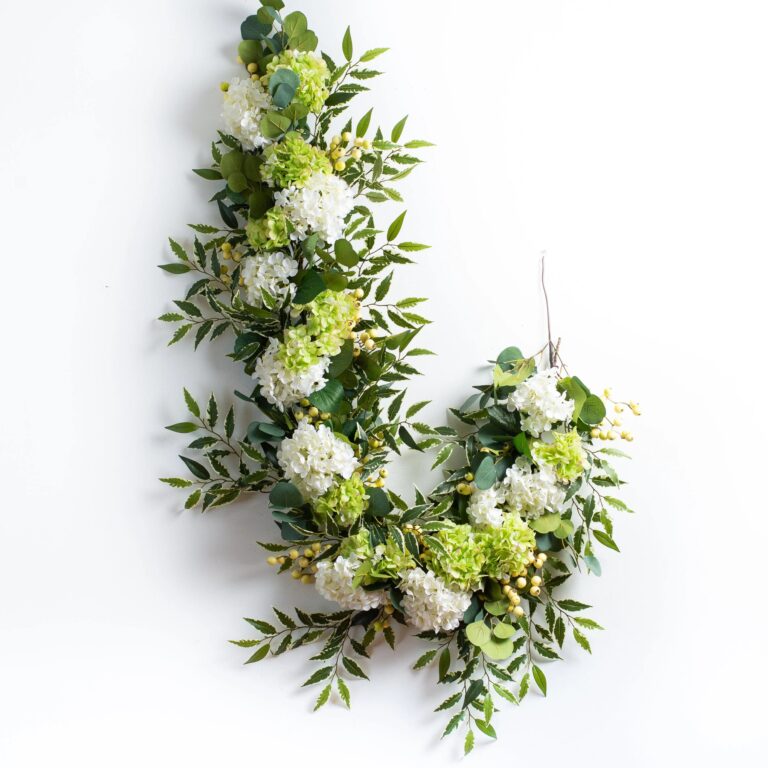
Memorial Day is the working end of the spring run. The flowered layer boxes dry, coiled loose, cool room — silk petals crack under tight winding, and two or three seasons is the honest working life before the blooms tire. The greenery base stays up in most houses and restyles straight into summer: eucalyptus and ivy read June as easily as April, and the summer garlands line — hydrangea, daisy and greenery builds — layers onto the same base on the same anchors. Households that run the full calendar change the flowered layer three times a year and buy the base once.
How to Choose a Spring Garland
Buy the base once, the statement per season.
A seeded-eucalyptus or ivy run is the multi-year install; the blossom or tulip layer is the two-season statement that defines the room as spring. The layered approach costs less per visible year than a solo flowered strand.
Run the placement arithmetic.
Mantel width plus 1-2 feet per side; stair rail run × 1.5; console and kitchen-shelf runs 6 feet; window swags 6 feet on removable hooks. Buy at 110-120 percent of the measured run.
Hold the palette to two tones plus green.
Blush and white, lavender and cream, or yellow alone. Pastel dye lots vary slightly by batch — one checkout for the whole room keeps the batch matched.
Match bloom to placement honestly.
Blossom reads airy on mantels and thin on rails; tulip and lavender read warm and full on rails and shelves; forsythia carries early March alone. Density-per-foot matters most on stairs, where the strand is seen from below.
Buy by early April.
The March peak (9,900 lookups) plus the spring-wedding window clear the blossom builds first. Verify stated length and piece count — one garland per photo unless the title says a set.
Frequently Asked Questions
How long should a spring garland be?
By placement: a mantel takes its width plus 1-2 feet of drape per side (a 6-foot mantel takes 7-9 feet), a stair rail takes its run × 1.5 (a 10-foot rail needs about 15 feet, built from two overlapped 9-foot pieces), console tables and kitchen shelves take 6 feet, and window swags take 6 feet wired to the sash. Buy at 110-120 percent of the measured run everywhere — the surplus hides joints on long runs and restyles somewhere else when the run is short.
What is the difference between a spring garland and an Easter garland?
Lifespan and vocabulary. The spring garland is the botanical run — blossom, tulip, lavender, forsythia on greenery — carrying March through May. The Easter garland carries the holiday pieces — speckled eggs, nests, pastel eggs — and is a two-week install around the Sunday. The efficient version is the spring run with clip-on Easter accents: one strand, both seasons, and the accents box labeled for next year.
When should I put up a spring garland?
Early March, as the light returns rather than as any holiday dictates — forsythia and yellow builds first (yellow reads before anything blooms outdoors), the pastel botanicals through the month, and the full layered look by April. The strand carries to Memorial Day, which makes it the longest-working seasonal garland in the line; the same install outlives the Easter accents by five weeks. The buying peak (9,900 monthly lookups) lands in March with the season's opening.
Can spring garlands go outside?
Covered porches and entries, yes — spring is the gentlest exposure window of the year, and a strand on a covered porch runs the whole season. Open exposure follows the line-wide honest rule: sustained direct sun fades dyed silk over a season or two — pastels show it first — slower with UV-stable grades, not never, and spring storms argue for zip-tie anchors that release fast. For fully exposed rails and posts through a whole season, the UV-stable outdoor builds are the right grade, and the outdoor garlands page carries that line in full.
Do spring garlands work for weddings?
They are the same construction the wedding program uses — greenery and blossom strands in 6, 9 and 12 foot sections for head tables, aisle chairs and arch swags. The practical differences are grade and timing: wedding strands get installed days early (silk holds where fresh garland wilts by morning), the colorway matching matters more because bouquets and arch pieces join the same room, and ordering garlands, bouquets and arch swags in one checkout keeps the whole palette on one dye batch. The wedding-garland format — plain eucalyptus runs in the mid-$80s for 6 feet at the florist-supply end — also sets the quality floor the retail spring line is built to clear.
How much does a spring garland cost?
Market bands as of October 2026, USD: greenery runs $25-60 per 9 feet; flowered spring builds $50-130; 12-foot sections upward from the same bands. The layered strategy prices out best over time — a $25-60 base run working five-plus seasons plus a $50-130 flowered layer renewed every two or three springs reads cheaper per year than re-buying a solo flowered strand, and both beat fresh spring garland, which holds a week indoors against a ten-week season.
How do I make a spring garland look fuller?
The same two moves that work on every strand, tuned for spring's airy builds. Fluff in alternating directions — spring foliage ships flat against the spine, and blossom sprays especially need each stem bent out on its own line. Then layer for density where it counts: a blossom or tulip layer laid loose over a eucalyptus base reads twice as full as either strand alone, with the base's green filling every gap the airy statement leaves. On stairs, where the strand is seen from below, the base layer is not optional — an airy spring build alone shows bare spine from the underside.
How do I store a spring garland?
Box dry, coiled loose — tight winding cracks silk petals, and the airy spring builds are the most breakable in the line — in its original bag or a tote, cool room, no weight on top. Greenery bases box for five seasons and more; flowered layers have an honest working life of two or three springs before the blooms tire, which the layered buying strategy is designed around. Re-fluff takes ninety seconds the following March; nothing needs water, and the only scheduled failure is the flowered layer's retirement.