
Red Artificial Flowers


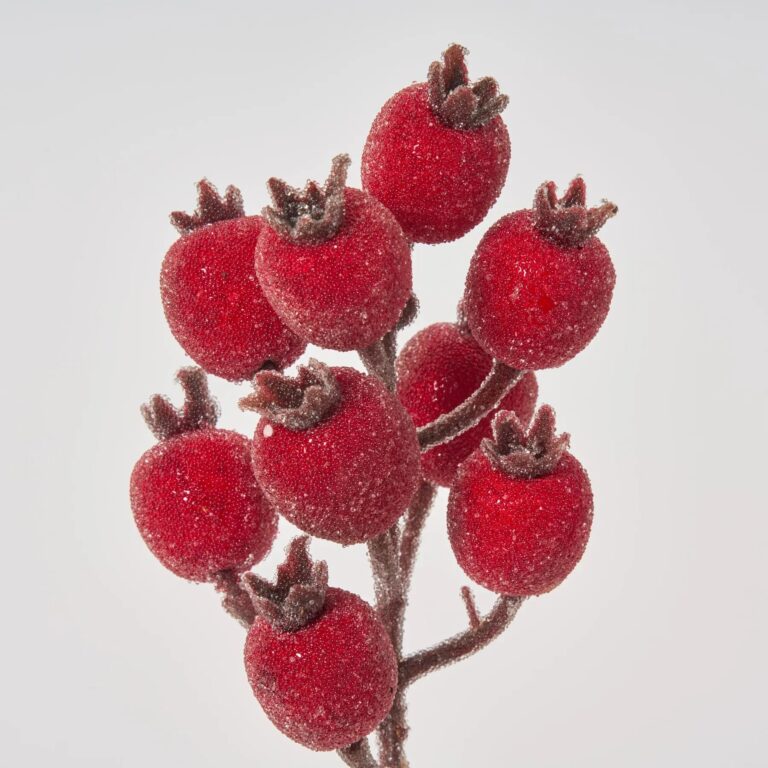
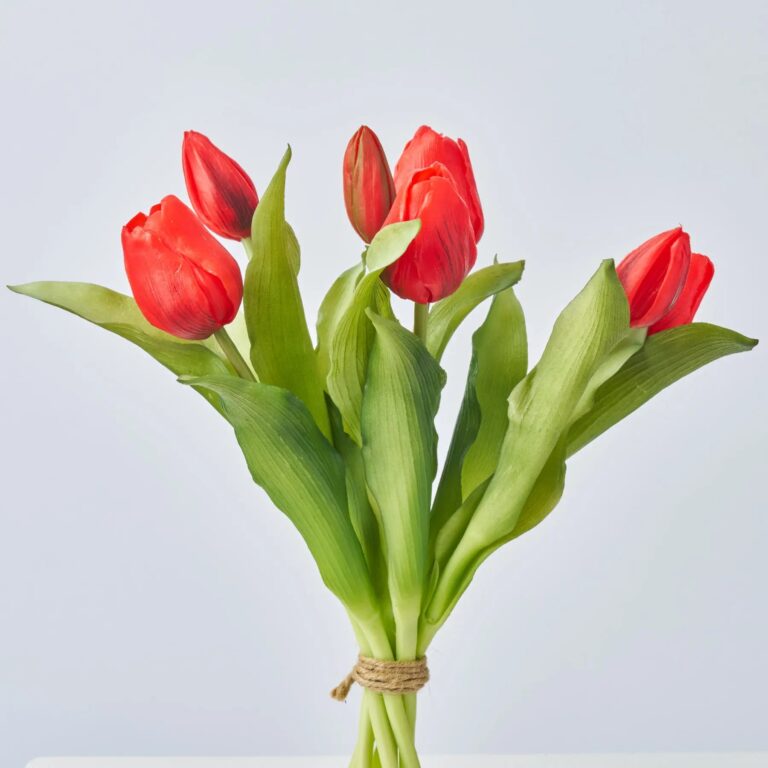
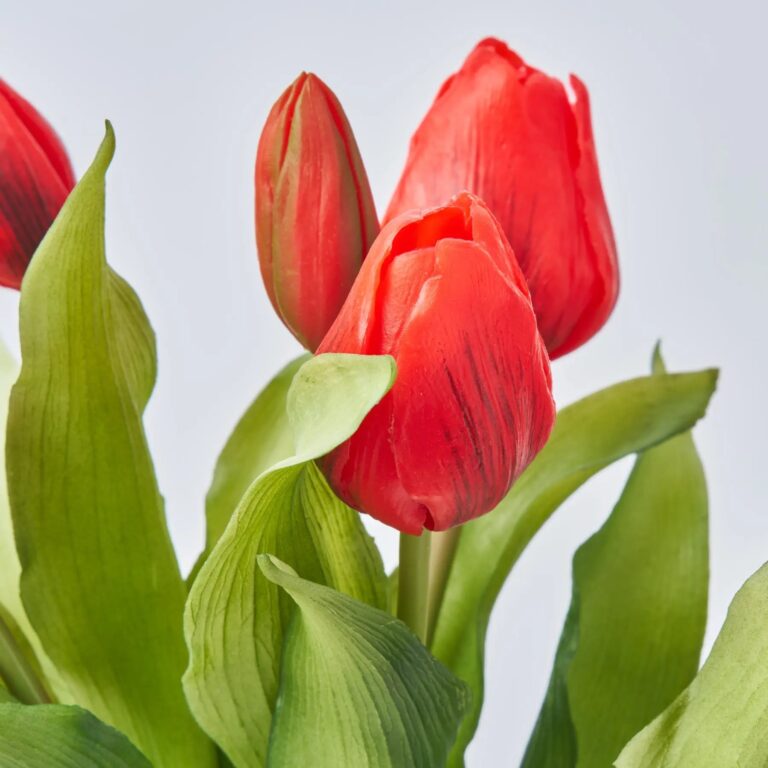


Red is the loudest color in flowers — one burgundy arrangement changes a whole room's register, and nothing else carries December and February the way red stems do. This collection holds all three of its jobs: holiday and berry pieces, romantic red-and-white work, and deep red statements that live out year-round. Bloom, greenery and stem materials are stated on every card.
Quick answer: Red runs three jobs: seasonal berry work that boxes flat after December, red-and-white romantic builds, and deep red statements that live out all year. Stems 18 to 24 inches from 13 USD, finished arrangements 40 to 180. Red punishes vagueness — one burgundy arrangement carries a room; scattered red reads busy.
The 30-Second Red Pick
- Start here: pick the job — holiday and berry work is seasonal and boxed after, red-and-white reads romantic, deep red statements live out all year.
- Materials per piece: fabric, PE-film or latex-touch petals, wired stems — stated bloom, greenery and stem separately on every card.
- Heights: stems 18–24 in for your own vases; potted pieces 8–14 in; finished arrangements 10–20 in — exact H×W per listing.
- Price band: single stems from $13, potted pieces $29–58, finished arrangements $40–180; free US shipping over $200.
Why red, and where it works hardest
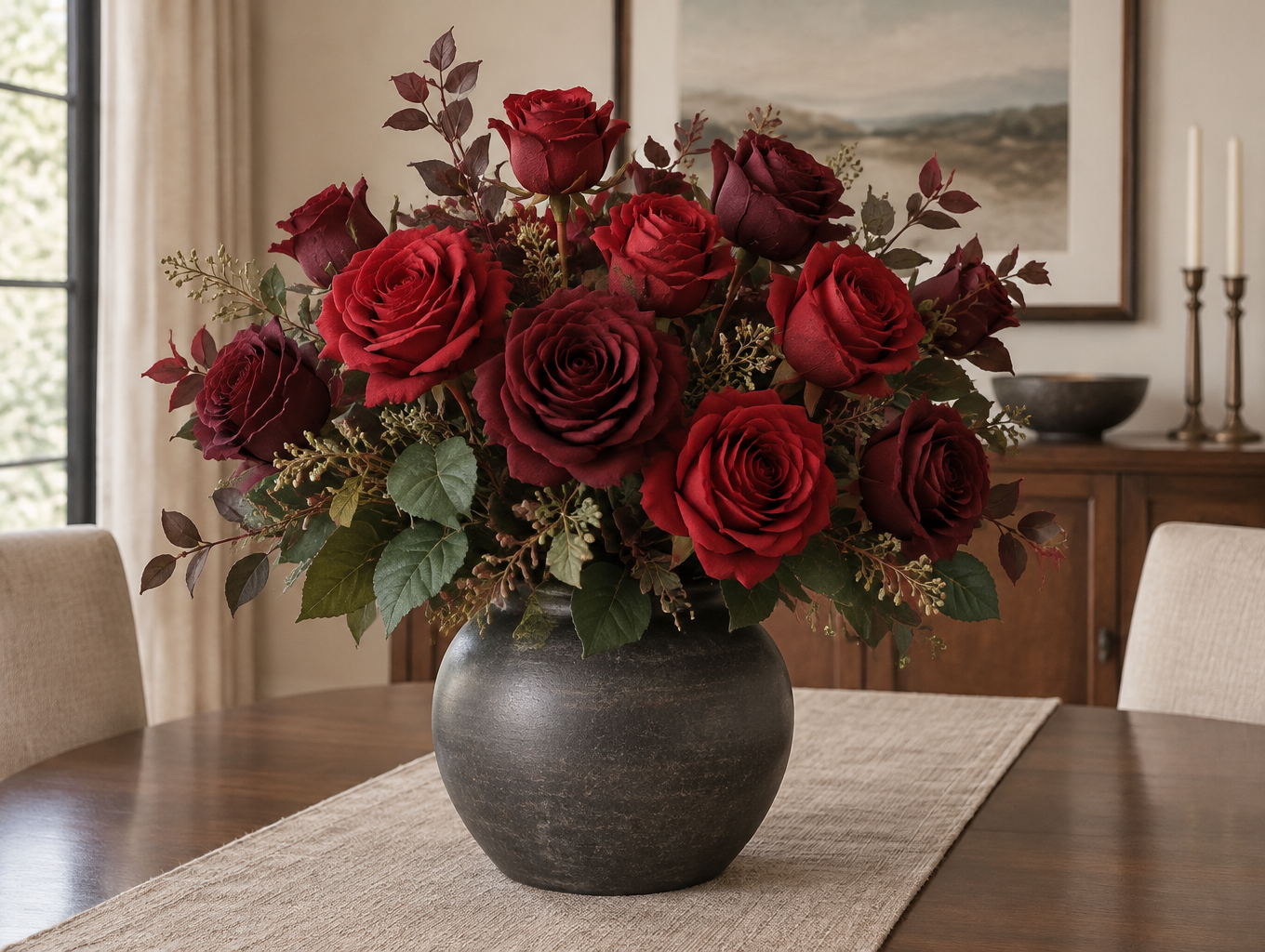
Red is the highest-volume decision in flower color — it pulls attention first, dates a room to a season fastest, and rewards being chosen deliberately rather than defaulted to. Its two calendar peaks are structural: December (berries, red-and-green, everything boxed and reused) and February (romantic red-and-white at close range). The rest of the year belongs to the deep end — burgundy and wine tones, which behave like a neutral's opposite: one deliberate statement in a cream or gold room, and nothing else competing with it.
The three jobs the collection holds, and when each works:
How to Choose Red Faux Flowers
Four decisions — red punishes vagueness more than any other color, so the job comes first.
- How much red?
Red earns its keep as a single deliberate statement — one burgundy arrangement carries a room; scattered small reds read busy. If the room needs red in multiples, deepen to burgundy, which tolerates repetition far better than bright red.
- What room is it for?
Living and dining rooms take deep statements; February and December work pulls the seasonal groups; entry consoles carry a red-and-white piece year-round without shouting. Red against grey and cream reads current; red against warm wood reads traditional.
- How close will people stand?
Deep reds hide petal texture well at distance. February pieces — held, gifted, close-range — reward the latex-touch line, whose no-water care also suits hand-tied work.
- Daylight or lamplight?
Red is the most lighting-stable flower color — its depth barely shifts between daylight and warm lamps, which is why evening rooms trust it. Bright reds deepen slightly under warm light; burgundy holds almost exactly. Judge from either photo on the card.
Frequently Asked Questions
What do red flowers mean in home decor?
Red reads as energy, romance and occasion — the highest-intensity choice in flower color, used where a room should feel deliberate rather than merely finished. Decorators treat bright red as seasonal and romantic (December, February, dining tables), and the deep end — burgundy and wine — as a year-round statement color that anchors cream and gold interiors. Red's meaning associations are the strongest in the flower lexicon; they are also the easiest to steer by choosing depth.
What colors go well with red artificial flowers?
Red with cream is the year-round classic — the pairing that lets a red statement read rich instead of loud. Red with white is the romantic register; red with green is December's own combination (the holiday group carries it pre-built); burgundy with gold metallics is the formal route. The pairing to avoid is bright red against orange or pink — neighboring warm colors that merge into noise.
What are red artificial flowers made of?
Three petal families appear across this collection — polyester-blend fabric, PE film and latex-touch — and every product card states which, for blooms, greenery and stems separately. Stems are wired, so a bend holds its shape. Deep reds are the most forgiving at close range; bright reds show petal sheen first, and the card's close-up photography shows the finish before ordering.
How do I keep red artificial flowers clean?
Dust weekly with a soft brush; deeper clean every few months with a 50/50 water-and-vinegar mist on a cloth — but keep liquid away from latex-touch petals and never soak finished pieces with wired stems. Deep reds hide dust; berry sprays collect it in the crevices — the brush does the work there. Our cleaning guide covers each material.
How do I use red flowers for the holidays without buying new ones each year?
That is faux's structural advantage over the December fresh-wreath-and-garland habit: buy once, box dry after the season, reuse. The holiday group here is built for that cycle — berry sprays and red-and-evergreen pieces that store flat and re-fluff in minutes, no needle drop, no reorder. Restyle the same pieces between years: red-and-green for December, the same berry stems bare against cream for a winter table through January. Fall and holiday wreath lines carry the door work.