
Loose Flower Stems

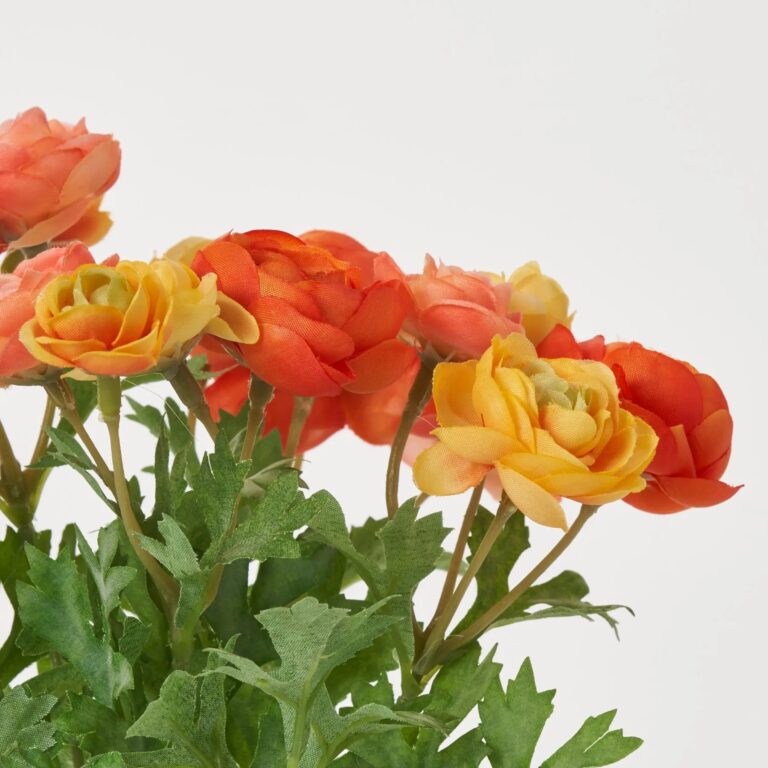
10″ Faux Ranunculus Bouquet – Pink
Price range: $15.00 through $29.00Faux ranunculus bouquet. Measures 10″ tall. Built for wedding work, bridesmaid sets, and everyday vases.

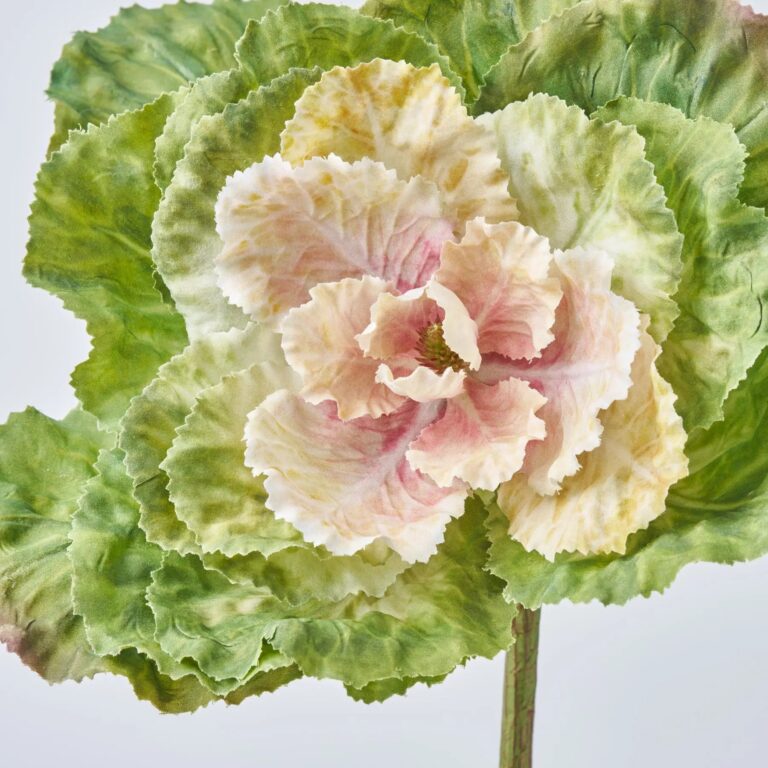
10″ Faux Stem – Green
$25.00Faux stem. Measures 10″ long. Perfect for filling vases, wreaths, and seasonal arrangements.

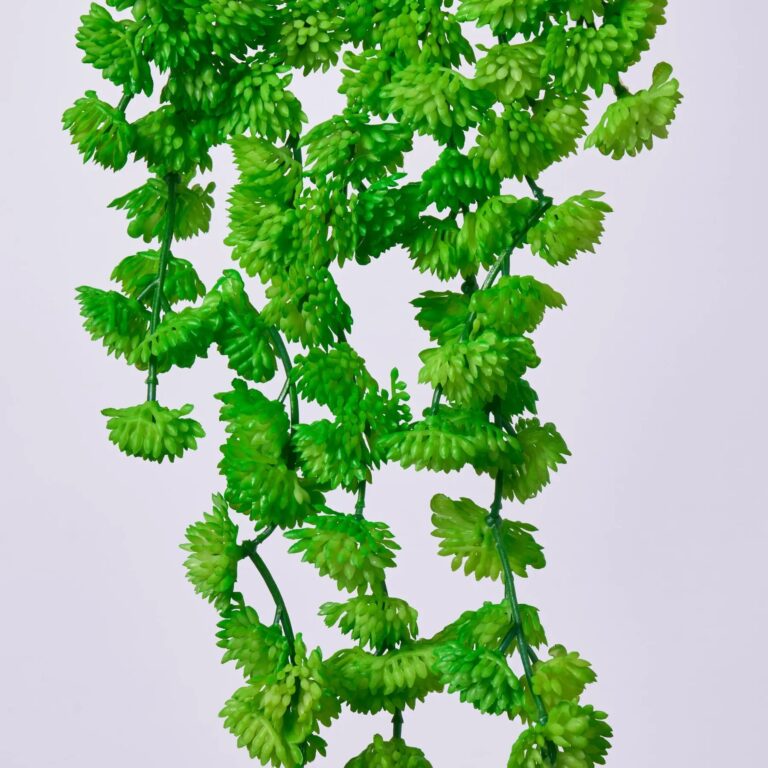
10″ Real Touch Sedum & Vine Spray – Green
$19.00Sedum & vine spray in green. Measures 10″ long. Wired stems shape and cut easily. A no-fuss way to keep vases full year-round.
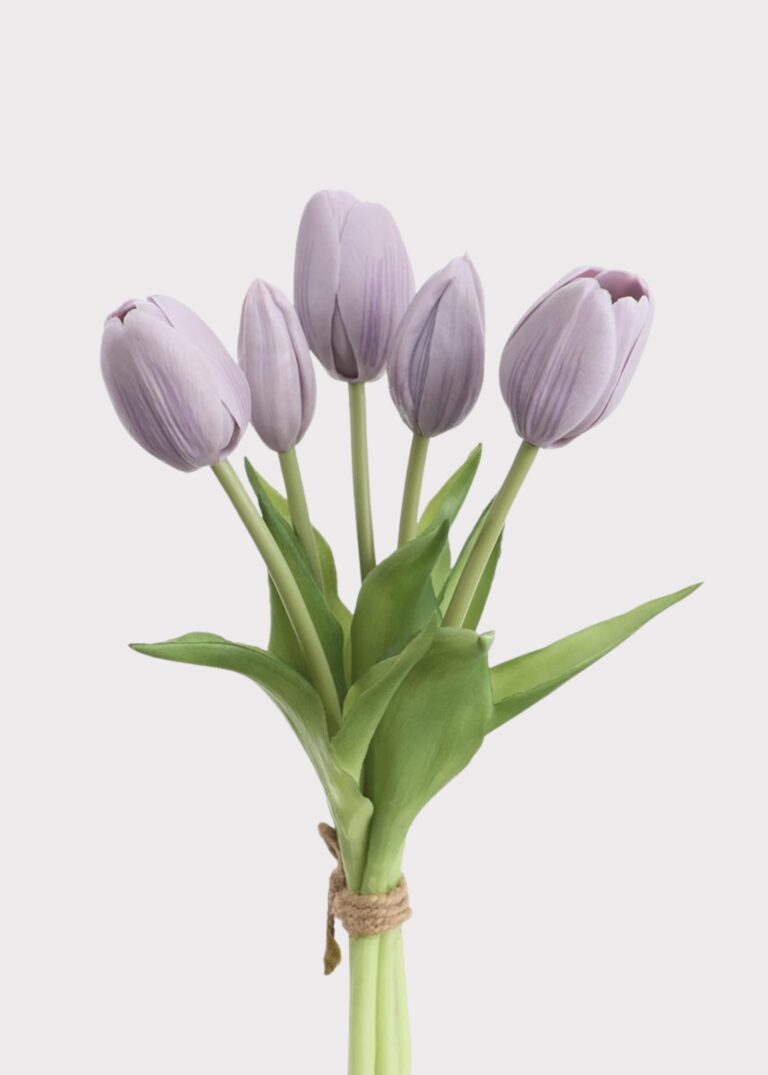
10″ Real Touch Tulip & Lavender Stem – Lavender
$14.00Tulip & lavender stem in lavender. Measures 10″ long. Sold as a set of 5. Mix it with other botanicals for a full, layered arrangement.

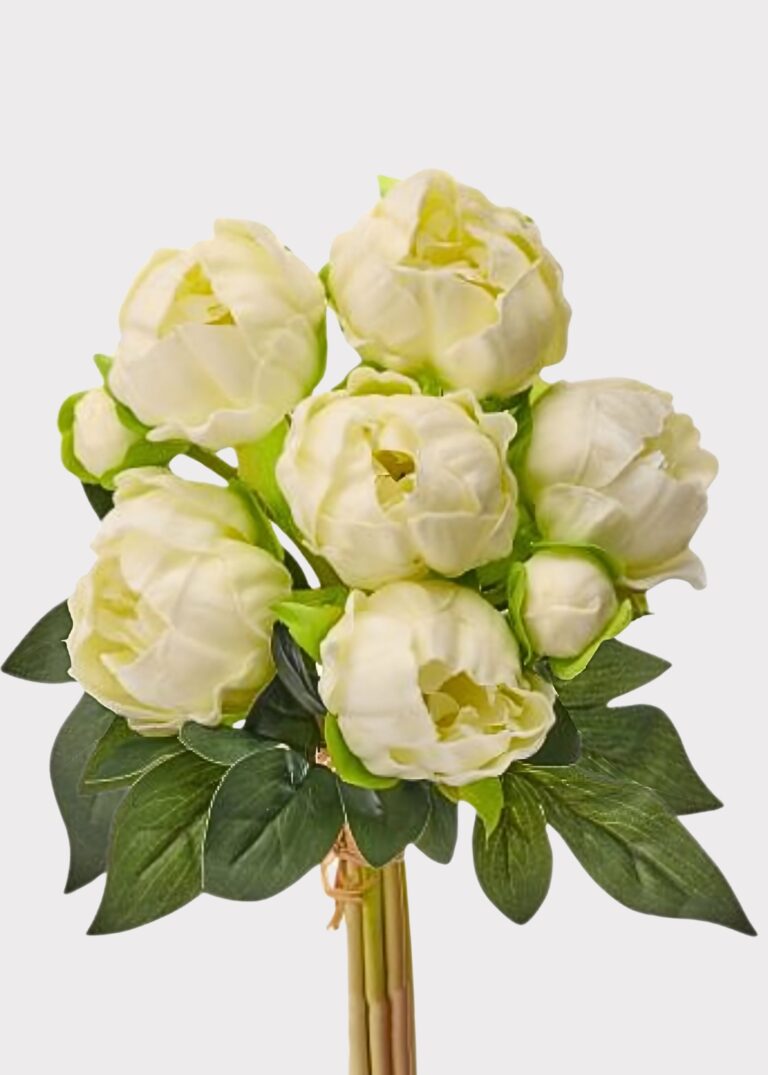
11″ Real Touch Peony Stem – Cream
$32.00Peony stem in cream. Measures 11″ long. Sold as a set of 8. Perfect for filling vases, wreaths, and seasonal arrangements.

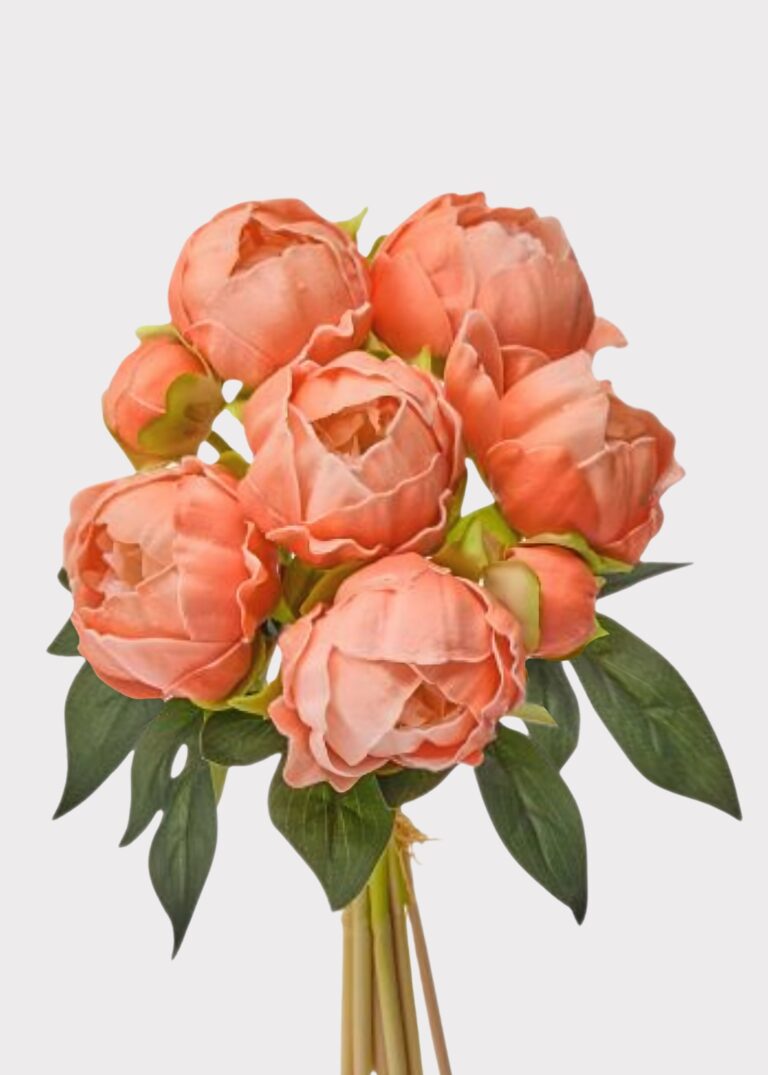
11″ Real Touch Peony Stem – Peach
$32.00Peony stem in peach. Measures 11″ long. Sold as a set of 8. Drop it into a table centerpiece or mantel display for instant texture.

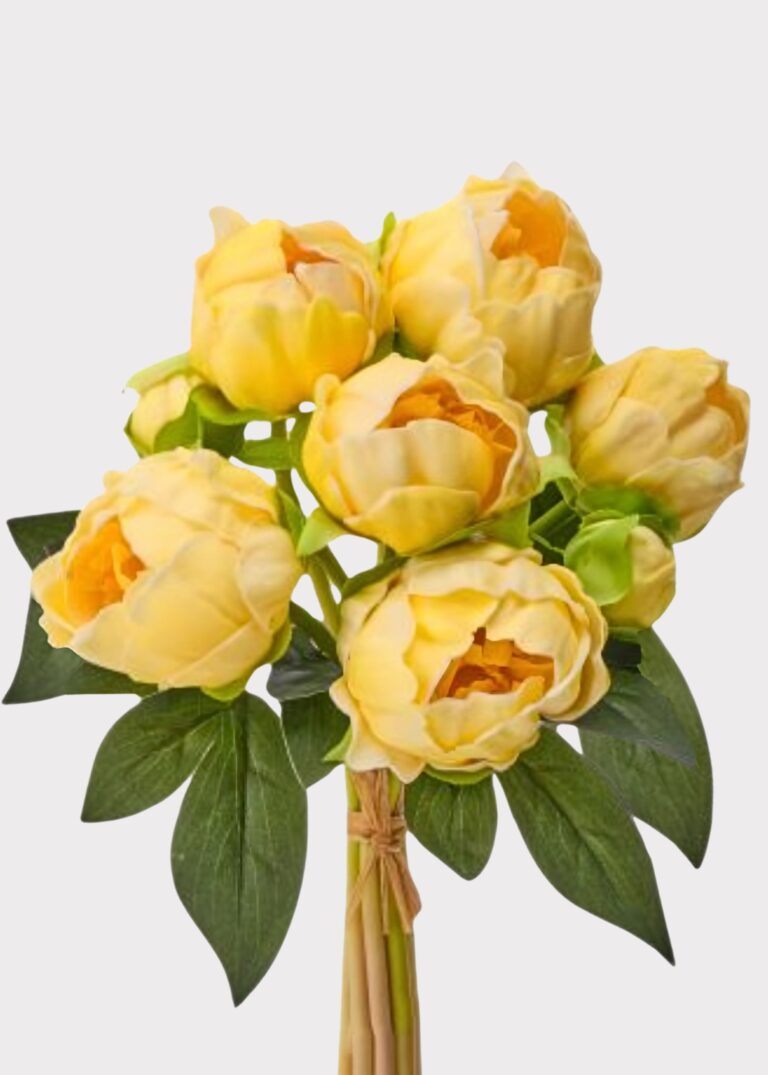
11″ Real Touch Peony Stem – Yellow
$28.00Peony stem in yellow. Measures 11″ long. Sold as a set of 8. Perfect for filling vases, wreaths, and seasonal arrangements.
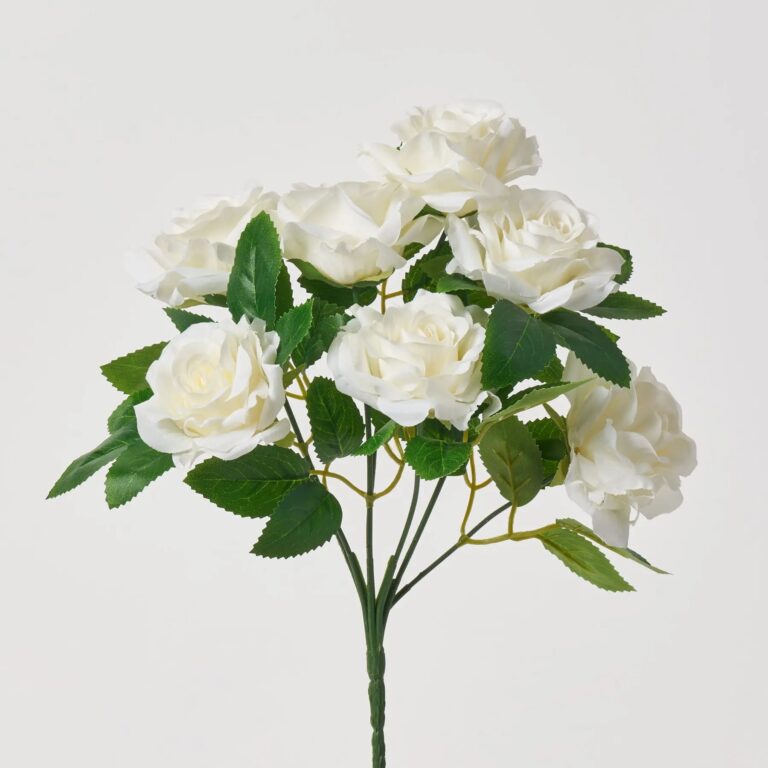

11″ Silk Rose Bouquet – White
Price range: $13.00 through $15.00Silk rose bouquet. Measures 11″ tall. Built for wedding work, bridesmaid sets, and everyday vases.


12″ Faux Daffodil Bouquet – White
$26.00Faux daffodil bouquet. Measures 12″ tall. Built for wedding work, bridesmaid sets, and everyday vases.
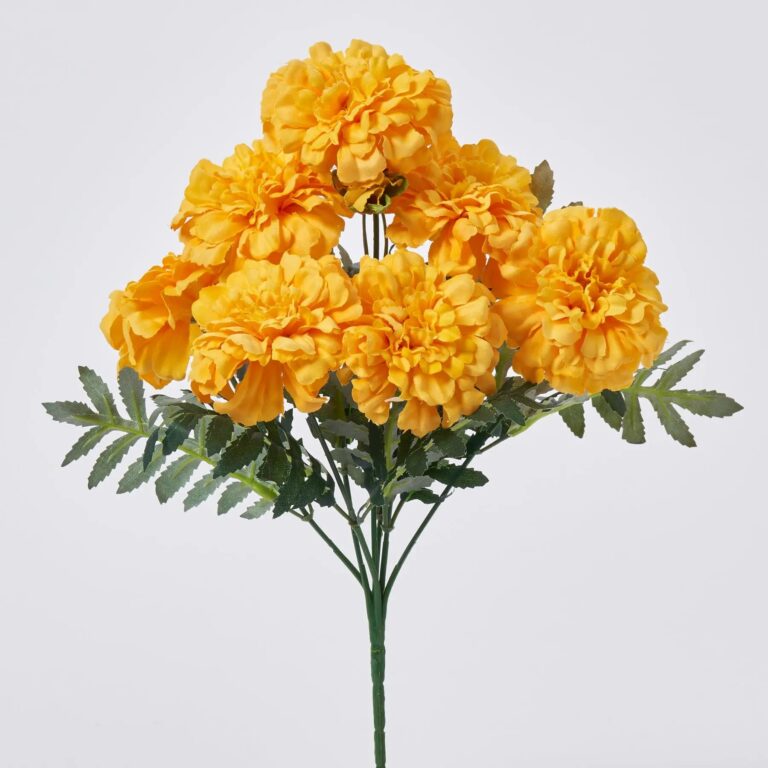
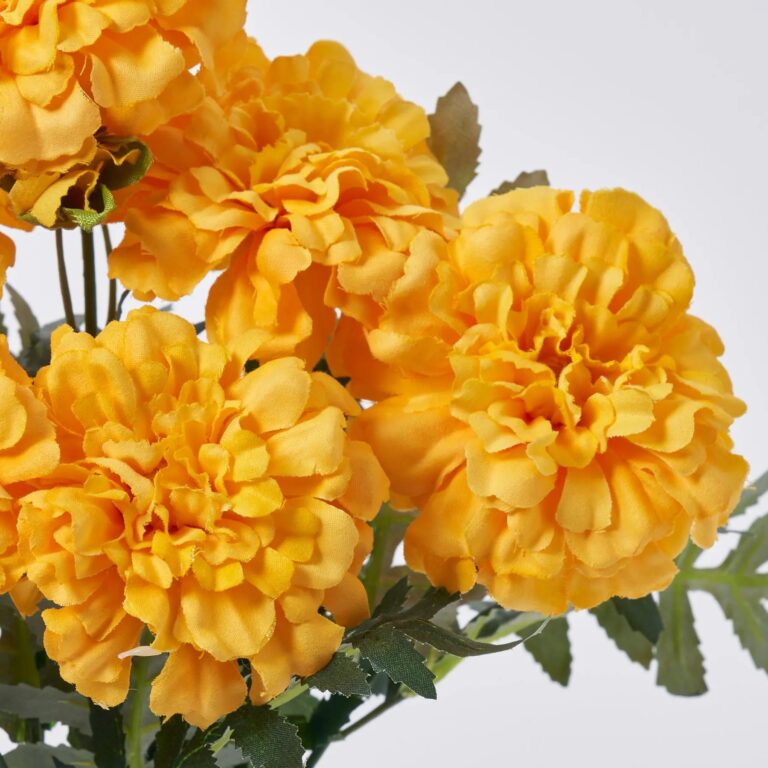
12″ Faux Marigold Bouquet – Green
Price range: $12.00 through $17.00Faux marigold bouquet. Measures 12″ tall. Built for wedding work, bridesmaid sets, and everyday vases.


12″ Faux Pumpkin Stem – Cream
$10.00Faux pumpkin stem. Measures 12″ long. Perfect for filling vases, wreaths, and seasonal arrangements.
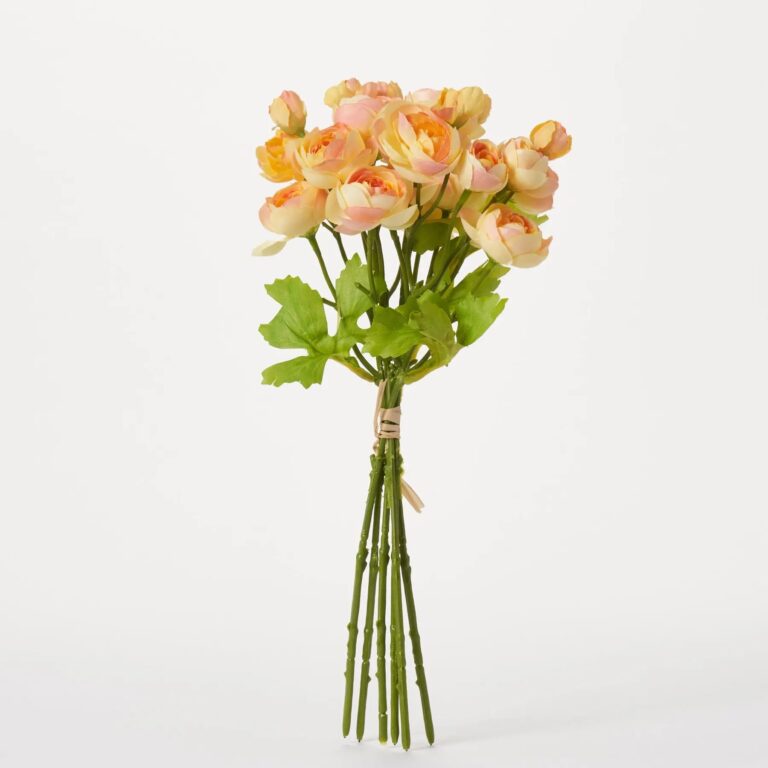

12″ Faux Ranunculus Bouquet – Green
Price range: $5.00 through $15.00Faux ranunculus bouquet. Measures 12″ tall. Tie one into a bouquet bar or keep a spare set on hand.
Single artificial flower stems, sold one at a time — the unit every DIY recipe counts from. Roses, peonies, tulips, hydrangeas, ranunculus, greenery and branches, sold unbundled for your own vases, wreaths and arrangements: wired, shapeable and permanent, so one stem purchase builds displays for years instead of weeks. Pick flower type, bloom size and colorway piece by piece; the listing photo is the single stem you receive, measured and labeled.
Quick answer: Loose flower stems are the control tier of artificial florals — pick the exact variety, count and palette, then build in your own vessels. Working recipes: 3–5 stems fill a bud vase, 12–15 a table vase, a wreath takes 6–10 bundles, a 5–6 person wedding party 60–100 stems. Order 10–15 percent over any recipe; spares make first builds look deliberate.
Recipe Counts by Project
Loose stems are bought by recipe, and the recipes are stable across the whole craft. The working numbers, by what you are building:
Two specs do the heavy lifting in every recipe. Bloom size is the listed head diameter — 2–4.5 inches typical: 2 in. reads delicate in bud vases and crowns, 3 in. is the all-purpose bouquet head, 4–4.5 in. (peonies, hydrangea clusters, garden roses) anchors a bouquet with fewer stems. Photos show each head against a scale reference so sizes compare visually, not by adjective. Heights run 18–30 inches typically, listed per product. The price band runs $3.90–9.50 per stem (as of October 2026, USD); every stem buys from qty 1, and US shipping is free over $200.
Why Loose Beats Fresh for Permanent Displays
Fresh stems are a countdown — a week or three of water changes, then compost. Loose artificial stems are inventory: they store flat for years, rebuild whenever the season or the room changes, and mistakes are reversible (pull the stem, re-bend, re-place — the wire inside takes and releases shapes endlessly). That reversibility is also why loose is the learning format: every arranging skill worth having is practiced cheaper on wired stems than on any fresh stem, because nothing you do is permanent until you decide it is.
Choosing Varieties and Grades
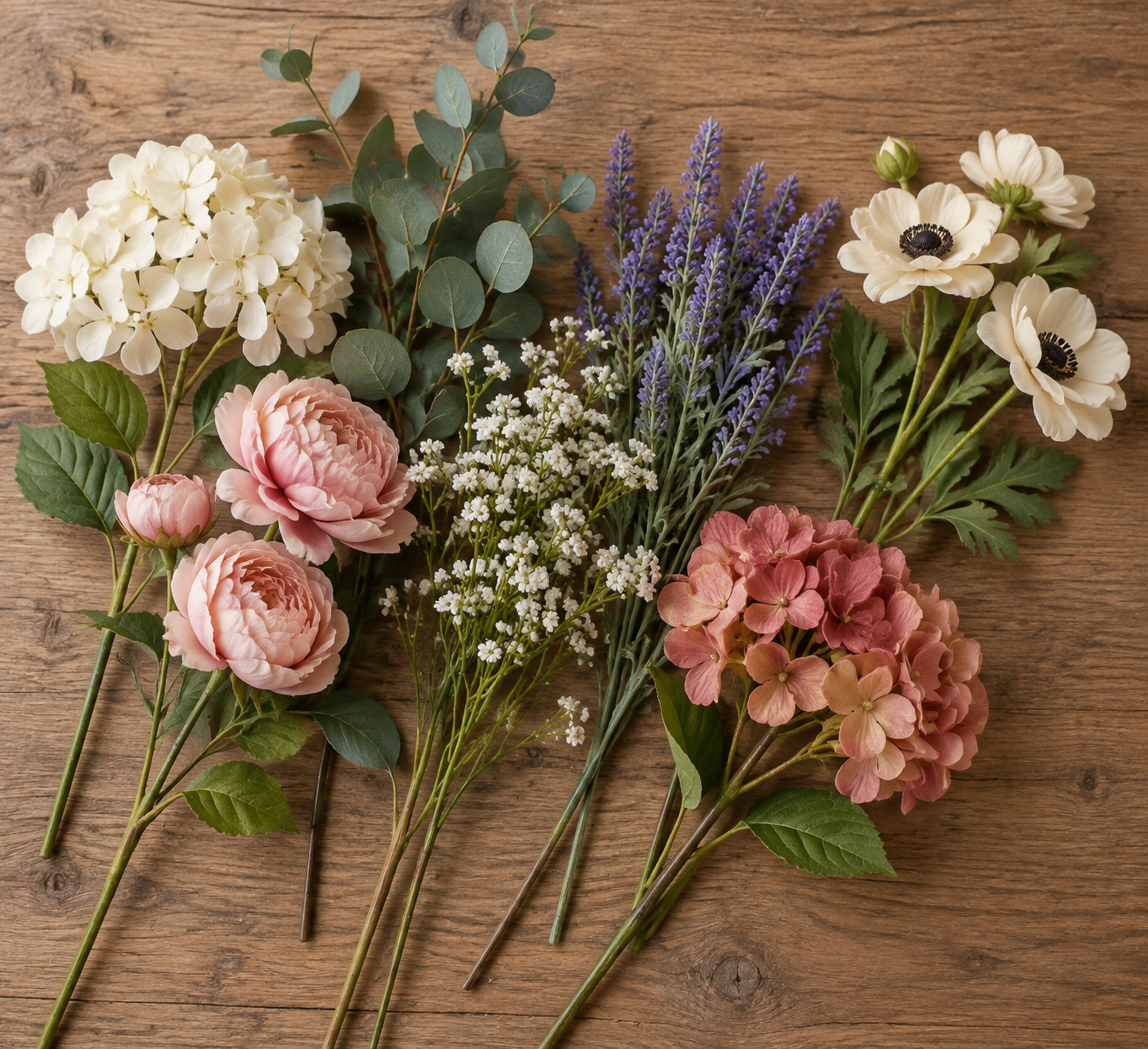
Build by role, not by flower: an anchor bloom (rose, peony, hydrangea — the large face of the arrangement), a secondary (ranunculus, tulip, spray rose — movement and fill), and greenery (eucalyptus, ruscus, fern — the frame). Every good arrangement is those three roles in balance; every bad one is three anchors fighting. On grade, the honest distance tiers: standard silk-type stems read full at the three-to-five feet of table and shelf display, while close-work pieces (bouquets held, table pieces at plate distance) earn real-touch petals — the tiers are laid out on the real touch flowers page.
For palette-critical work, the reliable play: order one stem of each candidate colorway, check in daylight against your fabric, then re-order that SKU in quantity — same SKU means one dye batch within the order. Colorway names are the names stems arrive as, and no absolute color-matching promise is made; the daylight-check process is.
How to Choose Loose Stems
- Stem, bush or spray?
One bloom per stem here — recipe-building units. A spray carries multiple heads branching from one stem (spray roses, cherry blossom); a bundle or bush is several stems grouped at the base, the unit wreath recipes count — a bush is one piece however many heads it carries. Recipes here state which unit they mean, because a "12-stem" build from bundles is four purchases, not twelve.
- Which bloom size?
Listed head diameter is the honest spec: 2 in. for delicate stems (mini carnations, buds), 3 in. as the all-purpose bouquet head, 4–4.5 in. for the statement heads. When a recipe says full-looking bouquet, head size is the lever — fewer big heads or more small ones, with the same visual weight at different price points.
- How many for a bouquet?
A hand-tied bridal bouquet: 5–9 main stems plus 3–5 fillers. Bridesmaid bouquets: 3–5 stems. A full bridal party of four typically totals 20–28 stems plus shared greenery. Order 10–15 percent over any recipe for trim losses and design changes — single-stem pricing makes that a few dollars, not a carton commitment.
- Will the color match?
Order one stem of each candidate, check in daylight against your fabric, then re-order that SKU in quantity — same SKU means one dye batch within the order. The process is the promise; screens differ and dye lots shift.
- How do stems arrive?
Compressed, the way the industry ships them — expect a quick straighten of the wire and a fluff of the head per stem; listings grade themselves (needs a quick fluff vs. mostly pre-shaped). Wire stems bend into arrangement position by hand and cut down with household shears; wrapping tape or ribbon covers the cut for hand-tied work.
The vessels these fill are compared at vases for artificial flowers; wedding-quantity buying moves to bulk artificial flowers; specific varieties run their own pages — tulips and greenery stems.
Frequently Asked Questions
How many artificial stems do I need for a vase?
3–5 for a bud vase, 12–15 for a standard table vase, 20–35 for statement and floor builds — and always 10–15 percent over the recipe, because spare material is what makes a build read deliberate rather than sparse. Match the mouth to the count as well: narrow necks carry small counts best, and over-wide mouths make even correct counts look lost.
How many loose stems make a bouquet?
For a hand-tied bridal bouquet, 5–9 main stems plus 3–5 fillers — at 3 in. heads, seven stems plus greenery reads full without bulk. Bridesmaid bouquets take 3–5 stems; a full bridal party of four typically totals 20–28 stems plus shared greenery; a 5–6 person wedding party with centerpieces runs 60–100 stems all-in, ordered as one batch for dye-lot consistency.
What is the difference between a stem, a spray and a bundle?
A stem is one flower head on one stalk; a spray carries multiple heads branching from one stem (spray roses, cherry blossom); a bundle (or bush) is several stems grouped at the base — the unit wreath recipes count. Recipes state which unit they mean, because a "12-stem" build from bundles is four purchases, not twelve. Listings state the unit plainly for the same reason.
Can artificial stems be cut and reshaped?
Yes — stems are built on wire, which is precisely why makers choose them over glued plastic sticks. The wire bends by hand to arc a stem outward or pull a bloom to face the camera, and household shears cut stems to bud-vase height; the cut end wraps with floral tape or ribbon for hand-tied bouquets. One rule matters: bend at natural points (just under a bloom, at a leaf node) rather than mid-span, where repeated sharp bends fatigue the wire. Foam and PE heads re-fluff gently after shipping compression; fabric-petal heads tease open with fingertips.
Can you mix artificial stems with fresh flowers?
Yes, and it is a working budget technique — permanent greenery and structural stems (the expensive volume of an arrangement) with a few fresh accent blooms for scent and the season. Two rules: keep the fresh stems in water tubes or a separate water source, because artificial stems never share vase water gracefully; and build so the fresh layer can be swapped without dismantling the permanent layer.
What does bloom size mean on the listing?
It is the measured diameter of the flower head at its natural open state — 2 in. for delicate stems, 3 in. as the all-purpose bouquet head, 4–4.5 in. for the statement heads. Every listing photo shows the head beside a scale reference, so sizes compare visually instead of through words like "large" that mean nothing across brands.
Do loose artificial stems read as flowers from across the room?
By distance grade, honestly stated: standard silk-type stems read full at the three-to-five feet of table and shelf display; real-touch grades close the gap to hand-shake distance for held and closely-inspected pieces; nothing passes nose-to-petal. Every listing photographs its stems at petal distance so the grade is judged before ordering.
Loose stems vs. buying in bulk — what is the difference?
Same flowers, same per-piece price, different shopping shape. This page is for picking stem by stem — mixing flower types, head sizes and colorways in ones and twos, which is how first builds and palette tests work. The bulk page carries the same catalog shaped for volume: inner box and full carton tiers with their discounts printed per listing, and recipe math for wedding-scale orders. The standard flow: sample your palette here at piece prices, then re-order the approved SKUs by the box over there.
Do loose stems come with leaves and greenery?
Listed per product — some stems carry their own leaves, others ship as bare blooms on wire for cleaner arranging work. The What's-listed section on each product states exactly what arrives: head material, leaf count, stem length and whether greenery is included. When greenery is sold separately it is a deliberate choice visible before checkout, not a surprise in the box — greenery bushes and filler sprays have their own entries for exactly that pairing.