
Product categories
- No product categories exist.
Price
Showing all 2 resultsSorted by popularity
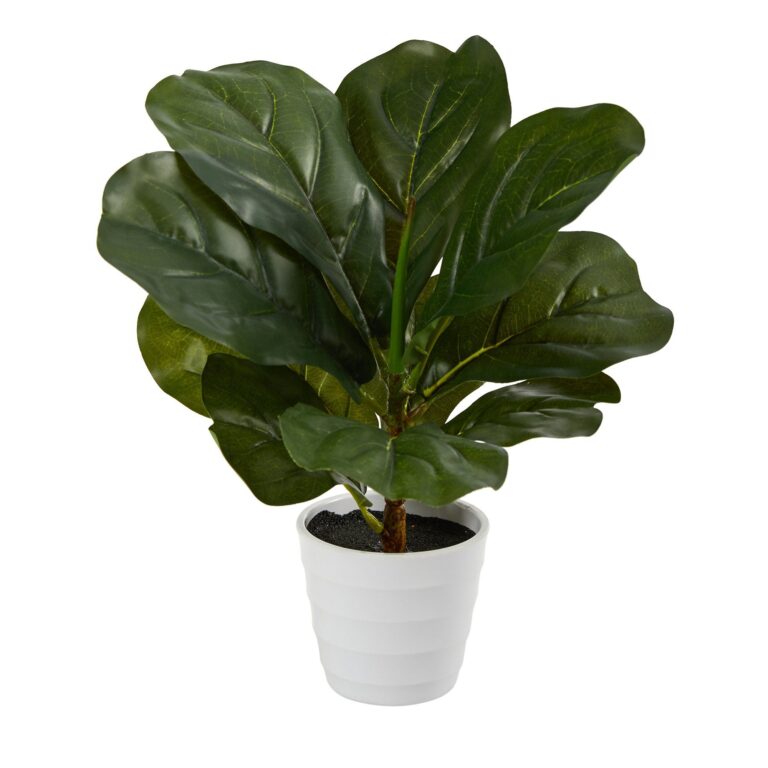
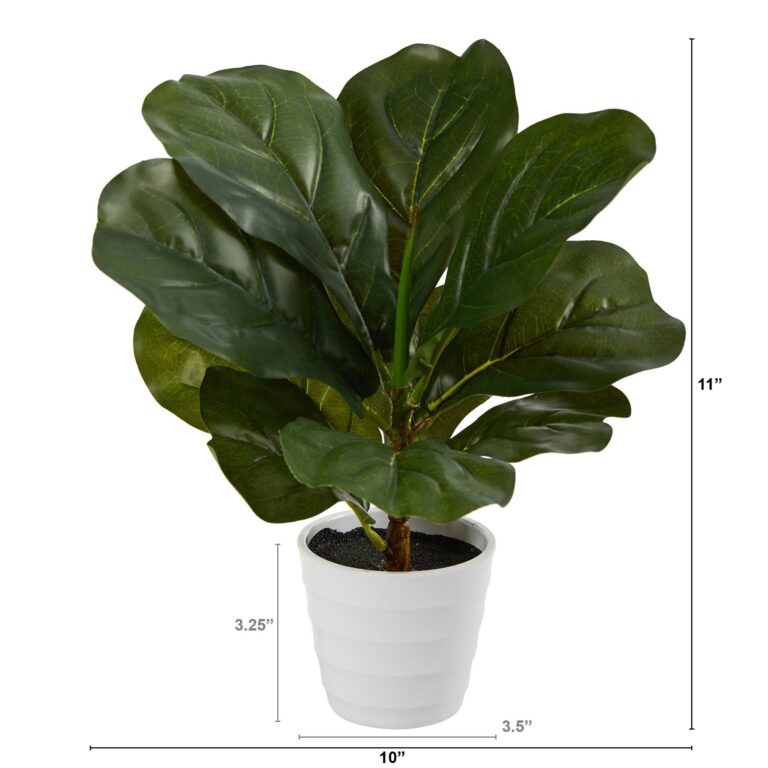
11″ Real Touch Fiddle Leaf Plant in Planter – White

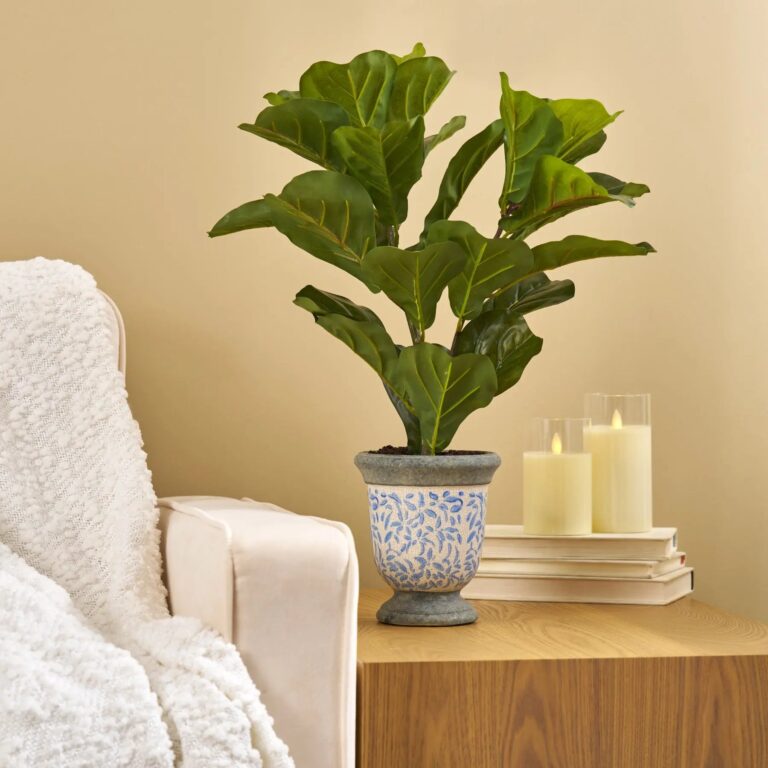
Fiddle Leaf & Greenery Faux Centerpiece in Urn
Faux fiddle leaf fig trees in the full height range this shop carries — tabletop starters, the 5-to-7-foot living-room mainstream, and the 8-to-10-foot statement pieces that anchor double-height entries. Faux fiddle leaf fig is the primary name this page uses because it is the name buyers use, with artificial and silk as the same-family synonyms, and every listing states its working numbers: height pot included, trunk style, and the minutes of leaf shaping the piece wants after unboxing. The fiddle is the tree that made faux mainstream — this is its page, stated honestly.
Quick answer: A faux fiddle leaf fig should stand ceiling height minus 12 inches or less — 5-6 feet beside a sofa or bed, 7-8 behind one, 8-10 only in double-height rooms. Expect 5-10 minutes of leaf shaping on arrival, a weighted planter for anything 6 feet and up, and no direct sun on silk-blend leaves.
Why is the fiddle leaf fig the tree everyone fakes first?
Because the real one is famously difficult and famously photographed in equal measure. Fiddle leaf figs — ficus lyrata, big violin-shaped leaves on an upright trunk — became the default interior tree of the last decade's design imagery, and then became equally famous as the houseplant most likely to lose its lower leaves, develop brown spots, or drop half its crown after nothing more than being rotated to a new window. The care sheet behind a live fiddle reads like a contract: bright indirect light for most of the day, a strict watering rhythm that punishes both over- and under-doing it, stability against drafts and repositioning, and acceptance that a move across the room can trigger a month of sulking. A faux fiddle keeps the entire visual proposition — the sculptural trunk, the architectural leaves, the tailored silhouette designers reached for in the first place — and exits the contract. That combination, the most-wanted tree and the most-demanding tree being the same tree, is precisely why the fiddle is the first fake most households buy and the anchor of the artificial plants collection.
| What the tree asks | Live fiddle leaf fig | Faux fiddle leaf fig |
|---|---|---|
| Light | Hours of bright indirect sun; sulks in low light | Any light at all, including the dark corner |
| Water | Strict rhythm; both over- and underwatering show in the leaves | None, ever |
| Moves and drafts | Repositioning can trigger weeks of leaf drop | Moves freely — staging, rearranging, seasonal resets |
| Failure modes | Brown spots, lower-leaf loss, root rot, pests | Dust and sun fade — both manageable by placement |
| Honest concession | New growth, the daily living presence of a real plant | Holds rather than grows — the look, not the life |
What size fiddle leaf fig fits your room?
Size is the decision that matters most on this tree, because a fiddle is a silhouette piece and the wrong height breaks the room instead of anchoring it. The working rule: ceiling height minus 12 inches is your maximum — a tree needs headroom to read as a tree rather than fill wall — and within that ceiling, the height follows the job. Five to six feet is the mainstream tier, standing beside a sofa, a bed, or an armchair, filling a single corner without demanding the room; six to seven feet works behind furniture or as a room divider in open plans; eight to ten feet is commercial scale, the hotel-lobby and double-height-entry class that stands alone in open floor. A useful cross-check before ordering: the tree should be roughly the height of the tallest furniture piece it stands beside, or one notch above it — a 10-foot fiddle next to a 30-inch armchair is a display-room mismatch, not a design statement. Every listing states height with the pot included, so the number on the page is the number that stands on your floor.
Where a fiddle works and where its cousins fit better
The fiddle's silhouette is tailored and architectural — big leaves, upright trunk, formal presence — which is exactly right next to tailored upholstery and in rooms that run structured. The same corner might want a different tree if the room runs differently: warm, airy, Mediterranean-leaning rooms take the silvery openness of an artificial olive tree; casual and tropical rooms take a palm; low-light corners and pet households take the wider logic of the indoor artificial plants guide, which walks the full tier system from shelf to floor. Within the fig family itself, the rubber plant — same genus, broader darker leaves — is the lower-contrast alternative when a fiddle's sculptural read feels like too much statement. Choose the room's tree first, then the height, and the catalog sorts itself quickly.
What are faux fiddle leaf figs made of?
Three layers, each stated on the listing. The leaves are the visible layer and the whole show: quality builds use molded PE or substantial fabric leaves with visible veining and a slight sheen that reads as leaf cuticle, and the fiddle's leaves are big enough — often 6-10 inches across — that material quality shows at arm's length, so this is the tree where leaf spec matters most in the catalog. The trunk is the structure layer, in the same three styles as the rest of the tree line: natural wood where real seasoned branches carry the grain, molded where the trunk is formed material in one piece, and wrapped where a natural-look finish covers the structural core. The pot is the base layer: most trees ship in a nursery pot or starter planter meant to drop inside a decorative vessel, and the listing says which, because a 6-foot tree plus an unplanned planter hunt is a bad surprise on delivery day.
The real touch question, answered honestly
Real touch foliage — materials formulated to feel like leaf tissue rather than look like it — is a genuine upgrade in exactly one use case: trees that will stand where hands actually reach, the entry piece guests brush past, the staging prop an event crowd touches. There the material earns its price, because touch is part of the experience the tree is buying. Everywhere else, real touch is money spent on a sense the tree will never be tested on — across a living room, at three feet and beyond, molded PE with good veining and honest color reads the same, and no guest strokes the foliage of a corner tree. This shop states the leaf material per listing and prices both tiers rather than upselling reflexively, because the honest recommendation for most rooms is the standard build in the right height, with real touch reserved for the positions that will actually shake hands.
What happens when the tree arrives?
Two things, both quick and both stated rather than hidden. First, shaping: a boxed fiddle ships with leaves and branches compressed for protection, so plan on five to ten minutes bending branches outward and fanning leaves until the silhouette reads like the listing photo — wired branches hold exactly the set you give them, which also makes this the moment to open the crown into a corner or keep it narrow against a wall. Second, potting: if the tree ships in a nursery pot, set it inside a weighted decorative planter 2-4 inches wider, which finishes the look and, more importantly, keeps a 6-foot crown from becoming a lever in a bumped household. After that, the care list is short: a monthly soft-brush dusting of those big leaves — the easiest cleaning job in faux greenery, thirty seconds a side — and placement out of sustained direct sun, because UV fades silk-blend leaves slowly the way it fades any fabric. Commercial positions, lobbies and offices included, run the same list at larger scale.
How to Choose a Faux Fiddle Leaf Fig
- Set the ceiling rule first.
Ceiling height minus 12 inches is the maximum tree height; 8-foot standard ceilings therefore cap out near 6-7 feet. Double-height entries alone unlock the 8-10 foot class.
- Match height to the job.
5-6 feet beside sofas, beds and armchairs; 6-7 behind furniture or as open-plan dividers; 8-10 as freestanding statement scale. The tree should match or top the tallest adjacent furniture by one notch, no more.
- Check leaf material at the listing.
Big fiddle leaves show material at arm's length — molded PE or substantial fabric with veining reads; thin shiny plastic fails. Leaf material is stated per listing, and on this tree it is the single most important line.
- Decide real touch only where hands reach.
Entry positions and event staging justify real touch foliage; corner and sofa-flank trees never get touched and read identically in standard material. Spend the difference on height instead.
- Plan the planter with the order.
Most trees ship in a nursery pot — order the weighted decorative planter 2-4 inches wider in the same cart, and the tree stands finished and stable on arrival day.
Frequently Asked Questions
What size faux fiddle leaf fig should I buy?
Run the two-step check. First, ceiling height minus 12 inches sets your maximum — standard 8-foot ceilings top out at 6-7 feet of tree, and the 8-10 foot class belongs to double-height entries and open foyers. Second, match the job: 5-6 feet stands beside a sofa, bed or armchair filling one corner; 6-7 feet reads behind furniture or as a room divider; 8-10 feet stands alone as commercial-scale statement. Cross-check against adjacent furniture — the tree should match the tallest neighboring piece or exceed it by one notch. Height is always listed pot included, so the listing number is the standing number on your floor.
Do faux fiddle leaf figs look convincing?
This is the right tree to ask that about, because its leaves are the largest in the catalog and material shows at arm's length when a leaf is 8 inches across. Quality builds carry molded PE or substantial fabric leaves with visible veining and a sheen that reads as leaf cuticle rather than plastic, and at three feet — the distance a corner tree is actually viewed from — a well-specced fiddle reads as greenery, full stop. Where it honestly shows its nature is touch and up-close inspection, which is what the real touch tier exists for. The listing states leaf material on every tree so the judgment happens before checkout, in your room's light rather than in a product photo's.
Is a real touch fiddle leaf fig worth the extra cost?
In positions where hands reach, yes; everywhere else, no. Real touch foliage is formulated for fingertip feel, and it earns its premium on entry-hall trees guests brush past, staging pieces event crowds touch, and any spot where the tree will physically interact with people. On a corner or sofa-flank tree viewed at three feet and beyond, molded PE with good veining reads the same to the eye, and the difference is money spent on a sense the position will never test. The honest allocation for most rooms: standard material, correct height, weighted planter — and real touch reserved for the one tree in the house that shakes hands.
How do I fluff and shape my tree when it arrives?
Plan five to ten minutes, and treat it as styling rather than chore. Work from the trunk outward: bend branches up and away from the center until the crown reads open, then fan the individual leaves — fiddle leaves are big and few enough that each one you adjust visibly changes the silhouette, unlike fine-textured greenery where shaping means volume work. Wired branches hold the set you give them permanently, so this is also when you decide the tree's character: opened wide into a corner, kept narrow against a wall, leaned slightly for a natural read. After the first shaping, a light touch-up each season is the whole maintenance of the shape.
Can I put a faux fiddle leaf fig outside?
Under cover, yes; in open sun, it is the wrong tool. Fiddle trees are indoor pieces: the big leaves are typically silk-blend and fabric-family materials that UV fades slowly and steadily, exactly as sun fades any textile, and a covered porch or sunroom with placement care is the honest outdoor limit. A fully exposed patio or pool deck position wants the UV-rated pieces from the outdoor line instead, built with foliage formulated for sustained sun. The indoor bias is worth respecting rather than fighting — this tree earned its place as the default interior silhouette, and the dark corner it was bought for is exactly where it does its best work.
How do I clean a faux fiddle leaf fig?
It is the easiest cleaning job in faux greenery, and the reason is leaf size: big smooth surfaces, thirty seconds a side with a soft dry cloth or duster, done monthly, whole tree in under five minutes. There is no fine texture to trap dust the way ferns and ivy do — the fiddle's few large leaves present flat, wipeable planes, which makes it the low-maintenance end of the faux spectrum even though it is the biggest piece in the room. Twice a year, a barely damp wipe followed by air-drying out of direct sun resets the finish. No water, no feed, no leaf-drop to sweep up — that contrast with the live version is the entire ownership story.
Fiddle leaf fig or olive tree — which fake tree should I buy?
Let the room's register decide. The fiddle is tailored: big architectural leaves, upright formal trunk, structured presence that flatters tailored upholstery and crisp interiors. The olive is looser and warmer: silvery-green small foliage on a gnarled natural trunk, the Mediterranean register that flatters airy, casual and rustic-leaning rooms. Both run the same height logic — ceiling minus 12 inches, sized to the furniture they stand beside — and both anchor a corner equally well; the difference is entirely tonal. Rooms that cannot decide take the palm as the neutral middle option, and the choice walks outward from there into the full tree and plant collection.