
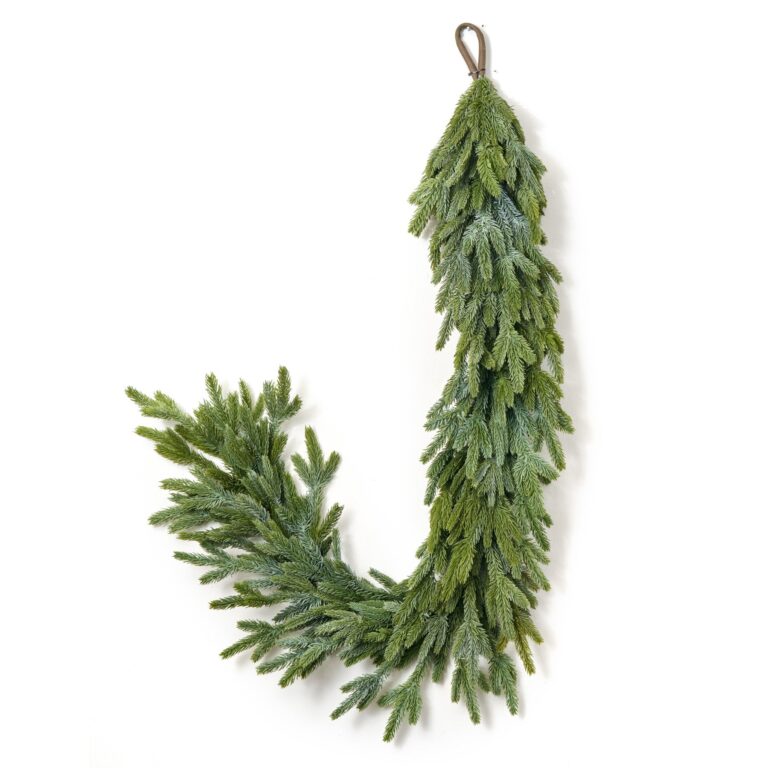

A doorway garland is the frame's strand — greenery or seasonal builds wound around a door frame, hung across an interior doorway, or swagged over a passage — sized to the frame's own arithmetic rather than a shelf or rail. This page is the doorway's guide: the two installs and their two lengths, the wreath-plus-garland pairing that dresses a whole entry off one palette, the anchoring rules for painted wood, and the word families — doorway and front door — that land on the same builds.
Quick answer: Two installs, two lengths on a standard 36-inch door: 8-10 feet wound once around the frame's face; 12-14 feet for the full wrap (top width + both side drops + 10 percent for the swag). Removable hooks on paint, zip ties on rails. Market bands as of October 2026, USD: plain greenery $25-60 per 9 feet, decorated $50-130 — doorway searches run 1,300 monthly lookups (8,100 at the November peak), stacked on the same stock as every door-line purchase of the season.
Doorway Garlands, Explained
What a doorway garland is
A doorway garland is a wired-spine strand installed on a door frame or across a passage — the entry's frame-dressing counterpart to the front door wreath, and the garland line's most photographed placement after the mantel. It runs two distinct installs: the single wind, once around the frame's face in a continuous line, and the full wrap, over the top and down both sides with swag bottoms — two looks, two lengths, chosen by the door and the season. The word families split across the house: "doorway garlands" runs about 1,300 searches a month and "front door garlands" about 880, both peaking in November (8,100 and 6,600 respectively), both landing on the same builds — the difference is which door, and the buying arithmetic answers both.
Every listing states its measured length — 6, 9 and 12 feet are the standard retail sections, with the doorway's needs met from one 9-foot piece (single wind) or a 12-footer plus slack (full wrap) — and the photo shows exactly one garland unless the title says a set.
The two installs, and the arithmetic of each
The single wind: the strand runs around the frame's face in one continuous circuit — across the head, down one side, across the threshold line or back up the other. On a standard 36-inch door in a normal-height frame (80 inches tall), the circuit runs about 16 linear feet of frame, but the strand does not hug every inch — it crosses the head, drops the sides in long open lines, and the working buy is 8-10 feet. It reads as one line framing the door, the quieter install, and it leaves the door's own hardware clear. The full wrap: the strand crosses the head with a swag, then drops both sides to any depth the frame allows, each drop ending in an open swag bottom. The arithmetic is the sum of the parts plus the swag tax: top width plus both side drops plus about 10 percent for the loop depth — a standard frame wrapped to mid-door height takes 12-14 feet. It reads as the frame fully dressed, the louder install, and it is the one that photographs. On double doors and archways both installs scale by the same arithmetic — double doors run near double the top width, archways follow the curve and buy toward the top of the band.
Measure the frame, not the door
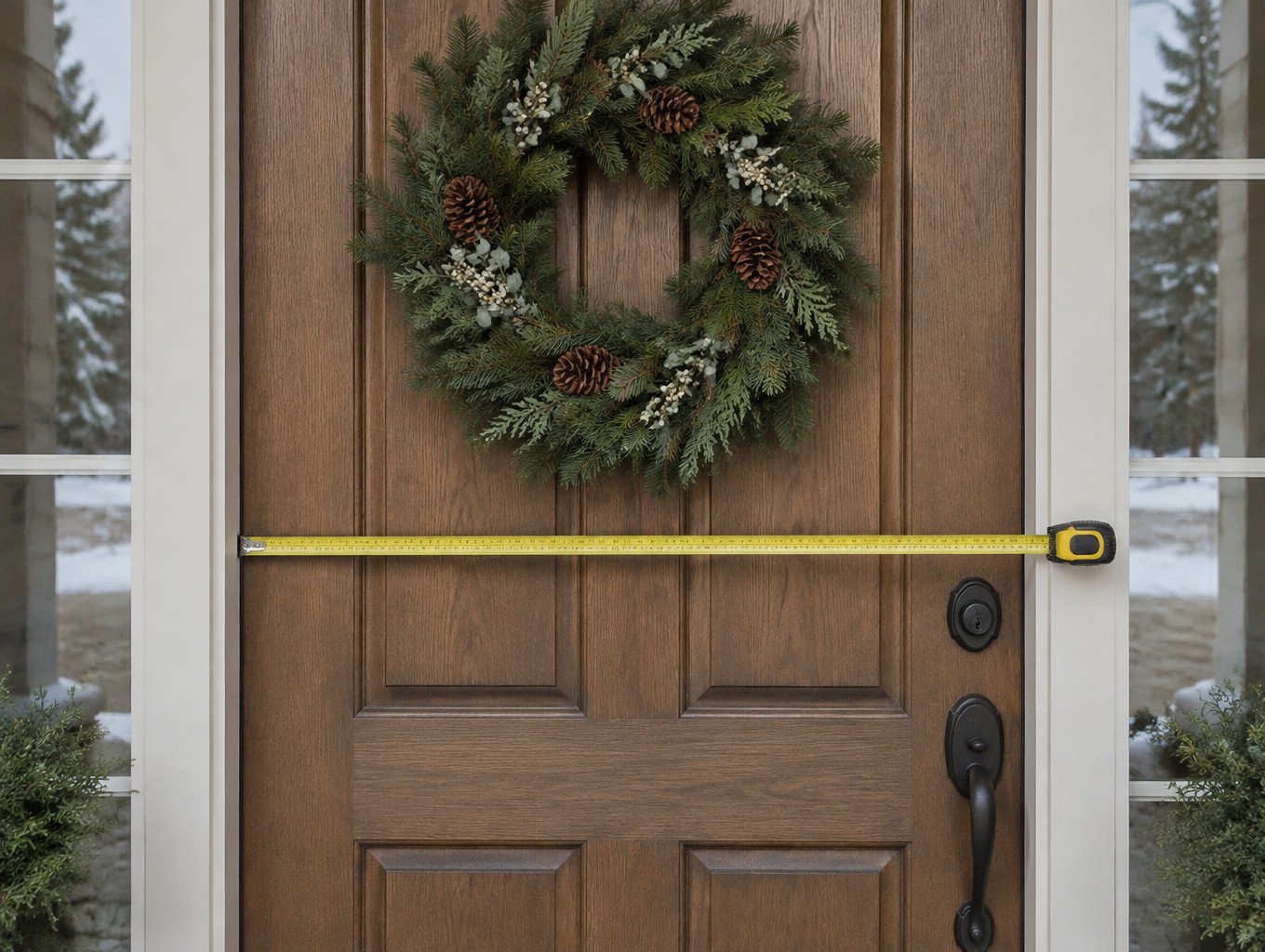
The measurement that decides both installs is the frame's outside trim, not the door slab: a "36-inch door" is the slab, and the frame's trim runs 40 to 50 inches wide once casing is counted. Measure the trim's outside width for the head run, the trim's outside height (head trim to the drop point you want) for the side runs, add the two sides plus the head, then add the 10 percent swag tax for the full wrap. Write the three numbers down before shopping — head width, drop height, circuit length — because retail sections (6/9/12 feet) meet real frames only approximately, and the anchor plan covers the difference. The same tape pass catches the second number the install needs: how far the door sits from the frame's outer trim, which decides whether the garland clears the door's swing.
Door frames to garland buys: the working table
Anchoring painted frames without damage
The doorway install lives on paint and trim, and the anchoring list is short because the damage list is long. Removable adhesive hooks (the strip kind, rated for outdoor door frames on exterior doors) carry swag crowns on painted casing and release cleanly in January. Over-door frame hooks — the inverted-U hangers that sit on the head trim — carry the head run's weight without touching the paint at all, and one at each upper corner plus hook spacing down the sides is the standard kit. Zip ties belong on porch rails and storm-door frames, not painted trim. What never touches the frame: nails, staples, and wire twisted through the casing — the flinch every time the door slams is the install telling you which one was used. On historic or irreplaceable trim, the zero-contact option is ribbon ties at the swag crowns, looped over the frame and knotted at the top edge where nothing shows from the street.
The wreath plus garland: one palette, one entry
The doorway garland's most common companion is the wreath on the door it frames, and the pairing has a working grammar. Match the family — same greenery, same accents — and the entry reads as one decision: the wreath on the door, the garland on the frame around it. Order the pair in one checkout and the dye lots match, which matters most in the seasonal palettes (fall's rusts, December's greens). Keep the division of labor: the wreath carries the door's center (and the doorbell conversation), the garland carries the frame and the drop swags — a garland that climbs into the wreath's airspace reads as collision rather than layering. And on double doors, where no single wreath centers, the garland often runs alone across the head — the frame becomes the whole statement.
Exposure: exterior doors and the honest outdoor rule
An exterior doorway garland lives in the entry's microclimate. Covered porches and deep eaves: any build in the line, the whole season, which is most American front doors. Shallow or absent overhang: the frame gets direct sun and driving rain on the same afternoon, and the line-wide rule applies — standard silk fades over a season or two in open exposure (UV-stable grades stretch that to years — slower, not never), storms argue for fast-release anchors, and the doorway's advantage is that teardown is one hook per swag. December's note: pre-lit doorway runs on exterior doors run battery (packs hidden in the head swag, on timers) — cords across a door's swing line are a snag hazard and an outlet problem at once. The full exposure playbook — rails, posts, porches and the grading that goes with them — is the outdoor garlands page's own subject.
What the market charges, and the November window
The bands as of October 2026, USD, per 9 feet: plain greenery $25-60; decorated builds $50-130 — and the doorway's buys price as single pieces (one 9-footer for the single wind, a 12-plus for the full wrap), which makes it the garland line's most affordable full placement: a decorated single-wind entry run lands in the $50-130 band all-in. The November timing stacks with every door-line purchase: doorway searches peak at 8,100 monthly lookups (against 1,300 baseline) with the decorating weekend, and the doorway's stock is the same stock the mantel and stair runs draw down. Interior doorway garlands — the passage arch, the October-March swag across a hallway — buy in the same bands and carry no window at all: they are a year-round line that peaks only because December says so.
Teardown and re-runs
January teardown is one hook per swag: the strand fluffs flat, coils loose, boxes cool, and the adhesive-hook strips come off the paint with the pull-tab they came with. The second year's install takes a third of the first year's time — the hooks' placement is the whole engineering, and reusing the same positions (a photograph of the finished install is the trick that pays) turns the doorway run into a ten-minute re-hang. Households that run doorways year-round — harvest swag into December greenery into spring — rotate the same frame positions through the garland collection's seasonal families without re-anchoring anything.
How to Choose a Doorway Garland
- Measure the frame's trim, not the door slab.
Head width, drop height, circuit length — written down before shopping. A "36-inch door" has a frame that runs 40-50 inches with casing; the garland hangs on the trim's outside face.
- Pick the install before the length.
Single wind: 8-10 feet on a standard frame, the quiet one-line look. Full wrap: 12-14 feet (top + both drops + 10 percent), the frame-dressed look that photographs. Double doors and archways scale the same arithmetic.
- Anchor for the paint.
Removable adhesive hooks on painted casing, over-door frame hooks for the head run's weight, ribbon ties on irreplaceable trim. No nails, no staples, no wire through the casing.
- Pair the wreath, don't collide with it.
Same greenery family, same dye lot (one checkout), the wreath owning the door's center and the garland owning the frame. On double doors, the garland often runs alone.
- Buy the first week of November for exterior doors.
The 8,100-lookup November peak shares stock with every door-line run of the season. Interior passages buy year-round. Verify stated length and piece count — one garland per photo unless the title says a set.
Frequently Asked Questions
How long should a doorway garland be?
By install. The single wind — once around the frame's face — takes 8-10 feet on a standard 36-inch door with trim. The full wrap — over the head and down both sides — takes 12-14 feet, calculated as top width plus both side drops plus about 10 percent for the swag loops. Double doors scale toward double the head width; interior passages take 6-9 feet swagged across the head. In every case measure the frame's outside trim, not the door slab — the casing adds 4-14 inches per side.
How do I hang a garland on a door frame?
With hardware the paint survives. Over-door frame hooks (inverted-U hangers) carry the head run's weight sitting on the trim; removable adhesive hooks rated for the surface carry the side swags; ribbon ties looped over the frame are the zero-contact option on historic trim. Space anchors one per swag crown. The list that damages frames is shorter than the list that doesn't: nails, staples, and wire twisted through the casing are the three that flinch every time the door slams.
What is the difference between doorway garlands and front door garlands?
Which door, not which product. Both word families land on the same builds and the same arithmetic — "doorway garlands" runs about 1,300 searches a month, "front door garlands" about 880, both peaking in November (8,100 and 6,600). Front door runs are exterior installs with exposure and lighting questions (battery over cords); doorway runs include interior passages and arches, which are year-round placements with none. The frame arithmetic in this page's table answers both.
Can a doorway garland go on an exterior door?
Yes — it is one of the line's standard installs, with the entry's microclimate deciding the grade. Covered porch or deep eave: any build, the whole season. Shallow or no overhang: the honest rule — sustained sun and driving rain fade standard silk over a season or two, slower with UV-stable grades, not never — plus fast-release anchors for storm rescue. Battery lights over cords on any door that opens and closes: packs hidden in the head swag, timers built in, no cord across the swing line.
Do I need a wreath and a garland on the same door?
The pairing is the classic entry and the grammar is simple: matched family and dye lot (order together), the wreath owning the door's center, the garland owning the frame around it. The collision to avoid is the garland climbing into the wreath's airspace — drops that end above the wreath's top edge read as layering, drops that touch it read as clutter. On double doors, where no single wreath centers, the garland often runs alone across the head and the frame is the whole statement. Interior doorways skip the wreath question entirely.
How much does a doorway garland cost?
Market bands as of October 2026, USD, per 9 feet: plain greenery $25-60, decorated builds $50-130 — and because doorway buys are single pieces (one 9-footer for the single wind), it is the garland line's most affordable full placement: a decorated entry run lands all-in inside the $50-130 band. Fresh door garland exists mostly as wreath-and-rope arrangements at florist pricing; the silk strand at a comparable spend returns every season for four or five years.
How do I keep a doorway garland from blocking the door?
Three clearances. Swing clearance: the garland lives on the frame's outside face; side drops that sit inside the door's swing line get pushed or snapped — anchor them proud of the door's arc, and check the swing once before the anchors are final. Traffic clearance: swag bottoms end above head-clearance height on the sides (or at mid-door height where nobody walks the threshold). Hardware clearance: the head run sits above the doorbell, the knocker and the lock — anchor the strand's densest moments between the hardware, not over it. A doorway install that passes those three tests stays up all season without a single adjustment.
Can I use doorway garlands indoors, across a passage?
Yes — the interior passage swag is a year-round placement with no exposure window and no peak but December's. A 6-to-9-foot piece swagged across a hallway head (or 12 feet with side drops for the arch look) runs harvest, December, spring, whatever the calendar says, anchored on removable hooks at the trim's top edge. The interior version also skips every outdoor rule — any build, any lights, teardown whenever the style changes — which makes the passage swag the line's lowest-commitment install and, reliably, the one guests ask about.