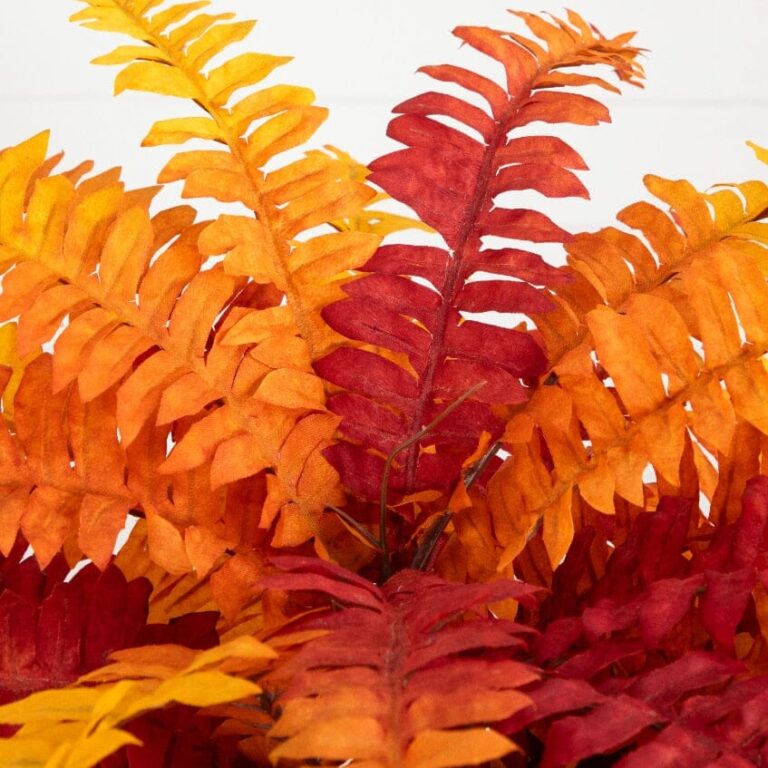
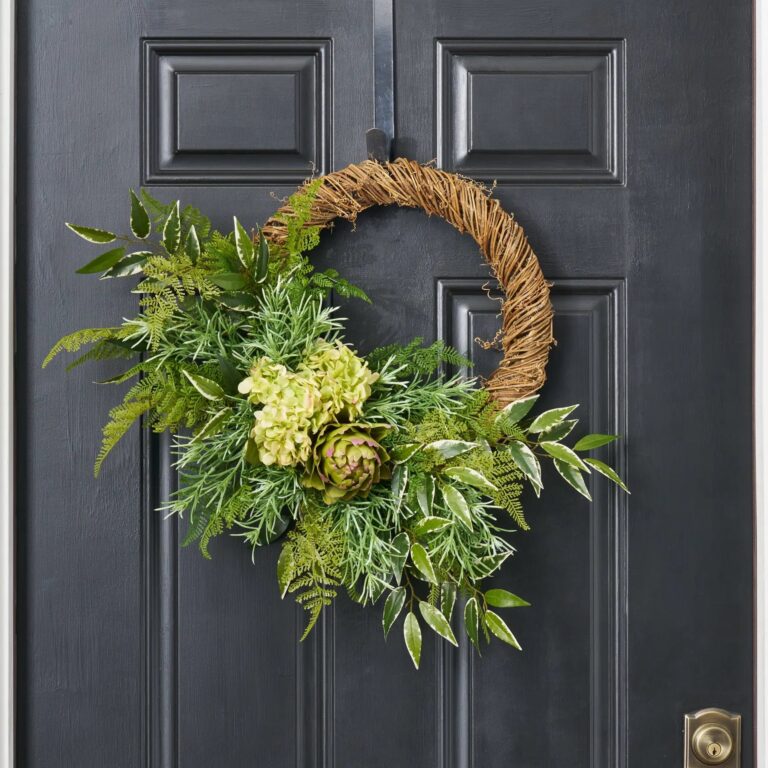
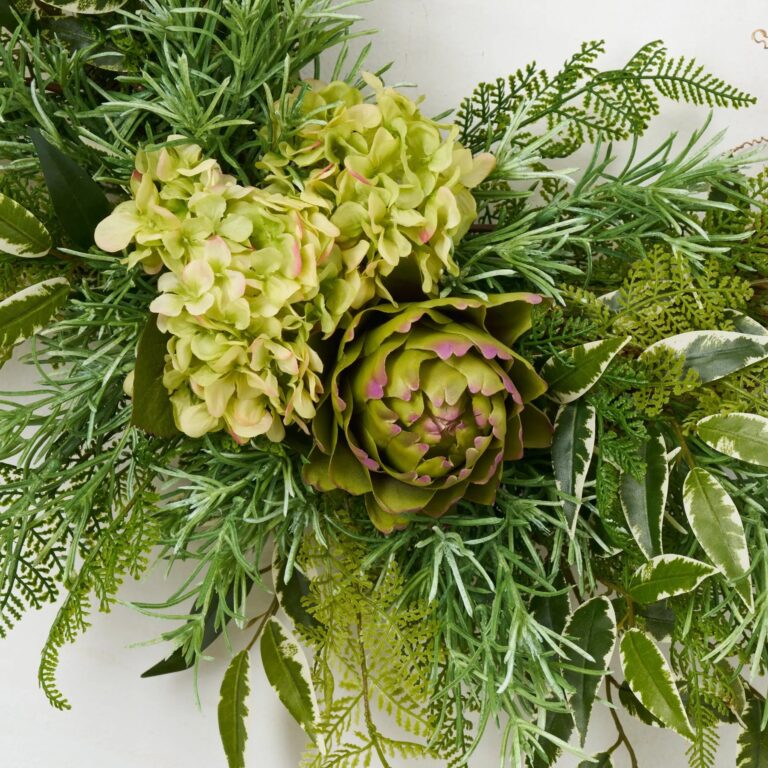
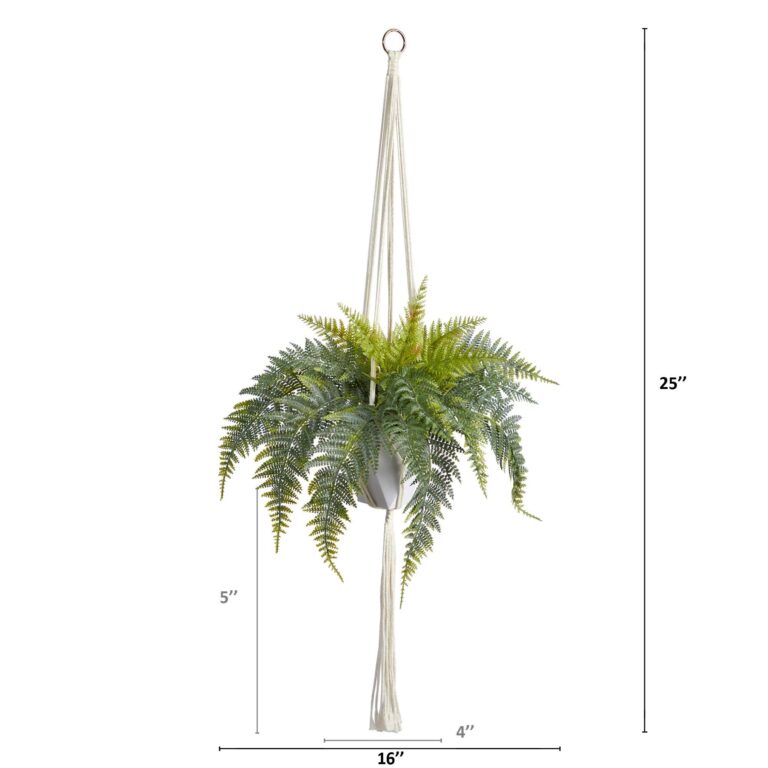
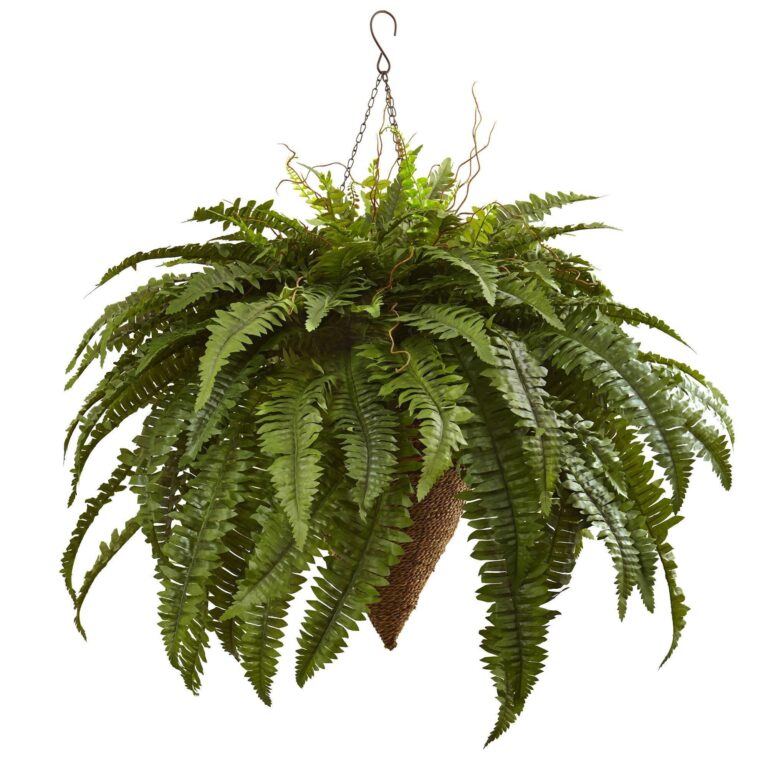
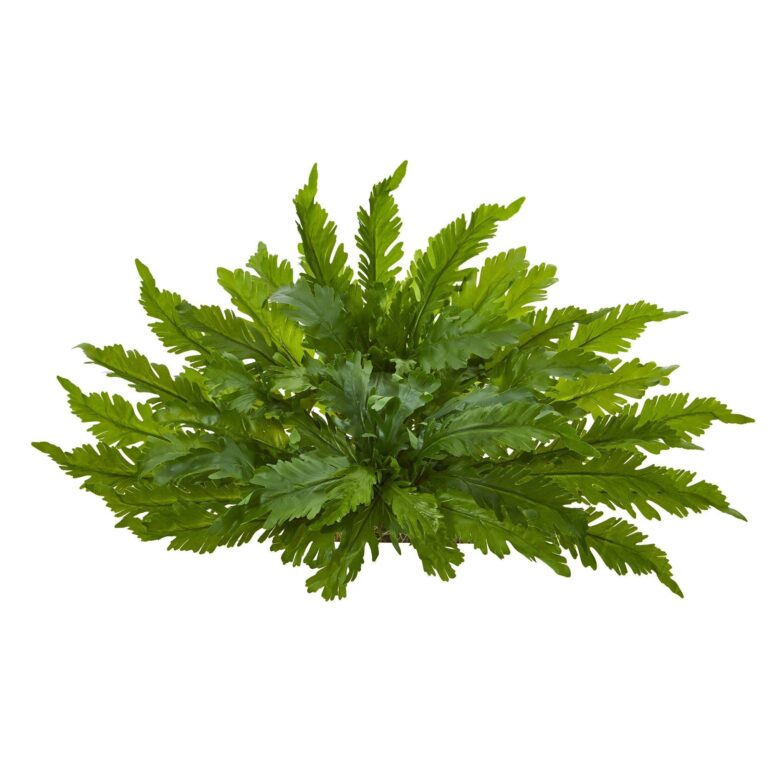
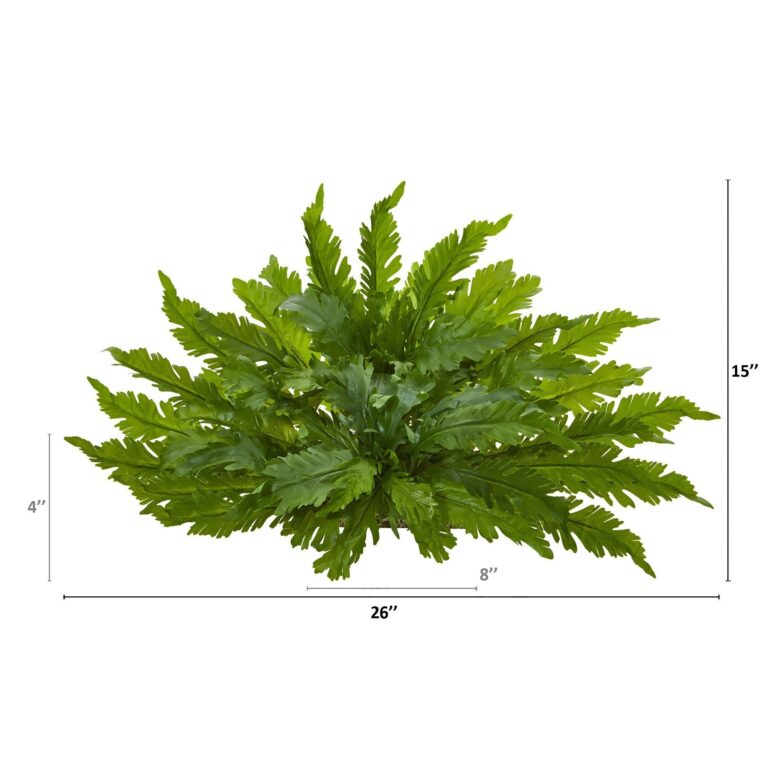
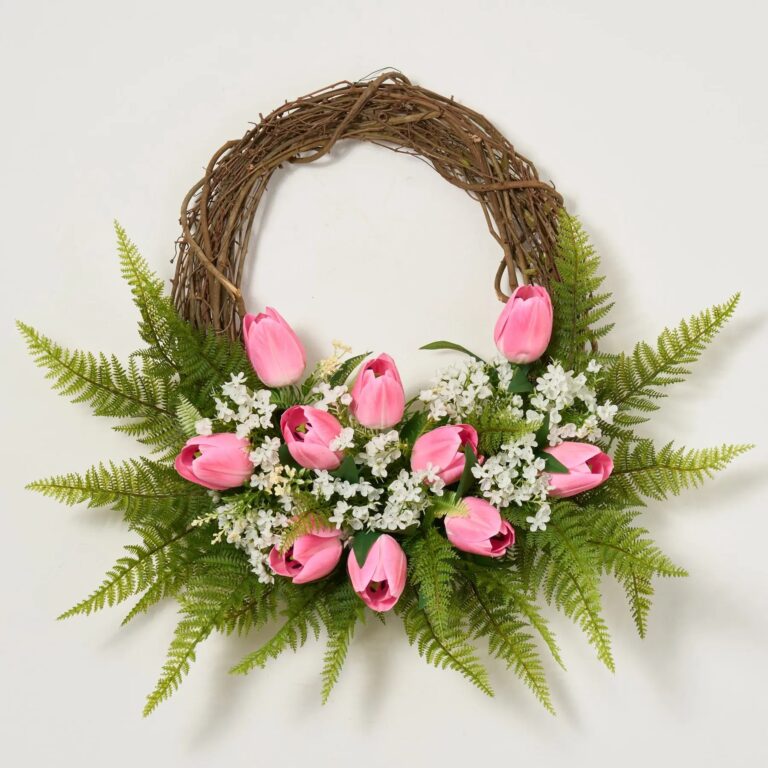
Tulip & fern wreath. Measures 26" diameter. Offered in multiple colorways. Built on a sturdy base for a full, layered look on any door.
Select options
This product has multiple variants. The options may be chosen on the product page
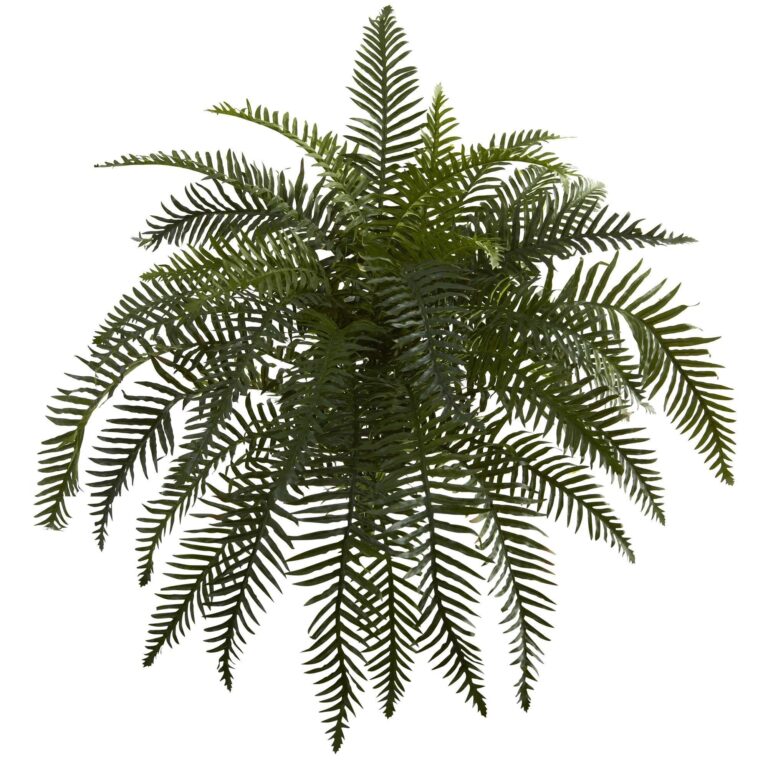
Artificial ferns from the full range this shop carries — Boston ferns leading the line, with maidenhair, bird's nest, Kimberly queen and tree ferns filling out the family. Fern, faux fern, silk fern and fake fern all name the same product here, and every listing states its two governing numbers: frond count and width at the widest frond. That is because a fern you order sight-unseen is bought by its silhouette, and frond count plus width is the silhouette, stated honestly before you commit. Nothing on this page needs the humidity tray its live counterpart demands.
Quick answer: Artificial ferns run roughly $27-146 by size and frond count (specialty-catalog range, October 2026), in hanging, potted and bare-stem builds from about 14 to 38 inches tall. Boston is the default pick; buy by stated frond count — 29 reads entry-level, 49-plus reads full — and keep silk out of sustained direct sun.
Which artificial fern should you pick?
Start from the shape of the space, because ferns divide cleanly into four silhouettes and the wrong one is the usual ordering mistake. The arching fountain — Boston and Kimberly queen — throws fronds out and down, which is why these two dominate porches and hanging baskets: they fill a circle of air, so buy them by width, not height. The upright vase — bird's nest fern — grows in a tight vertical bowl that sits well on consoles and bathroom counters where an arching fern would swallow the surface. The lace cascade — maidenhair — is the delicate one, a fine-textured weeper that belongs on pedestals and plant stands at eye level, where the detail earns its keep. The tree form — Boston and maidenhair trained on short trunks — lifts the same foliage to 30-plus inches for floor and hearth placement without committing to a full tree. Match the silhouette to the spot first, then choose the variety inside it.
Fern
Silhouette
Texture read
Best position
Boston fern
Arching fountain, fronds out and down
Classic dense lace — the porch standard
Hanging baskets, porch and patio edges, plant stands
Maidenhair
Delicate weeping cascade
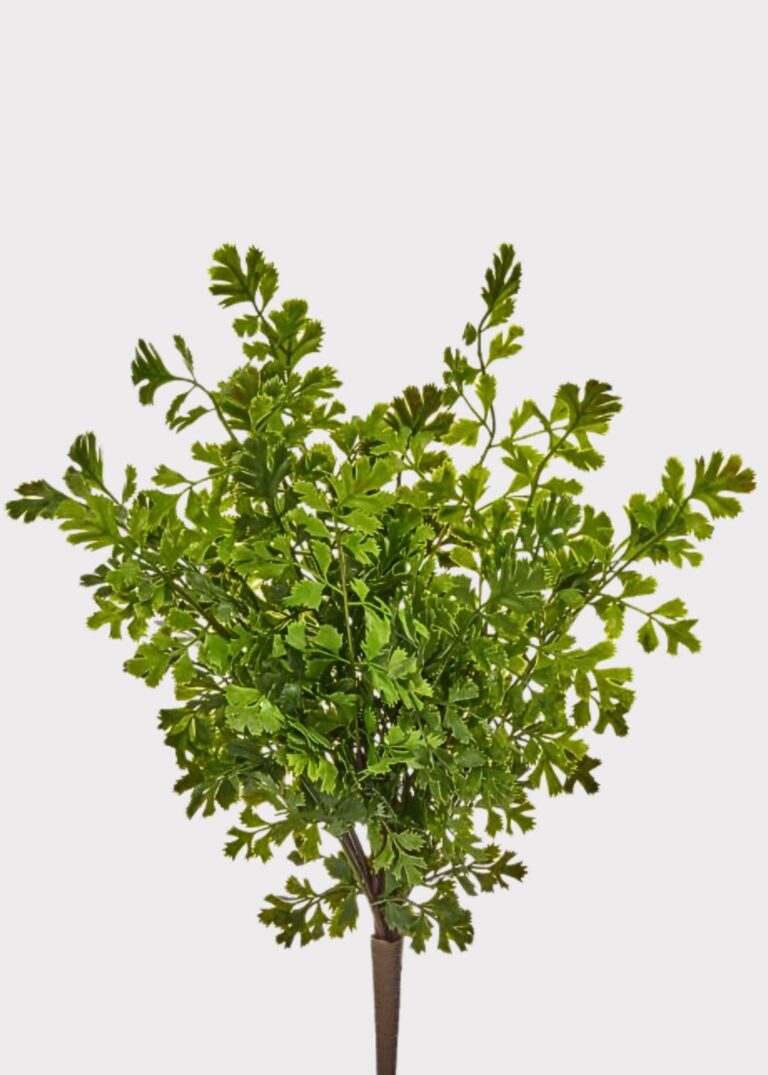
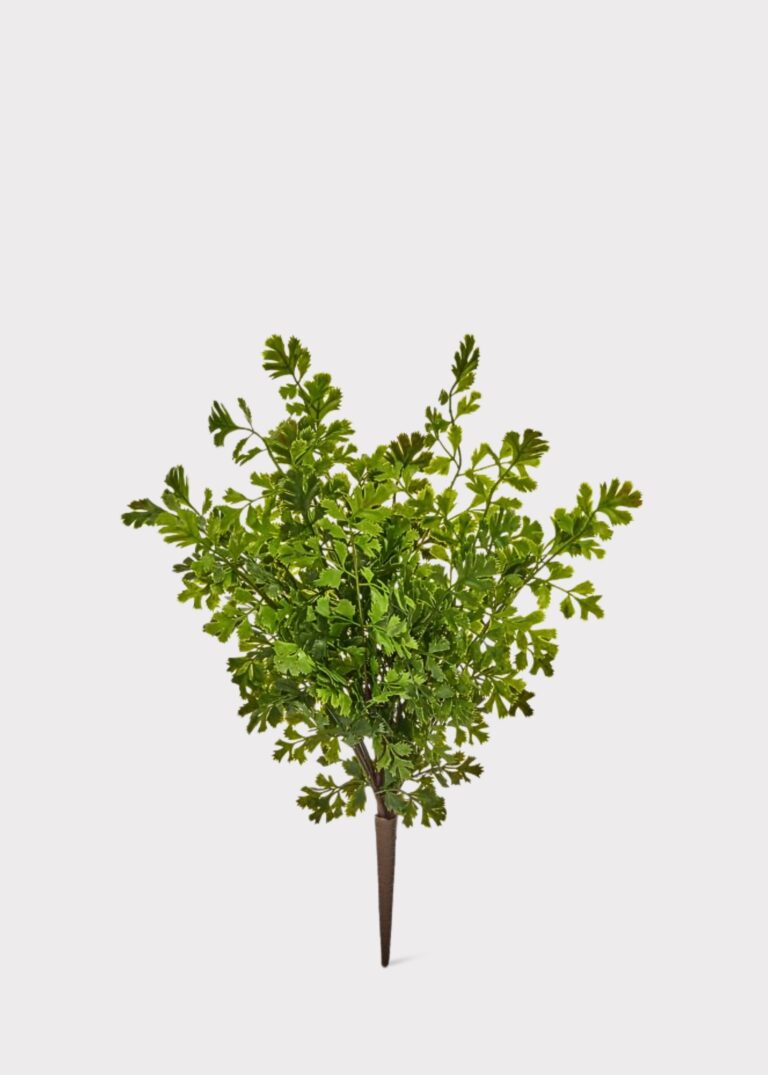
Finest frond, black wiry stems — the detail pick
Pedestals and stands at eye level, quiet corners
Bird's nest
Upright vase, tight and vertical
Broad rippled fronds, sculptural
Consoles, bathroom counters, tabletops with airspace
Kimberly queen
Arching but stiffer, more upright than Boston
Leathery blades, formal read
Flanking entryways in matching pairs, floor pots
Tree fern
Fern head on a short trunk
Soft crown over a woody stem
Hearths, reading corners, floor positions to 32 inches
Hare's foot
Wide, low, creeping spread
Fuzzy creeping rhizome over the pot edge — the character piece
Wide low bowls, shelf edges where the foot can trail
What do frond count and width mean on the label?
Frond count is the density number, and it is the single most useful spec on a fern listing because it predicts fullness before the box arrives. A 23-inch Boston fern at 29 fronds reads as a young, airy plant with visible structure between the fronds — right for a small hook or a spot where lightness is the point. The same fern at 49 fronds reads as the mature porch specimen people picture when they hear Boston fern, dense enough that the fronds layer into each other, and 59-frond builds at 40 inches wide are the statement pieces that anchor a covered porch railing solo. Width is the placement number, and it is measured at the widest frond tip, not the pot: a fern described as 40 inches wide needs 40 inches of clear radius plus breathing room, because compressed fronds are how a good fern instantly reads as a cramped one. Specialty catalogs price along exactly these two axes — one 124-item fern catalog runs $26.54 for a 38-frond bare-stem Boston to $145.68 for a 59-frond outdoor piece (Earthflora, checked October 2026) — so frond count and width are also the fair-price test wherever you shop.
Bare stem or finished pot — which build?
Bare-stem ferns ship as the plant alone, a clean cluster of fronds on cut stems with no pot and no soil surface, and they are the designer's format: you set the stems in your own planter with foam or gravel, one arrangement fits the room's actual vessels, and the catalog price runs lower because you are not paying for a grower pot. Potted builds arrive finished — nursery pot, soil surface, ready to set inside a decorative planter the day they land — which is the right call when the fern is a single purchase for one defined spot and you want zero assembly. The trade is honest in both directions: bare stems trade ten minutes of arrangement for control and price, potted builds trade a few dollars for immediacy. Listings here state which build ships, because finding out at the door that your fern needs a vessel you do not own yet is an avoidable disappointment.
Can artificial ferns go outdoors?
Covered positions, yes out of the box; open sun, only with UV-treated foliage — and this shop would rather state the boundary than blur it. UV treatment slows fading, it does not repeal it: a treated fern on a covered porch holds its green for years, the same fern on a fully exposed south-facing railing still softens season by season under direct sun, and an untreated indoor-build fern left outdoors fades fastest of all. The practical tiering: covered porch and overhang positions take anything in this line; partly exposed spots want the UV-treated selections, flagged per listing; fully open sun is where the dedicated outdoor line from the artificial plants collection does the heavier work. Rain itself is a lighter concern than sun — fronds shed water and dry in place — but wind is the real structural test for wide builds, so a 40-inch fern in an exposed spot wants a heavy planter underneath it, exactly as a live fern would.
The humidity trade ferns quietly solve
Live ferns are the neediest houseplants in the catalog on moisture: they want 40-60 percent ambient humidity, water the moment the surface dries, and in dry winter air they brown at the frond tips as a standing apology — the bathroom share of fern content online exists precisely because bathrooms are the only rooms humid enough. An artificial fern takes the entire humidity question off the table: the bathroom fern needs no steam subsidy, the winter radiator corner stops being a fern graveyard, and the dry-air office with forced heating holds its Boston on the credenza year-round. For the wider argument about where faux beats live in a house, the indoor artificial plants page runs the position-by-position case; ferns are simply the most extreme example, because they are the live plant family whose care requirements least match average indoor air.
How do you use ferns in a room?
Ferns work hardest in the positions their shape was made for. Hanging: a Boston at 30-40 inches wide fills a porch hook or a tall corner's upper air, and the hanging position shows off the fountain silhouette from below, where it reads best — matching the logic of the shop's hanging basket line. Pedestal: maidenhair on a plant stand at eye level, where the fine texture has an audience. Bathroom: bird's nest or a small Boston on the vanity or the toilet tank, the classic spa read, minus the humidity the classic spa read usually demands. Console and hearth: tree ferns lift foliage to 30-plus inches where a low fern would look like a leftover. Floor: Kimberly queen in matched pairs flanking a doorway, the formal read that arching Bostons cannot hold. One rule travels across all five: give a fern the radius its widest frond wants, because a fern that touches its surroundings constantly reads as clutter rather than planting.
How to Choose an Artificial Fern
Pick the silhouette before the species.
Fountain (Boston, Kimberly queen) for air and porches, vase (bird's nest) for surfaces, cascade (maidenhair) for eye-level, tree form for height. The silhouette decides the position; the species refines it.
Buy by the two stated numbers.
Frond count is fullness — 29 reads young, 49-plus reads mature specimen — and width at the widest frond tip is the space the plant actually claims. Both are on every listing, and together they are the fair-price benchmark.
Choose your build honestly.
Bare stem for lower price and your own planter, ten minutes of arrangement required; potted for a finished piece that lands in place. Check which one ships before checkout, not at the door.
Tier the exposure.
Covered porch: anything here. Partly exposed: UV-treated selections only, flagged per listing. Open sun all day: use the outdoor-rated line instead, and weight the planter against wind regardless.
Give it the radius.
Measure the widest-frond span the position allows and buy inside it — a compressed fern is the fastest way to make a good build read cheap, and the fix is a tape measure, not a return.
Frequently Asked Questions
What is the best artificial fern for a porch?
A Boston fern, sized by your hook's air. The arching fountain silhouette was practically invented for porch edges — fronds out and down, read from below, forgiving of a swing's passing — and Boston is the variety every visitor already recognizes. Buy it by the two stated numbers: frond count for fullness (29 reads entry-level, 49-plus reads the mature specimen look) and width at the widest frond tip for the clearance your railing or hook actually has. On a covered porch, any build in this line works; on a partly exposed one, take the UV-treated selections, and in any position give the planter weight against wind. Kimberly queen is the stiffer, more formal alternative when the porch runs architectural rather than cottage.
How many fronds should a good artificial Boston fern have?
Match the frond count to the job rather than chasing the biggest number. At 23-24 inches tall, a 29-frond Boston reads young and airy — right for a small hook, a bathroom shelf, or a spot where a lighter touch is the point. The same height at 38-40 fronds reads as a healthy mature plant, the everyday default. Move to 49-59 fronds and 30-40 inches wide and you are buying the layered specimen that anchors a railing solo. Frond count is the density spec because it is the one number that predicts fullness from a photo — every listing here states it alongside width for exactly that reason, and it is also the fair-price test: within one catalog, price tracks fronds and width almost linearly.
Do artificial ferns last outside in the sun?
With the honest tiering: covered positions, years; partly exposed, seasons to years with UV-treated foliage; fully open sun, expect gradual fading no matter what the label promises. UV treatment slows the photochemistry rather than stopping it, so a treated fern on a covered porch holds its green indefinitely while the same fern on a bare south railing softens year by year. Untreated indoor builds fade fastest outdoors and belong there only temporarily. Rain is manageable — fronds shed and dry in place — but wind matters more for wide builds, so weight the planter. If a position is truly exposed all day, that is the job for the outdoor-rated pieces in the wider outdoor artificial plants line, not an indoor fern pressed into service.
Bare stem or potted — which should I order?
Order bare stem when you want control and price: the fern arrives as fronds on cut stems, you set it in your own vessel with foam or gravel, and the piece then matches your room's actual planters instead of arriving with a grower pot to hide. Budget ten minutes of arrangement. Order potted when the fern is a one-spot purchase and immediacy wins: it lands finished with its nursery pot and soil surface, ready to drop inside a decorative planter the same hour. Neither is the better build — bare stem is the designer's format and the lower price, potted is the convenience format — and every listing states which one ships, because the worst version of this purchase is discovering at the door that you needed a vessel.
How do I clean a fake fern?
Skip the cloth and go straight to air. Fern texture is exactly where wiping fails — individual fronds on fine stems bend under a rag, and the dust sits in the layering a cloth cannot politely reach — so the working method is a cool blow-dryer on low from about a foot away, working top to bottom, which clears a full Boston in two or three minutes. Warm or hot air is off the menu: silk-blend fronds curl permanently under heat. Once or twice a year, a barely damp pass on the broader-fronded types (bird's nest, Kimberly queen) followed by air-drying away from direct sun resets the collection. It is the entire care routine — no misting, no pebble trays, none of the humidity apparatus a live fern would demand.
Why do people put ferns in bathrooms — and does a fake one work there too?
Live ferns land in bathrooms out of need, not style: they are the only ordinary rooms humid enough to keep a fern's fronds from crisping at the tips. A faux fern gets the look without the dependency — the spa read of a Boston on the vanity or a bird's nest on the counter, holding steady through steam and dry October heating alike, with zero relationship to how often anyone showers. The placement logic is the one improvement over the live version: you are free to put the fern where it looks right rather than where the humidity happens to pool, and the bathroom fern stops being a maintenance gamble that pays off only in well-showered households.