
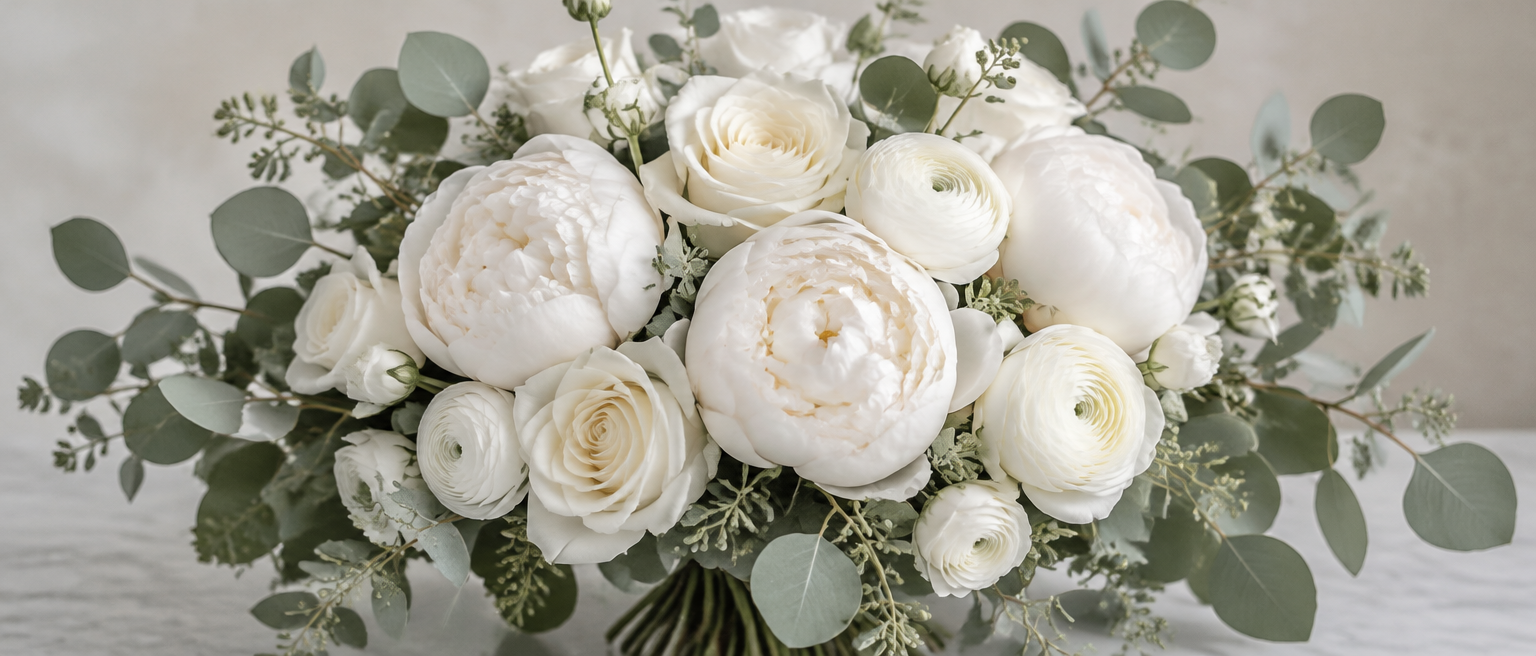

Quick answer: White is the most-chosen wedding flower color, and six combinations carry nearly all of it: peony-rose-ranunculus (the lush classic), hydrangea-rose (the volume value), orchid-minimal (the modern), lily-eucalyptus (the formal), garden-rose-only (the luxury), and baby’s-breath-mix (the airy budget play). The rules that keep white working: layer three textures minimum, green it heavily, and vary the cream-to-pure-white mix.
All-white is wedding work’s default canvas — the palette that survives every trend cycle because it photographs against every dress, venue, and skin tone. It also fails in a specific, well-known way: undifferentiated white mass reads flat in photos — the washed-out wedding album. The combinations below are the trade’s working answers, and the anti-washout rules are the difference between the classic look and the flat one.
The Six Working Combinations

- 1. Peony + rose + ranunculus (the lush classic). White peonies for volume and ruffle, white roses for structure, ranunculus as the delicate layer — the three-bloom texture stack that defined the past decade’s bridal look (white peony meaning: purity and fresh starts — the card reads bridal on purpose). Runs 2:2:1 by stems (rose:peony:ranunculus) with eucalyptus. The most photogenic combination in white work and the most forgiving to build.
- 2. Hydrangea + rose (the volume value). White hydrangeas supply mass at the best coverage-per-stem in the trade (white hydrangea meaning: grace and purity); roses supply the focal blooms — the combination that fills ceremony arches, aisles, and centerpieces without the peony’s price or season problems. Runs 1:1 by visual weight (one hydrangea head balances 3-4 roses).
- 3. Orchid + minimal (the modern). White phalaenopsis orchids alone or with one greenery — the architectural build for gallery, museum, and modern-venue weddings (white orchid meaning: purity and elegance). Precision over abundance; the smallest stem count in the file.
- 4. Lily + eucalyptus (the formal). White lilies for height and trumpet drama, silver-green eucalyptus for cool — the ceremony-and-cathedral build (white lily meaning: purity and commitment). Handle the pollen note (florists strip anthers; silk skips the problem entirely).
- 5. Garden rose only (the luxury statement). One variety of white garden rose, massed — the single-flower build that reads most expensive because it is (white garden roses run the trade’s premium per stem). The all-one-flower bouquet is the quiet-luxury signature.
- 6. Baby’s breath + mix (the airy budget play). Baby’s breath (gypsophila) as cloud volume around any of the above — or alone, the cloud bouquet — the coverage-per-dollar champion and the lightest look in the file.
Shop all of them at white artificial flowers and wedding bouquets.
Keeping White from Washing Out
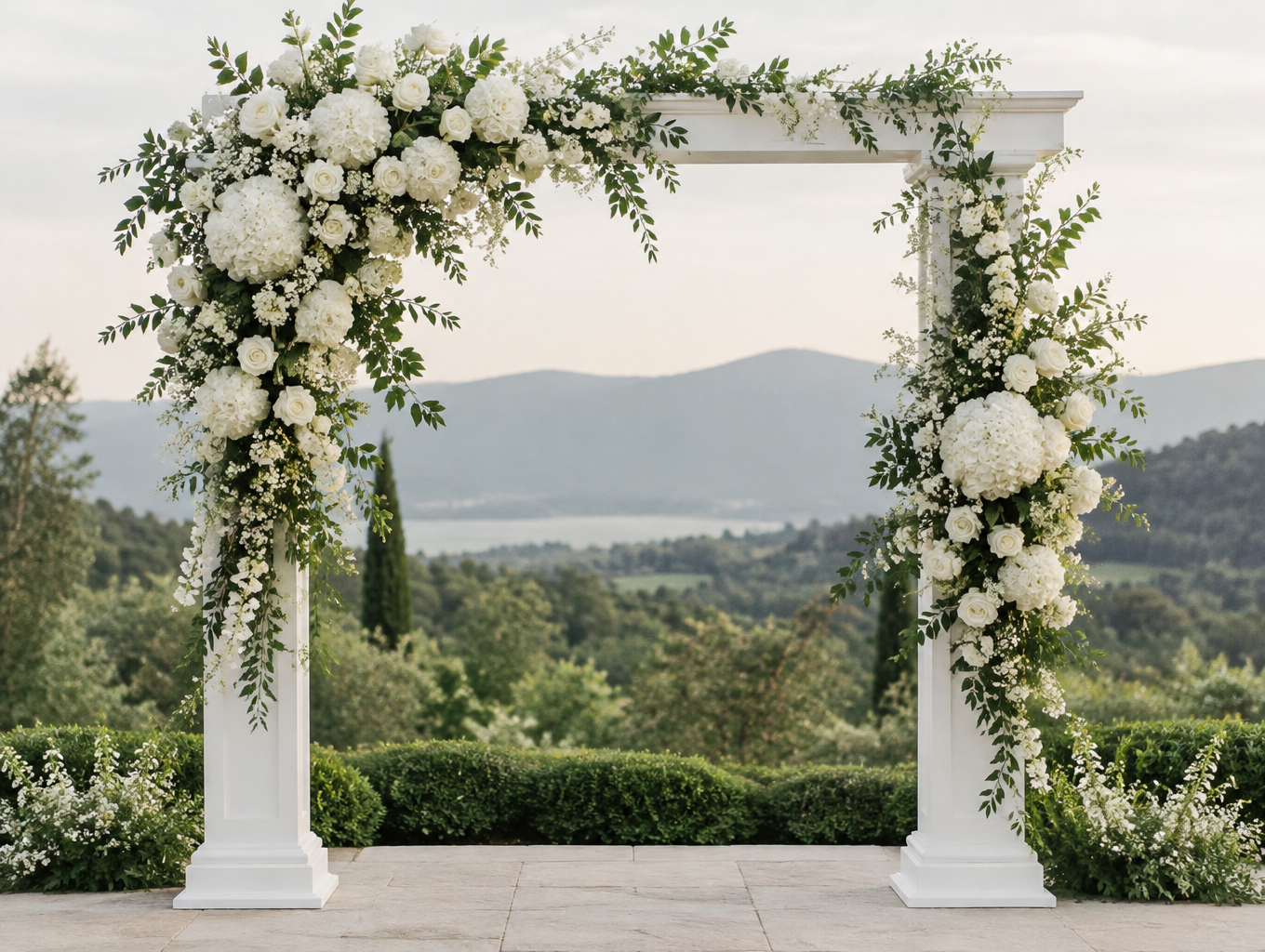
The failure mode is real: white-on-white-on-white photographs as one undifferentiated field, especially in bright outdoor light. The four rules that prevent it:
- Layer three textures minimum. Ruffle (peony, ranunculus), spiral (rose), spray (baby’s breath), trumpet (lily), spike (orchid) — any three read richly where one reads flat. This is why the six combinations above are all multi-texture except the deliberate luxury builds.
- Green generously. Eucalyptus (silver-green, the white-wedding standard), ruscus (formal), or olive (the Provence register) — the green does the separation work that more white can’t. The greenery ratio in white work runs higher than colored palettes: roughly one green stem per two white.
- Mix the whites deliberately. Pure white, cream, and blush-white layered reads dimensional; all-pure-white reads clinical. The “white” wedding that photographs best is usually three adjacent shades — and in silk, this means ordering across two or three skus rather than one (same-maker palettes keep the shades adjacent rather than clashing).
- Add one structural dark. Deep green foliage (magnolia leaf, the Southern file), a dark vessel, or black ribbon — a single dark anchor makes every white around it read whiter.
Where white combinations excel and where they don’t — the settings at a glance:
The faux angle in one paragraph: white is the most color-stable register in silk (no dye lot to drift, no fading to green-yellow as fresh whites do within days), which — plus zero pollen, zero bruising, and season-proof availability — is why the all-white wedding was the first genre the faux trade carried wholesale. A silk build in the six combinations above holds the exact layered whites from planning to last dance. The full palette context at wedding color palettes.
FAQ
What are the best white flowers for a wedding?
The working core: peonies, garden roses, hydrangeas, ranunculus, orchids, lilies, and baby’s breath — combined across at least three textures. The six standard combinations: peony-rose-ranunculus, hydrangea-rose, orchid-minimal, lily-eucalyptus, garden-rose-only, and baby’s-breath-mix.
How do I keep an all-white wedding from looking flat?
Layer three bloom textures minimum, green generously (one green stem per two white), mix pure white with cream and blush-white shades, and add one structural dark — dark greenery, a dark vessel, or black ribbon.
What greenery goes with white wedding flowers?
Eucalyptus (the silver-green standard), ruscus (formal), olive branches (the Provence register), and magnolia leaf (the Southern structural dark). In white work the greenery ratio runs higher than in colored palettes.
Are faux white wedding flowers convincing?
White is silk’s strongest register — no color drift, and quality layered builds read convincing at guest and photographer distance, with no pollen, no bruising, and no season limits. Fresh whites yellow within days; silk whites hold exactly.