
Artificial Wreaths
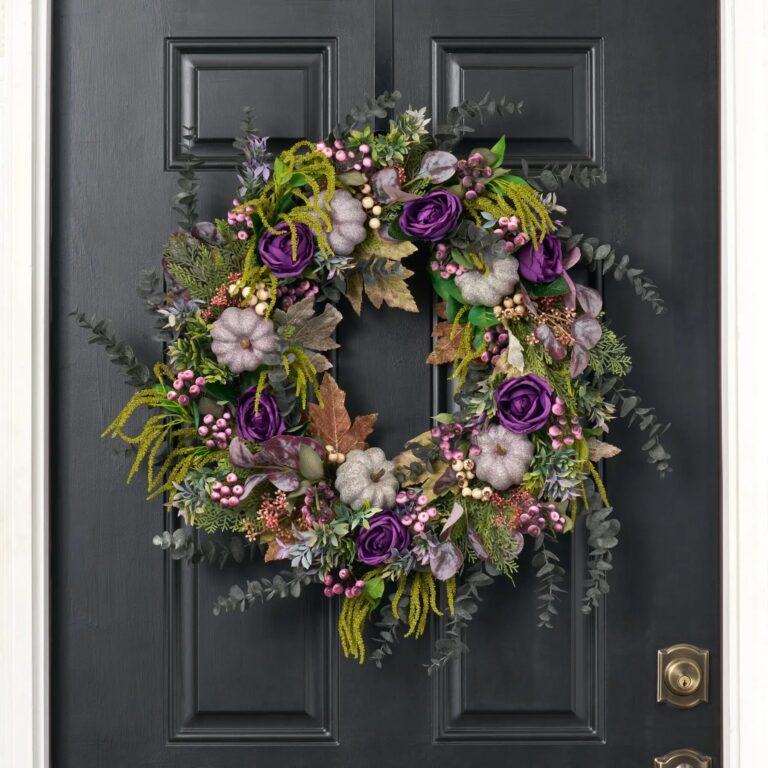
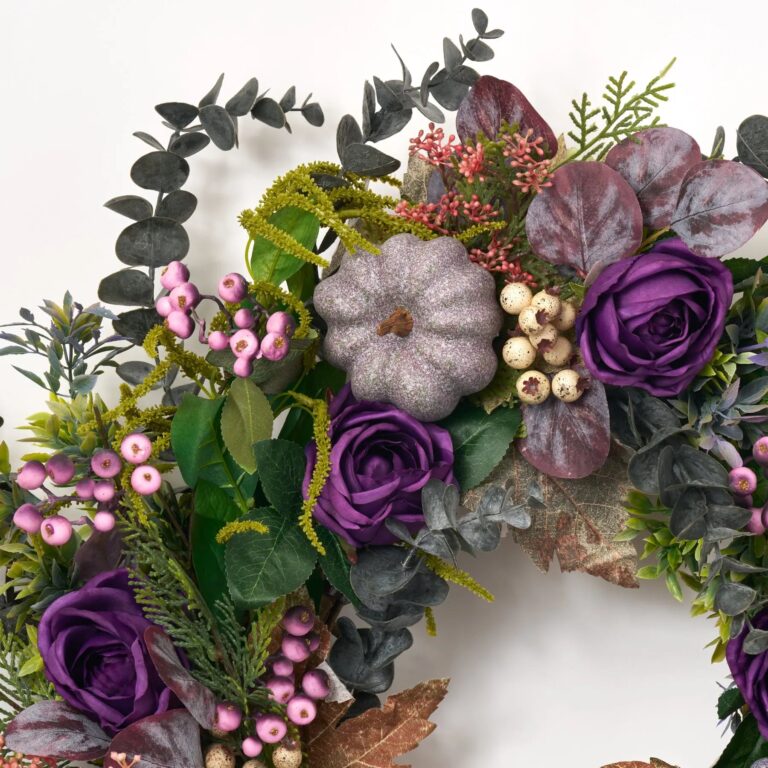


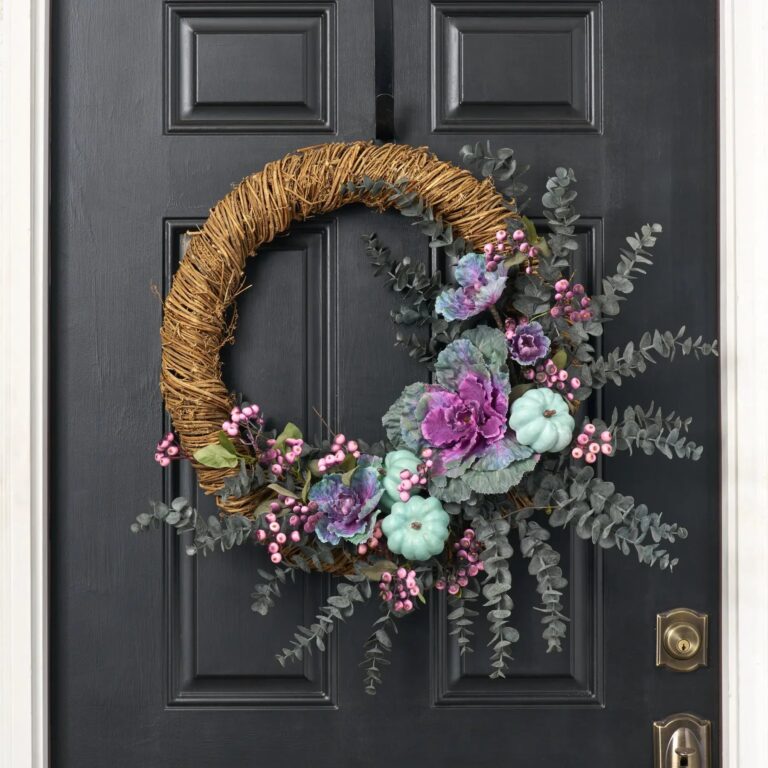

This is the complete wreath program — nineteen series covering every season, doorway, wall and window, built on evergreen, grapevine and deco mesh bases in sizes from 9-inch minis to 36-inch statement rings. Silk, faux and artificial name the same family here, and every listing photographs the exact single wreath that ships, with its measured diameter and tip count stated. Start with the map below, then follow the series that matches your door.
Quick answer: An artificial wreath is a decorative ring on a fixed base — evergreen boughs, a grapevine frame or deco mesh — wired with blooms, berries and ribbon, sized 18–36 inches for doors and windows. Size it to 50–70% of the door panel's width (22–24 inches on a standard 36-inch door). Pieces run $40–150 (USD, October 2026) and return every season; fresh specialty wreaths run $52.95–404 and last about three weeks.
Artificial Wreaths, Explained
A wreath is the one greenery form that frames instead of runs or falls — a closed ring hung flat against a door panel, window or wall, sized against what sits behind it. What separates a good artificial ring from a discount-bin one is not the front face but the build underneath it, and three specifications decide that: the base, the tip count, and the grade of the filler greenery.
The three bases carry three looks. Evergreen boughs read classic and dense — the December default. Grapevine frames read rustic and airy, with the visible twig ring as part of the design. Deco mesh reads bold and craft-fair bright, built from ruffled ribbon rather than foliage. On the evergreen side, PE (polyethylene) injection-molded tips copy real branch geometry and carry the realism at close range; PVC film strips are flatter and best used as interior filler — most better wreaths mix both, a PE face over a PVC body. Tip count works alongside: 150–250 tips on a 24-inch ring reads full at doorstep distance; under about 100, the frame shows through indoors.
The collection standard underneath all three bases: filler greenery cut at the same material grade as the focal blooms — the inner branches, backing and leaves are not a cheaper afterthought, which is exactly where low-grade wreaths fail at handshake distance. Glue lines are specified invisible at half a meter, and flower heads, pinecones and berry clusters are pull-tested before boxing.
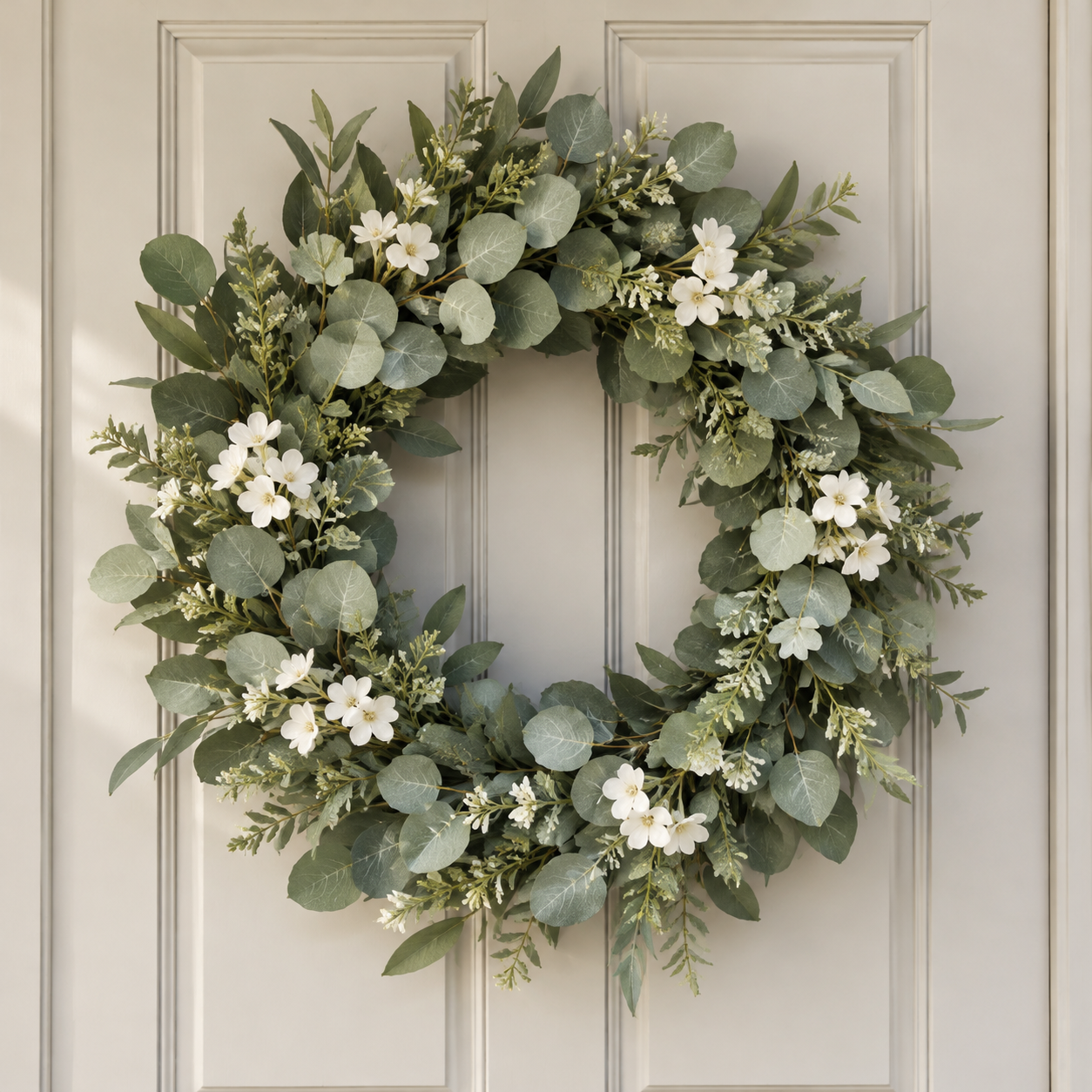
The one sizing rule
Wreath size follows door width: the ring should span 50–70% of the panel. A standard 36-inch door takes a 22–24 inch wreath; 30-inch doors and interior spots take 18–20 inches; 38–48 inch doors and doors with sidelights carry 30 inches; double doors take either one 36-inch ring or two matching 20–24 inch wreaths hung one per panel at identical height. Measure once with a tape and the decision is made — every product page lists the measured diameter of the exact piece photographed. The size extremes have their own series: mini & small wreaths under 14 inches for cabinets, windows and candle rings, and large wreaths from 24 inches up for grand entries.
The Nineteen Series, Mapped
Nineteen series organize along four axes — season, placement, size and base material — and one wreath typically belongs to just one axis at a time. Shop the axis that matches the job: the season axis for the year's rotation, the placement axis for where it hangs, size and material when those are the deciding facts.
Season: eleven series on the calendar
Placement: three series by where it hangs
Size and material: five more series
Two size series bookend the range — Mini & Small Wreaths (under 14 inches: kitchen cabinets, candle rings, walls) and Large Wreaths (24 inches and up: grand entries, double doors, oversize statements). Two material series carry the evergreen-family builds — Greenery Wreaths (eucalyptus, seeded and mixed greens for the year-round neutral door) and Grapevine Wreaths (the twig-ring rustic line) — with Deco Mesh Wreaths completing the map as the ribbon-built craft line. Vertical surfaces, for the record, belong to the sister form: swags and teardrops dress the posts and door frames a ring cannot.
How to Choose a Wreath in Five Steps
- Measure the surface first.
Ring = 50–70% of the door panel's width; 22–24 inches is the default on a 36-inch door. Windows and interior doors drop to 18–20 inches; grand entries carry 30–36.
- Pick the base for the look.
Evergreen for classic and dense, grapevine for rustic and airy, deco mesh for bold color. Check the PE/PVC mix and tip count per listing — 150–250 tips on a 24-inch ring reads full.
- Match the exposure.
Covered porch: anything. Fully exposed door: denser builds, and see the outdoor series for the weather-favored lines.
- Decide pre-lit or unlit.
Warm-white LED (typically 50–100 lights on a 24-inch ring) for on-the-door glow; unlit if you re-work ribbon every year. A failed string never condemns the wreath — it just returns to being an unlit base.
- Plan the storage before you buy.
A 30-inch wreath needs a 32-inch shelf or box top. Keep the shaped box it ships in; the same piece decorates the door for many seasons.
The Four-Ring Year
The quiet advantage of nineteen series on one standard is rotation: one hook, four boxed rings, a door that changes with the calendar instead of fading in place. A practical year runs fall (berries and leaves) into Christmas (evergreen or flocked), then a spring flowering ring, then summer greenery or a patriotic build — each piece amortized across years rather than composted after three weeks. The cost math against fresh is blunt: specialty fresh wreaths run $52.95–404 per single season (Lynch Creek's 2026 line, checked October 2026), while an artificial ring at $40–150 exits its box every season for years — and the door looks identical each time, which matters when the rest of the styling is already set. The honest trade is scent: no silk ring smells like noble fir, and the fix — a few real pinecones tucked behind the ring — costs less than replacing a fresh wreath annually.
Frequently Asked Questions
What size artificial wreath do I need?
Size to the surface: 50–70% of the door panel's width. A standard 36-inch front door takes 22–24 inches; 30-inch doors, interior doors and windows take 18–20; 38–48 inch doors and doors with sidelights carry 30 inches; double doors take one 36-inch ring or two matching 20–24 inch wreaths hung one per panel. Minis under 14 inches dress cabinets, candle rings and small walls. Every listing states the measured diameter of the exact piece photographed.
What are artificial wreaths made of?
Three components: the base (evergreen boughs, a grapevine frame, or deco mesh ribbon), the decoration (PE and fabric blooms, pinecones, berries, wired ribbon), and the backing ring. On evergreen builds, PE injection-molded tips carry the realism and PVC film works as interior filler — the mix is stated per listing. The collection standard is that filler greenery is cut at the same material grade as the focal blooms; glue lines are specified invisible at half a meter and wired decorations are pull-tested before boxing.
How long do artificial wreaths last?
Stored dry in the shaped box, away from attic heat, a wreath from this collection is built to return for many seasons — no needle drop, no browning, no water. The failure points are physical: crushed branches from flat-packing, shed flocking on flocked styles (a one-to-two-season cosmetic), and faded ribbon after years of direct sun. Plan on a five-minute fluff each season; that repeat is the value case against fresh wreaths, which last about three weeks indoors.
Can artificial wreaths hang outside?
Under cover, all season and for years — covered porches and overhung doorways are the easy case. On fully exposed doors, the honest boundary applies to any artificial botanical: driving rain, snow load and weeks of sun age a piece, with dense builds holding up visibly longer than airy ones. Bring wreaths in during named storms, and favor the outdoor series for open-exposure placements.
Which wreath is best for a front door?
The front door series, sized 22–24 inches on a standard 36-inch panel. On styling: evergreen reads classic, greenery builds (eucalyptus, seeded greens) read neutral enough to run all year, and grapevine reads rustic. Denser builds handle exposed doors better than airy, wide-spaced tip arrangements; pre-lit rings carry 50–100 warm-white LEDs on a 24-inch base.
How much should a good artificial wreath cost?
Market ranges as of October 2026, USD: undecorated 24-inch rings typically run $40–70; pre-decorated designer styles run $70–150; oversized 36-inch statement pieces run higher. Mass-market silk rings list $35–120 at the big faux-botanical retailers (Nearly Natural's line, checked this month) with persistent sitewide discounting. Against fresh specialty wreaths at $52.95–404 for a single season, an artificial piece costs less per year from the second season on.
How do I store wreaths between seasons?
Keep the shaped box — its inner supports hold the ring round. Let the wreath dry fully if it has weathered rain, box it flat, and store cool and dry; hot attics directly under the roof degrade PE tips over years. A 24-inch wreath shelves in a 26-inch box, a 30-inch in 32. A five-minute fluff — bending tips outward — restores the silhouette before it goes back on the hanger.
Do you have wreaths for windows and small spaces?
Two series cover exactly that. Window wreaths run smaller (18–24 inches typical) with damage-free hanging methods for glass and frames. Mini & small wreaths run under 14 inches for kitchen cabinets, candle rings (a mini wreath around a pillar candle is the classic centerpiece trick) and gallery-wall accents — often sold in multi-piece sets for cabinet fronts.