

Artificial Swags
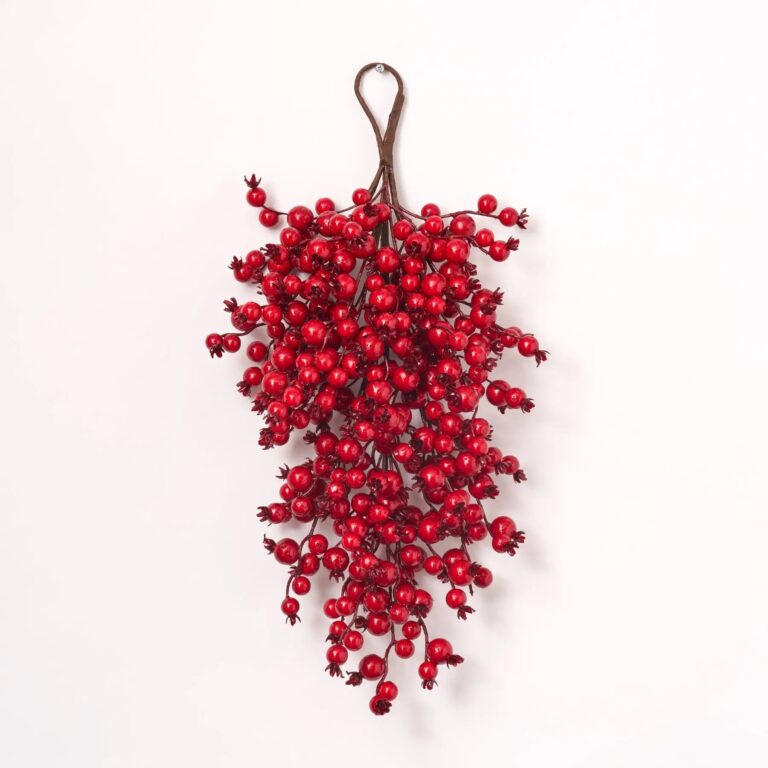

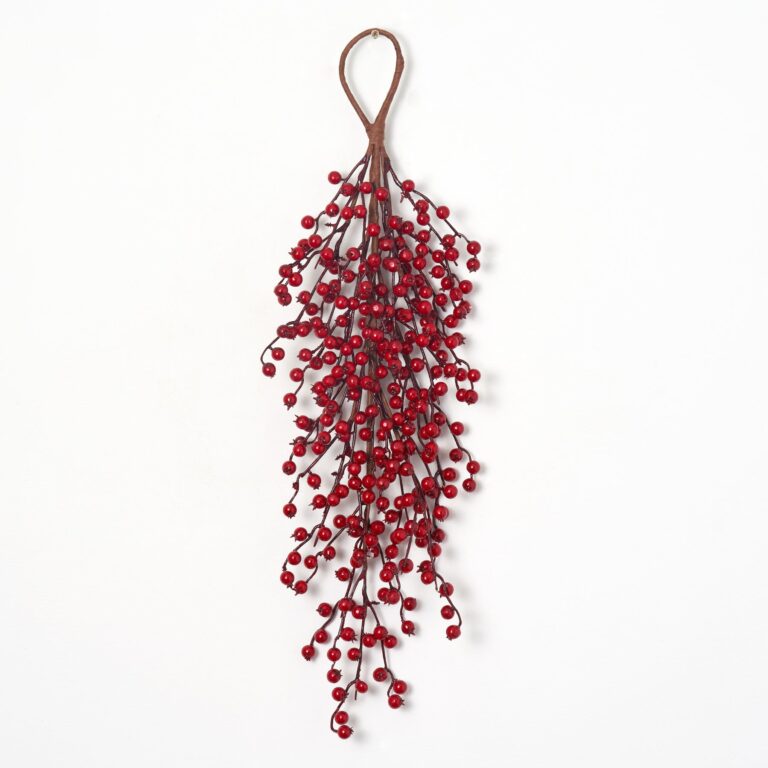
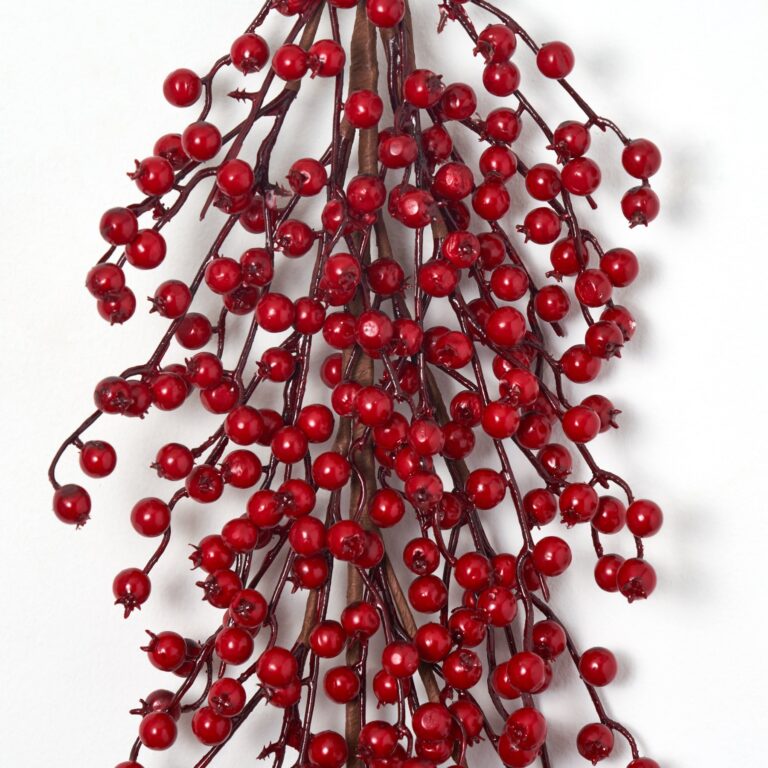
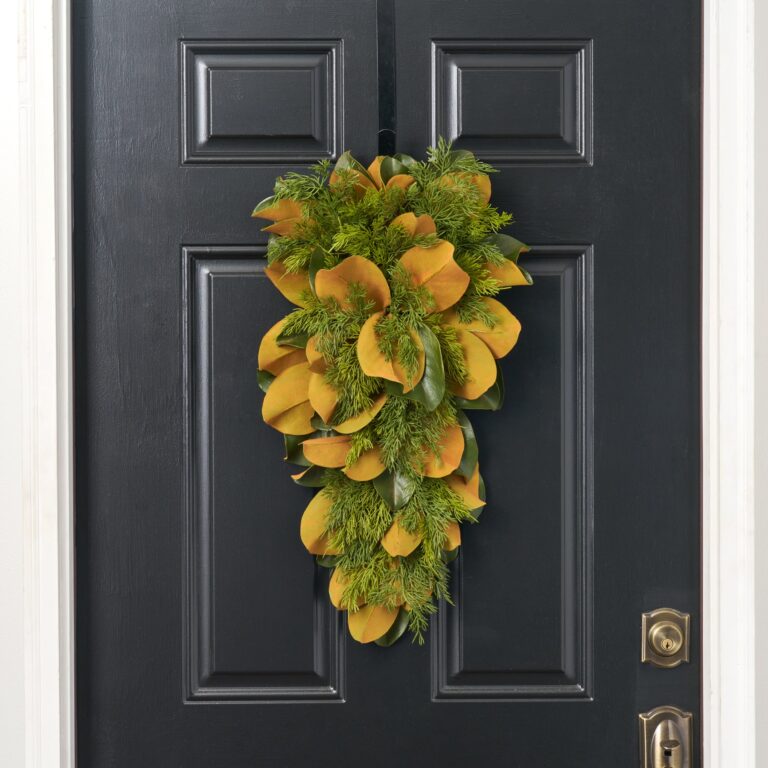

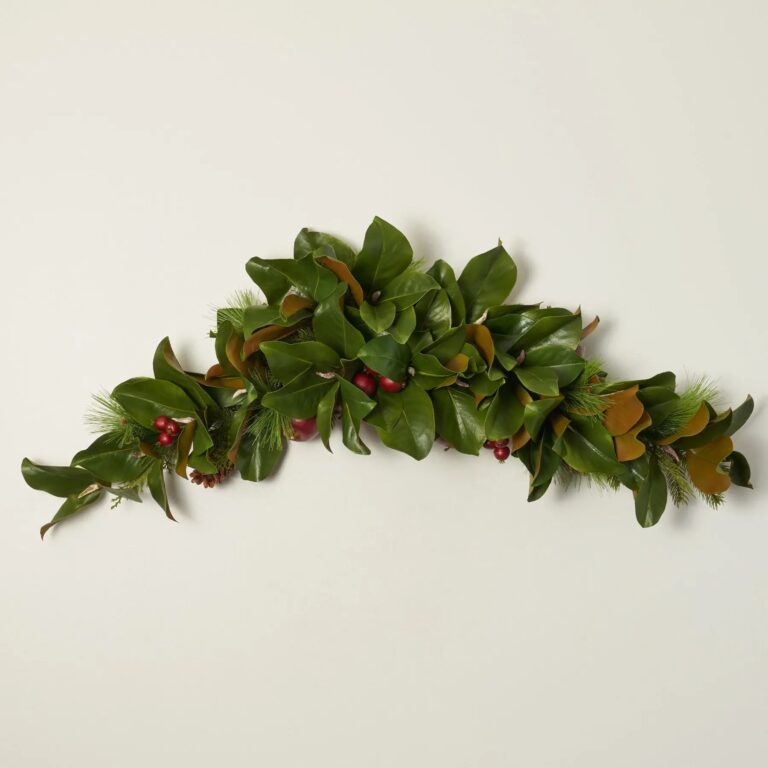







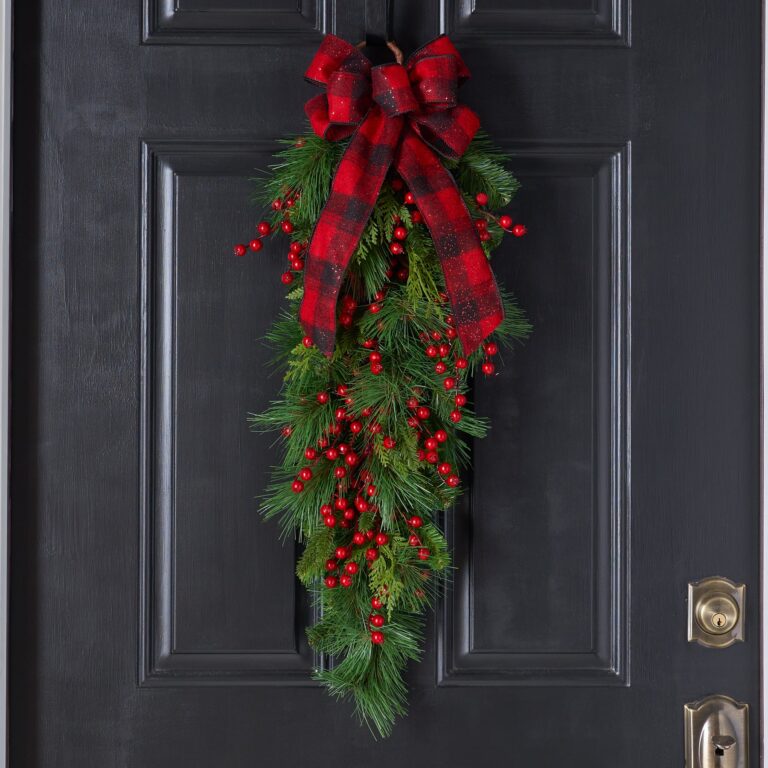





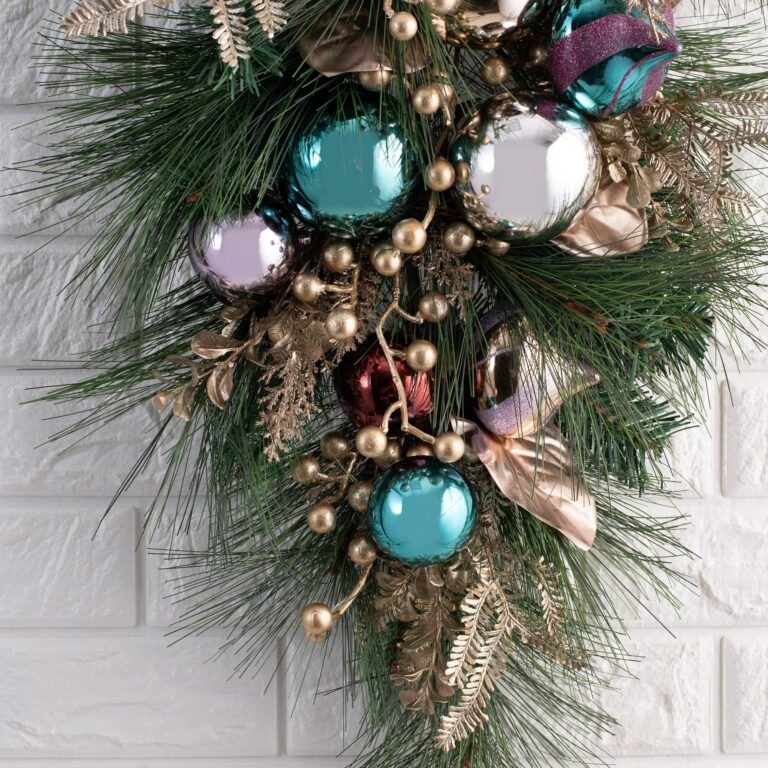


This is the swag and teardrop line — the vertical half of the greenery program, hung where rings cannot go. Where wreaths frame and garlands run, swags fall: flat-backed sprays built wide at the top and tapering down a measured drop, for door frames, posts, columns and mantel centers. Every listing photographs the exact single piece that ships with its measured drop stated.
Quick answer: An artificial swag is a teardrop-shaped greenery spray — wide at the top, tapering down a 24–48 inch drop — that hangs flat against vertical surfaces where a wreath's ring would leave an empty middle: above door frames, on lamp and gate posts, at mantel centers. Market prices run $25–130 (USD, October 2026); swags store flat and return every season.
What a Swag Actually Is
A swag is a bundled spray, not a ring: greenery and decoration gathered at a single hanging point, fanning wide up top and tapering to a tail below — the teardrop is the same object named for its silhouette. Because the back is flat and the weight hangs from one anchor, a swag mounts on surfaces a ring physically cannot use: the flat face of a lamp post, the wall beside a door handle, the center of a mantel between candlesticks, each panel of a double gate. The drop is the sizing unit — 24 to 48 inches on standard pieces — measured from the hanging point to the tail's end.
Build grade in this collection follows the house standard: greenery and filler at the same material grade as the decorated face, so the lower taper — the part you see from below — is not cheaper material; glue lines are specified invisible at half a meter, and pinecones and berry clusters are pull-tested before boxing. The flat-backed construction means one loop or frame carries the whole piece: hang it, adjust the fall of the spray, done.

Sizing by drop, not diameter
Swags size by drop length against the vertical clearance of the spot: 24–28 inches accent windows, interior doors and mailbox posts; 32–36 inches are the workhorse drops for standard door centers, lamp posts and newels; 40–48 inches make statements on tall doors, gate pillars and mantel centers, ending above eye level so the doorway stays open. Before ordering, measure from the hanging point down to the obstacle below — knocker, handle, house numbers — and leave two inches of clearance. One further format lives at the end of the range: 6-foot long swags, continuous 72-inch sprays built to run down a full column or porch post.
Swag or Wreath: Choosing by Geometry
Pick by the shape of the space, not by loyalty to either form. The rule in one line: a framed feature wants the ring, a vertical column wants the teardrop — and most doors deserve both.
The two forms are teammates, not rivals. The layered entry runs a wreath on the door face and a swag above the frame or flanking the wall; the same pairing in reverse — swag on the door center with vertical hardware, ring on the wall beside — is the fix for doors whose knockers sit below the midpoint. For the December version of this line in depth — pre-lit counts, the full-door program, pairing with Christmas garland — see Christmas swags & teardrops, the deepest series in the program.
Where Swags Outperform Everything Else
- Door frames and transoms: the space above the door line is a flat vertical band — a swag's wide top fills it without the dead circle a ring leaves.
- Lamp and mailbox posts: zip-tie at the post top, face out; the drop follows the post's line. Fast January removal is part of the plan.
- Double doors and gates: two matching swags at level heights — matched with a tape, because the eye catches a one-inch miss at twenty feet.
- Mantel centers and stair newels: the tail drape is the traditional finish at both spots, layered over a mantel garland run.
- Chair backs and window columns: the 24–28 inch accent drops, one per chair or window, in matched sets down a row.
Outside those placements the shape concedes: doors with a centered feature want the ring, and any running length wants garland. That boundary is the honest one to state — a swag bought for a wreath's job will read as the wrong tool within a week of hanging.
Swags Through the Seasons
The form is not Christmas-only, even though December is its peak. The seasonal logic tracks the wreath calendar: sunflower and citrus sprays carry summer doors; maple, magnolia and marigold builds carry fall; pine, cedar and berry builds carry Christmas and winter; and greenery teardrops (eucalyptus, seeded mixes) run the year-round neutral door. A swag base plus seasonal picks re-decorates each year at pick prices — the same refresh economics as the ring program, on a form that stores in a third of the space.
On exposure: covered porches and overhung entries take any swag all season, and silk has no water clock, so covered placements hold for years. Fully exposed posts and gates face the boundary that applies to every artificial botanical — driving rain, snow load and weeks of sun age a piece, dense builds visibly slower. Zip-tie posts for fast removal, bring pieces in during named storms, and on pre-lit swags tuck the battery pack under the binding, as it is the weather-sensitive end. Interior and covered placements are the honest core use for this form — treat open-exposure hanging as seasonal and retrievable rather than permanent.
Frequently Asked Questions
What is the difference between a swag and a wreath?
Shape and mounting. A wreath is a closed ring that frames a feature — door face, window, knocker — sized by diameter against the door's width. A swag is a flat-backed teardrop spray that fills a vertical column of space — above the door frame, down a lamp post, at the mantel center — sized by drop length (24–48 inches standard). A swag's taper clears hardware that sits below the door's midpoint; a ring centers on the panel. Most entries run both: ring on the door, swag at the post.
Is a teardrop the same as a swag?
Yes — teardrop names the same object by its silhouette, and retailers who build the pair into one line ("swags & teardrops") are listing one form. Strictly, some makers use teardrop for the narrower, longer silhouettes and swag for the fuller, fan-shaped sprays; in this collection both hang the same way — flat-backed, from a single anchor — and both size by drop. Listings state the exact drop and shape per piece.
How long should a door swag be?
Standard door centers carry 32–36 inch drops; tall doors and gate pillars carry 40–48; windows, interior doors and chair backs take 24–28. The quick check: measure from the hanging point down to the first obstacle — knocker, handle, house numbers — and leave two inches of clearance, with the tail ending above eye level so the doorway stays open. Long-format 6-foot swags are for full columns and porch posts, not door centers.
How do you hang a swag?
By its built-in loop or frame: over-the-door hooks at the top rail, a nail or removable hook for wall placements, and zip ties for gateposts and lamp posts — zip ties for the fast January removal. Flat-back construction means a single anchor carries the piece; hang, adjust the fall of the spray, and step back. On masonry, use a removable hook rated for the swag's weight rather than masonry nails.
Can swags stay outside all season?
Under cover, yes, and for years — covered porches and overhung doorways are the core placement for this form. Fully exposed posts and gates face the same boundary as every artificial botanical: driving rain, snow load and weeks of direct sun age any piece, with dense builds holding up longer. The working pattern: zip-tie for fast removal, bring pieces in during named storms, box dry — and on pre-lit swags, tuck the battery pack or connection point under the binding.
How much do artificial swags cost?
Market bands as of October 2026, USD: plain evergreen teardrops run $25–50; pre-decorated builds (pinecones, berries, bows) run $45–110; pre-lit versions run $70–130, with 40–48 inch statement drops and 6-foot long formats at the top. Mass-market silk lines list $41–77 for 26–38 inch seasonal pieces (Nearly Natural's collection, checked this month, including sale pricing). Fresh swags from specialty farms cost similar money for a single three-to-six-week season — the second year is where the artificial math pulls ahead.
Do swags come pre-lit?
The Christmas line does: 30–70 warm-white LEDs depending on drop, with counts stated per listing rather than assumed — single-point placements rarely need more. Long 6-foot formats carry scaled counts (a 50-LED six-footer is typical). LEDs run cool enough to layer against ribbon, and a failed string never condemns the piece; it goes back to being an unlit base.
How do I store swags after the season?
Box dry, flat or lightly coiled, somewhere cool — hot attics are the enemy of both tips and light strings. Because a swag is a bundle rather than a ring, it compresses into a shallow box and shelves in a fraction of the space wreath storage demands; that small footprint is one of the form's quiet advantages when the decoration shelf is full. A two-minute fluff in December — bend tips outward, shake the taper loose, straighten the bow — restores the silhouette.