
Product categories
- No product categories exist.
Price
Showing all 3 results
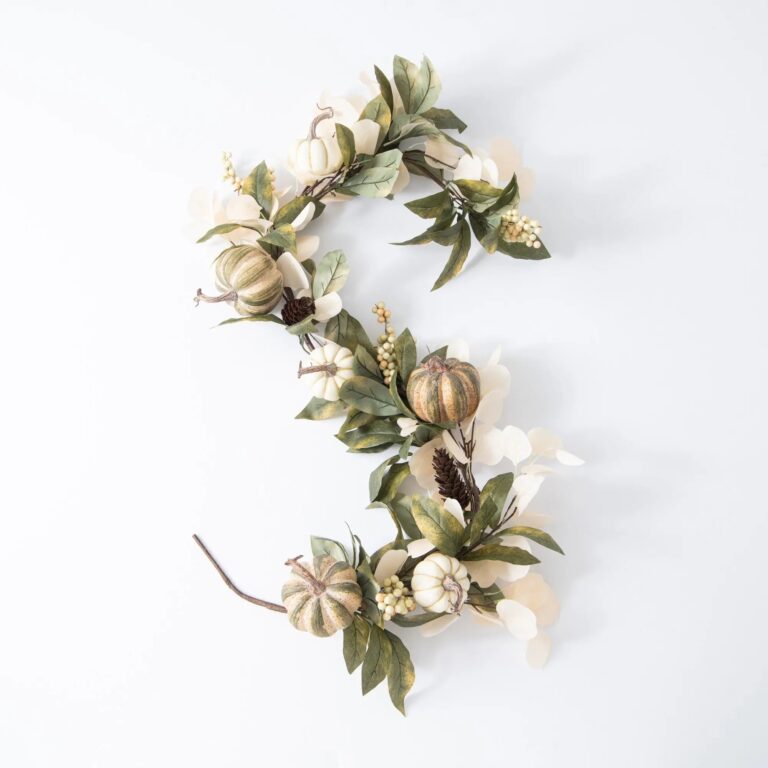
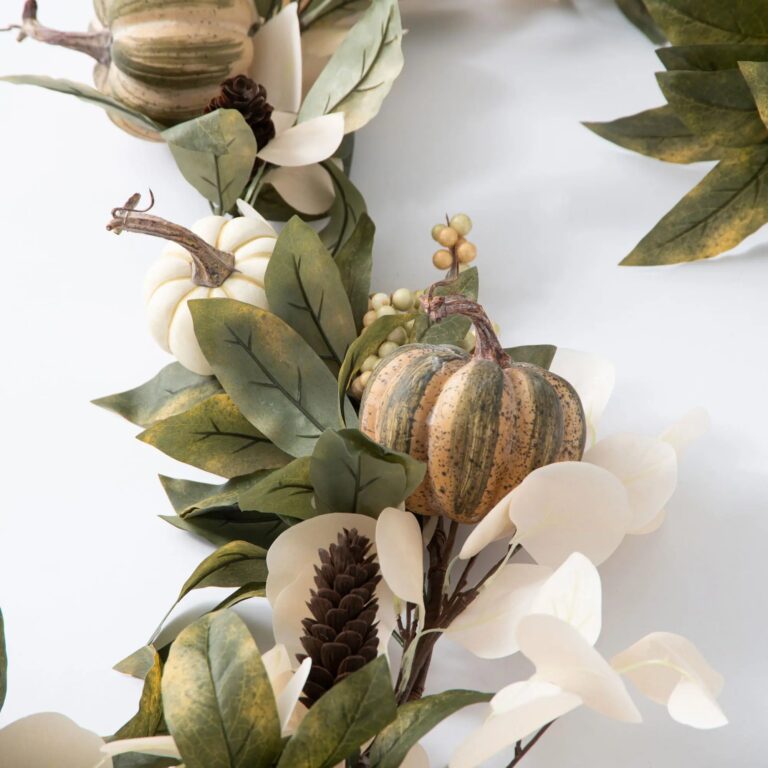
5ft Faux Bleached & Pumpkin Garland for Mantel – Green
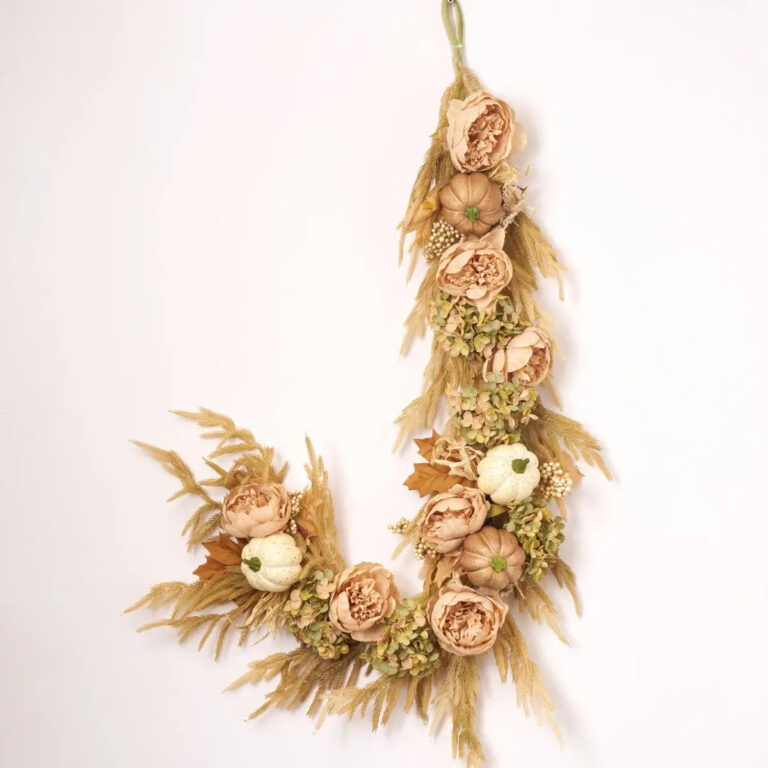
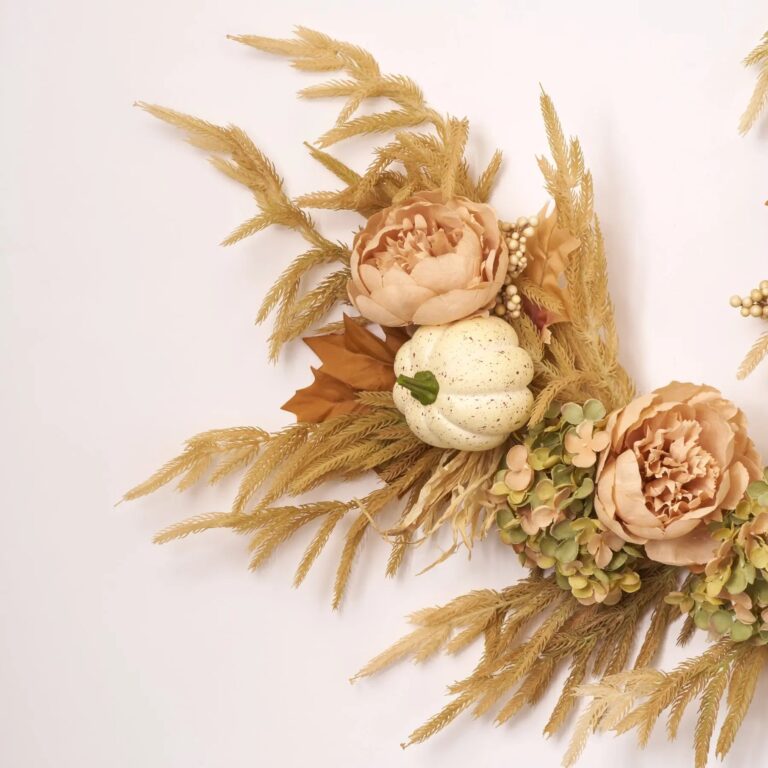
5ft Faux Pumpkin & Norfolk Pine Garland for Mantel – Beige
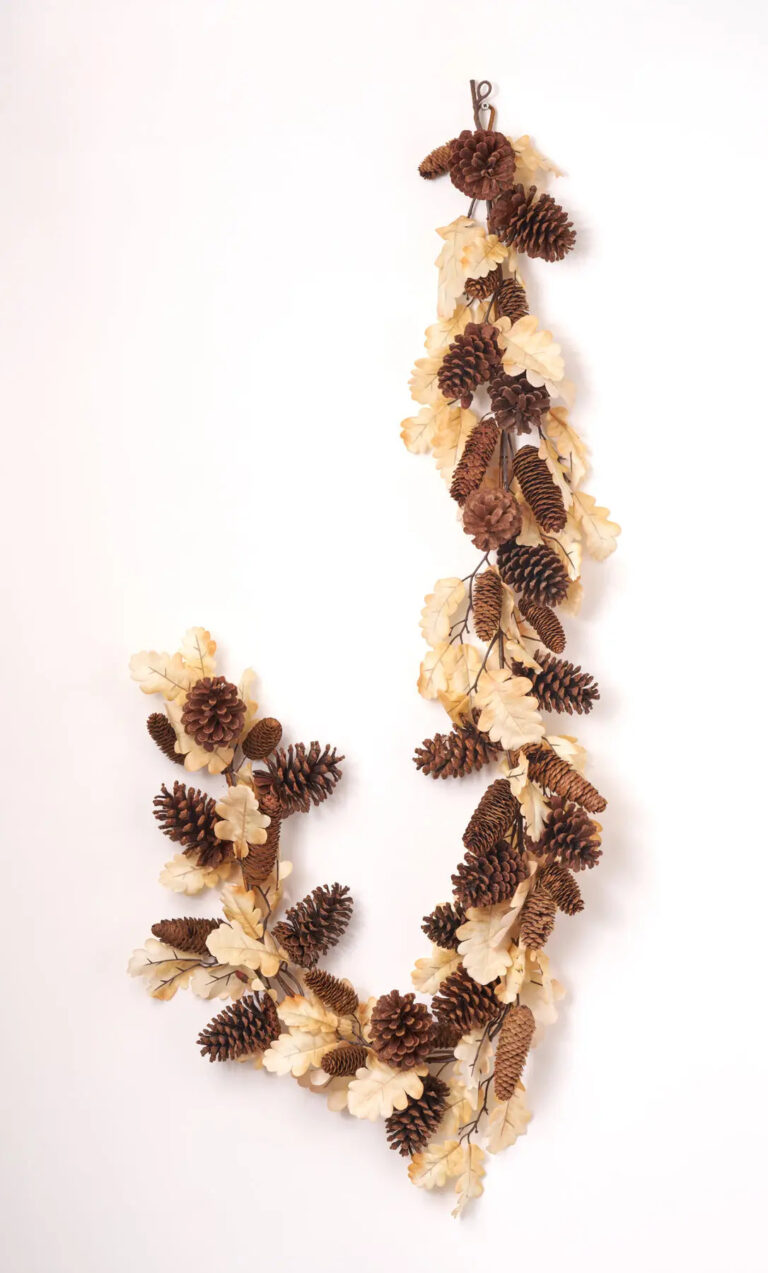
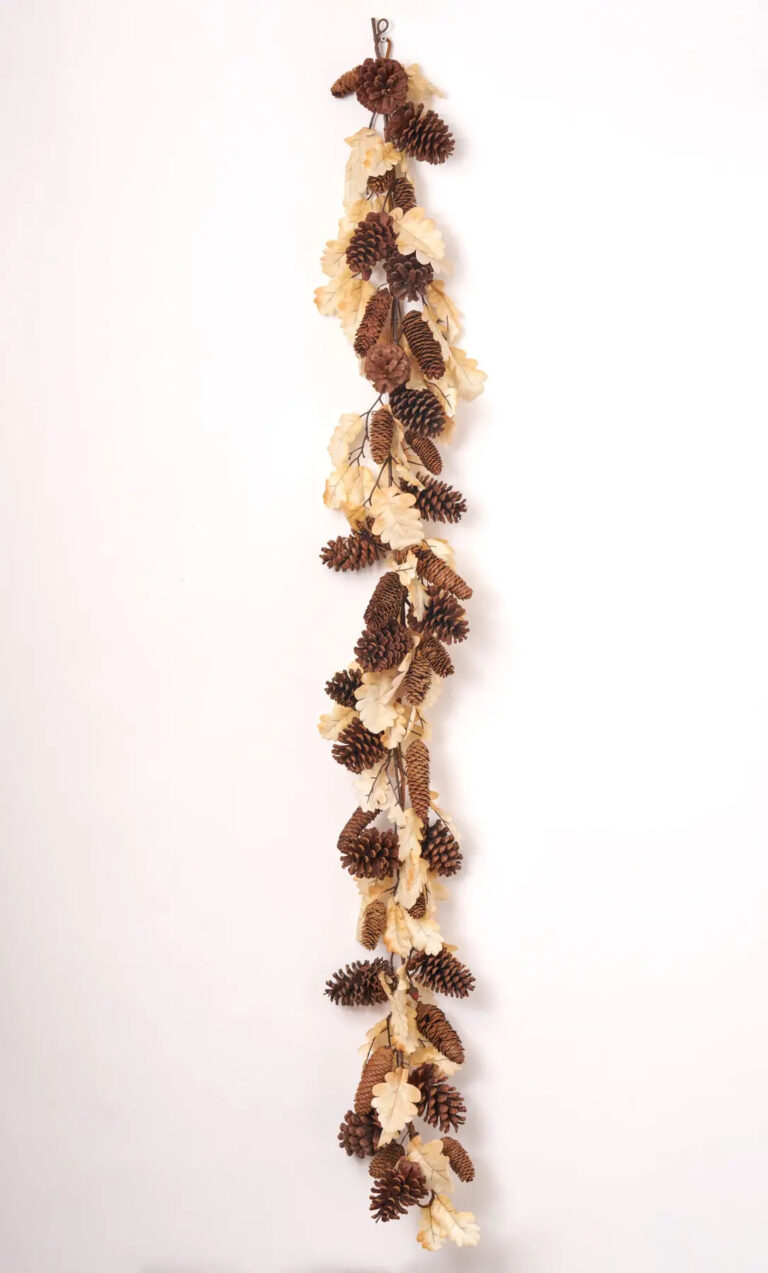
6ft Artificial Oak Leaf & Pine Cone Garland for Mantel – Beige
This garland sets a beige mood in any room. Available in multiple sizes. Run it down the table or mantel for fall gatherings.
A Thanksgiving garland is the November half of the autumn strand — wheat, cotton, oak and magnolia leaves in cream, rust and sage, sold by measured length for the harvest table, the sideboard and the mantel that already carried October. This page covers the harvest builds in 6, 9 and 12 foot sections, the table-runner specs that feed a crowd, and the two-palette handoff that turns an October strand into a November one without re-buying.
Quick answer: The harvest table takes the longest strand in the house: a standard 8-foot dining table wants a 9-foot run with drop ends (buy the table's length plus a foot per end), and the sideboard wants 6. Market bands as of October 2026, USD: wheat and cotton runs $25-60 per 9 feet, decorated harvest builds $50-130 — and the buying window closes earlier than the holiday: search peaks at 12,100 monthly lookups in early November, against a 1,600 baseline the rest of the year.
Thanksgiving Garlands, Explained
What a Thanksgiving garland is
A Thanksgiving garland is a harvest strand — the same wired-spine construction as the rest of the autumn line, dressed in November's quieter vocabulary: wheat and wheatsheaf, cotton bolls, oak and magnolia leaves in rust and cream, seeded eucalyptus in sage, berry sprays in burgundy. Where October's builds shout orange, November's strand is the layer under candlelight: texture over color, cream and straw tones that catch lamp light on a table running the length of a family dinner. The searches agree on the timing — "thanksgiving garlands" runs a quiet 1,600 lookups a month for most of the year and spikes to 12,100 in the first days of November, which is households realizing the table is the room that matters this week.
Every piece is sold by stated length — 6, 9 and 12 feet are the standard sections — and the listing photo shows exactly one garland unless the title says a set.
October's strand, November's table: the handoff
Most houses do not need a second autumn strand — they need the first one restyled, and the mechanics are worth stating plainly. Pull the October layer: the marigold accent run, the pumpkin picks, anything black or purple from Halloween. Keep the base: a maple or eucalyptus run in rust, cream or sage reads harvest the moment the orange comes off it. Move it: the mantel strand comes down and becomes the table runner, because Thanksgiving's center of gravity is the table, and a 7-to-9-foot mantel run is exactly a 9-foot table run. Add the November vocabulary on top: a wheat or cotton layer laid loose down the center, berries pushed in every 18 inches, and pillar candles set into the strand on saucers or in hurricanes — glass between flame and fabric, always. Households that skipped October entirely start here, and the same cream-rust-sage palette rule applies from scratch.
The harvest builds, side by side
| Build | What's on it | Best placement |
|---|---|---|
| Wheat / wheatsheaf | Golden straw stems wired on a spine or tied in sheaves | The table runner — catches candlelight down the center |
| Cotton boll | Cream bolls on brown stems, airy spacing | Sideboards and buffets — the farmhouse neutral |
| Oak leaf / magnolia | Rust-to-brown leaves, magnolia with brown-backed panels | The mantel base — full silhouette under candles |
| Seeded eucalyptus | Sage-tone foliage with seed pods, the year-round strand | Every layer — the strand that survives every restyle |
| Harvest decorated | Leaves plus berries, mini pumpkins and gourds pre-wired | One-motion installs — guest tables and sideboards |
The table runner: specs for feeding a crowd
The Thanksgiving strand has a job October's never had: sharing a surface with dinner. The working specs: run the table's length plus a foot of drop per end — a standard 8-foot table takes a 9-foot run, and the 12-foot section does the same table with generous swag or carries a 10-foot table plain. Keep the runner's spine offset to one side of centerline rather than threading the middle: serving dishes land down the center all afternoon, and a strand laid off-center reads as designed rather than displaced. Height is the second spec — keep the runner under 8 inches tall at the swag tops, or it blocks sightlines across the table, which is the fastest way to end a styling argument. Candles: hurricanes glasses or saucers under every flame that touches the strand's airspace, and battery tealights inside the strand itself. The shorter kitchen-island or sideboard runs take 4-to-6-foot pieces — the sage table-garland format — layered two strands deep where guests set down plates.
Color: the November palette is a rule, not a mood
The harvest palette holds because it bridges three weeks without restyling: cream, wheat gold, rust, sage and brown. Orange survives at the margins — a burnt-orange maple base reads harvest once the bright October accents are off it — but harvest yellow and pumpkin orange as accents belong to October, and by the fourth Thursday they read as leftovers. The colors here are named the way they ship: silk dye lots vary slightly by batch, and the listings do not promise a matched swatch — order a runner and its sideboard companion in one checkout and they ship from the same batch. That is the practical color rule at every scale: one order, one batch, one palette reading across the whole room.
What the market charges, and the four-year math
The bands as of October 2026, USD: wheat and cotton runs $25-60 per 9 feet; decorated harvest builds with berries and gourds wired in $50-130. Fresh garland is the comparison everyone makes on this holiday specifically, because fresh harvest material is real — and it is also the shortest-lived: wheat and cotton hold a season, but a fresh magnolia-leaf runner browns within two weeks of a warm kitchen. A silk-based strand at the price of one-and-a-half fresh seasons comes out of the box for four or five Novembers, and the year it finally retires is usually the year the style changed, not the strand.
After the table: December is three weeks out
The teardown discipline is the same as the setup: the harvest strand boxes dry, coiled loose, cool room. Houses that run the full calendar keep the rail anchors and swag positions from October through the handoff — the stair spiral that carried maple and cotton for six weeks gets the December greenery three days after Thanksgiving, and the Christmas garlands line uses the same length arithmetic (rail run × 1.5, mantel width plus drape), so the anchors laid in October serve straight through the year-end. The autumn builds themselves rest in the garland collection between seasons.
How to Choose a Thanksgiving Garland
- Measure the table before anything else.
Table length plus a foot of drop per end — an 8-foot table takes a 9-foot run. Off-center the spine, keep swag tops under 8 inches, and the runner coexists with the serving line all afternoon.
- Shop your own October strand first.
The handoff — orange accents off, rust-cream-sage base kept, mantel run moved to the table — restyles a whole house without a purchase. Buy only the November vocabulary: a wheat or cotton layer and berries.
- Pick builds by placement.
Wheat for the table (light-catching, low), cotton for sideboards, oak or magnolia for the mantel base, sage eucalyptus for every layer — the strand that survives every restyle including December's.
- Set the candle rules at purchase.
Hurricanes or saucers under every flame near the strand, battery tealights inside it. If the table runs tall tapers, the runner stays low and the candles stand in holders outside the strand's airspace.
- Beat the first-week-of-November peak.
The 12,100-lookup spike lands as households realize the table is the room that matters — the good decorated builds thin out with it. Buy the last week of October, verify stated length and piece count, one garland per photo unless the title says a set.
Frequently Asked Questions
How long should a Thanksgiving table garland be?
The table's length plus about a foot of drop at each end: a standard 8-foot table takes a 9-foot run, a 10-footer takes 12 feet plain or 9 with tight ends. Keep the swag tops under 8 inches so sightlines survive across the table, and lay the spine off-center — serving dishes own the centerline all afternoon. If the strand will carry candles, plan the candle positions at lay-out, not after: hurricanes or saucers set into the runner where it sits flat, never flame directly against silk.
Can I use my fall garland for Thanksgiving?
Usually yes — that is the two-palette system working as designed. Pull the October layer (bright marigold accents, pumpkin picks, anything from Halloween), keep the base run in rust, cream or sage, and the strand reads harvest immediately. The strongest version moves the mantel run to the table — a 7-to-9-foot mantel piece is exactly a table runner — and adds a wheat or cotton layer down the center. If your October strand was black-and-purple Halloween, nothing bridges; that one boxes and the harvest run starts fresh in the cream-rust-sage palette.
What is the difference between Thanksgiving garlands and fall garlands?
Same construction, different month and placement. The fall garland line is the whole September-through-November family in the louder palette, mantels and rails first; the Thanksgiving strand is November's quieter half — wheat, cotton, oak and sage — with the harvest table as its center of gravity. Search behavior mirrors the split: fall runs 9,900 lookups a month with a September peak, Thanksgiving runs 1,600 with a sharp first-week-of-November spike at 12,100.
What colors work for a Thanksgiving garland?
Cream, wheat gold, rust, sage and brown — the palette that bridges the three weeks from teardown to the fourth Thursday without restyling. Orange survives at the margins: a burnt-orange maple base reads harvest once the bright accents come off, but harvest yellow and pumpkin orange as accents read as October leftovers by Thanksgiving. Keep runner and companion pieces in one checkout so they ship one dye batch — silk lots vary slightly, and one order is how a room reads as one palette.
How much does a Thanksgiving garland cost?
Market bands as of October 2026, USD: wheat and cotton runs $25-60 per 9 feet; decorated harvest builds with berries, gourds and ribbon pre-wired $50-130; 12-foot sections price upward from the same bands. Fresh harvest material exists but is the shortest-lived comparison in the whole line — a fresh magnolia runner browns within two weeks of a warm kitchen. A silk strand at the cost of about one-and-a-half fresh seasons returns four or five Novembers.
Can a Thanksgiving garland go under candles?
With glass between them, yes — that is the standard styling, done safely two ways. Set pillar candles into the runner on saucers or inside hurricane glasses, so the flame's airspace is enclosed and the strand cannot drift into contact. Or use battery tealights inside the strand itself, which is the move on kids' tables and anywhere the runner runs tall. Open flame directly against silk, wheat or cotton is not a styling choice at any price — the builds here are combustible materials and treated that way.
How do I store a Thanksgiving garland after the holiday?
Box it dry the weekend after — coil loose rather than tight, since tight winding is what cracks silk leaves and breaks wheat heads over a summer in storage — in its original bag or a tote, somewhere cool. Keep the November vocabulary (wheat, cotton, berries) boxed separately from the October accents if your strands share a base; next year's restyle takes ten minutes instead of an hour of un-sorting. The rail anchors and zip-tie points stay up for the December greenery on the same rails.
Do Thanksgiving garlands work outside?
Covered porches and entries, yes — the whole November run, which is a shorter exposure window than October's anyway. Open exposure follows the same honest rule as the rest of the line: sustained sun and storms fade fabric over a season or two, slower with UV-stable grades, not never. Most Thanksgiving strands never go outside at all — this is the table-and-sideboard holiday, and the strand's working life is indoors under candlelight, which is also why harvest builds hold up across five seasons while porch strands age faster.