
Blog
The Most Realistic Artificial Flowers: A List by Flower Type, Build, and Where Guests Will Stand

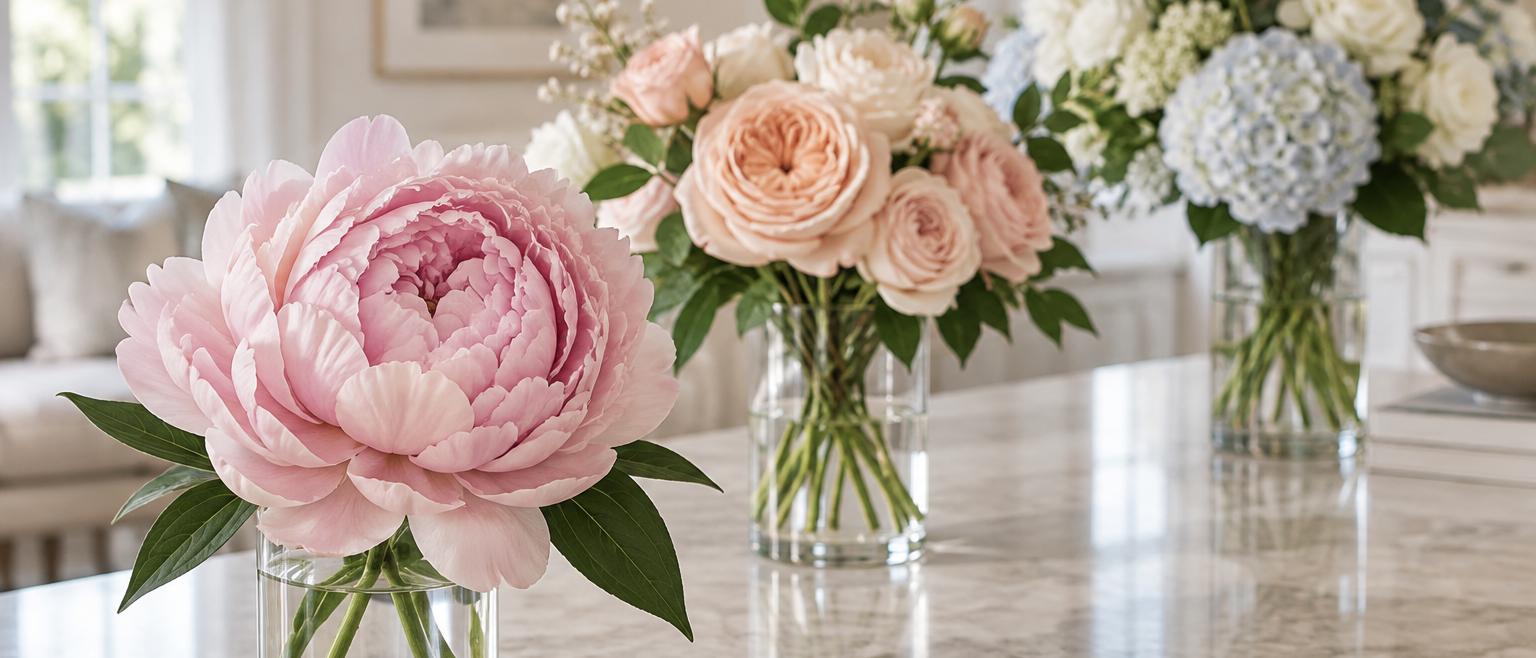
By Evercombe Team · Updated October 13, 2026 · 8-minute read
Quick answer: The flower types that read as most convincing are real-touch peonies, garden roses, and ranunculus — species with naturally thick, layered, irregular petals that synthetic materials imitate well. Close behind: hydrangeas and orchids. Hardest to fake convincingly: daisies and tulips, whose geometry is too clean. Build matters as much as species: real-touch (latex-over-foam) passes closest inspection on the bloom itself, quality silk passes at conversation distance, and everything passes at three meters if the greenery is good. Budget $4–15 per stem for the convincing tiers (competitor prices as of October 2026).
“Realistic” is not one property a flower either has or lacks. It is a set of build decisions — petal material, edge treatment, stem finish, greenery grade — each of which passes or fails at its own distance. A stem can have a bloom that reads convincing at half a meter and leaves that give the game away from the hallway. This list ranks flower types by how close a well-built version gets before it breaks, with the build to look for, the honest downside of each, and what the tiers cost.
What “Convincing” Actually Means: The Build Test
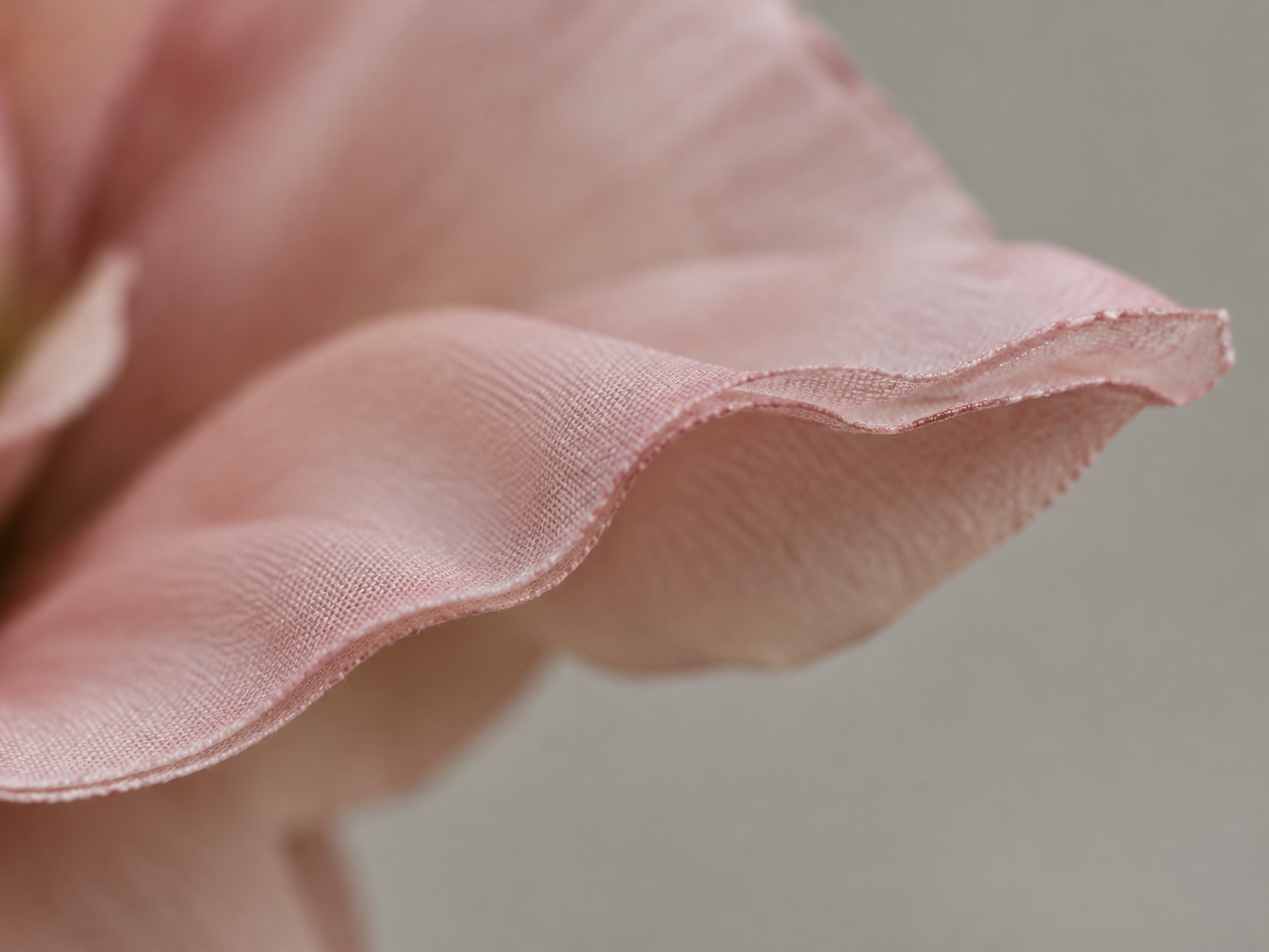
Four checkpoints, in order of how often they fail:
- Petal edges. Cheap petals die at the edge — stamped flat, perfectly even, sometimes with a visible cut line. Good builds ruffle the edge or layer two materials so the petal lip has thickness.
- Petal count and irregularity. Real flowers are asymmetrical. A bloom with too few petals arranged too evenly reads as a drawing of a flower.
- The greenery. The single most-roasted component in buyer reviews across the category: praised blooms, plastic-looking leaves. Stems whose leaves match the bloom’s material grade pass rooms; stems with shiny injection-molded leaves do not.
- The stem and calyx. Where the bloom meets the stem is a fingerprint zone. Wrapped, tapered, slightly messy joins pass; molded plastic collars fail at arm’s length.
Our deeper material breakdown — silk versus latex versus foam, and what each does at each distance — is in silk vs. latex vs. foam flowers. The species ranking below assumes the best build tier available for each flower.
Tier 1: The Most Convincing Types
1. Real-touch peonies. The peony’s natural advantage is chaos — dozens of ruffled, uneven petals with no clean geometry to betray. Real-touch builds (foam core, latex skin) add the soft matte give that passes touch and close viewing on the bloom itself. Best for: dining-table centerpieces, anywhere guests stand close. Downside: the most expensive tier per stem, and heavy heads need stiff wired stems to avoid nodding. Typical range: $6–15/stem.
2. Garden roses and ranunculus. Both species have tightly layered, many-petal builds that synthetic materials render convincingly — ranunculus in particular is a paper-thin-petal bowl that crepe-like fabrics and real-touch both handle well. Best for: bouquets and wedding work where the bloom is the point. Downside: thin-petal builds crush in storage and transit; unpacking and fluffing time is real, and honest listings say so. Typical range: $4–12/stem.
3. Orchids. Waxy, firm, geometric petals that happen to suit latex and high-grade silk — the material and the flower agree with each other. A phalaenopsis stem passes at conversation distance with almost no effort. Best for: bathrooms and modern interiors, single-stem vases. Downside: the flower is simple, so any flaw in the petal surface has nowhere to hide; low-grade orchids look worse than low-grade peonies. Typical range: $5–14/stem.
Tier 2: Convincing With the Right Build
4. Hydrangeas. The bloom is a cloud of tiny florets — manufacturers nail the look with fabric florets on structured heads, and at one meter plus, quality hydrangeas are nearly indistinguishable. Downside: the florets shed on cheap builds, and the leaf grade varies more than any other species. Typical range: $5–10/head.
5. Anemones and poppies. Few petals, but a dark center disk does the visual heavy lifting — the eye reads the contrast, not the petal detail. Downside: the thin stem must have the right droop; a straight wire reads wrong immediately. Typical range: $3–8/stem.
Tier 3: Hardest to Fake Convincingly
6. Tulips. Six clean petals, one cup, no texture to hide behind — the geometry is so simple that any material stiffness shows. Good fabric tulips at vase distance work; in-hand, they rarely pass. 7. Daisies. Same problem plus a matte-petal surface that cheap plastics get wrong in a way everyone has seen a hundred times. Both are fine at three meters or in large mixed arrangements where they read as texture, not as individual flowers.
The Price Table (What Each Tier Costs)
| Tier | Types | Build to look for | Range per stem | Passes at |
|---|---|---|---|---|
| 1 | Real-touch peony, garden rose, ranunculus, orchid | Real-touch or layered high-grade silk | $4–15 | 0.5–1 m on the bloom |
| 2 | Hydrangea, anemone, poppy | Structured fabric head, graded leaves | $3–10 | 1–2 m |
| 3 | Tulip, daisy | Best available fabric | $2–6 | 3 m or mixed-in |
(Competitor retail ranges, US, as of October 2026.)
Pick by Where It Will Live (The Decision Flow)
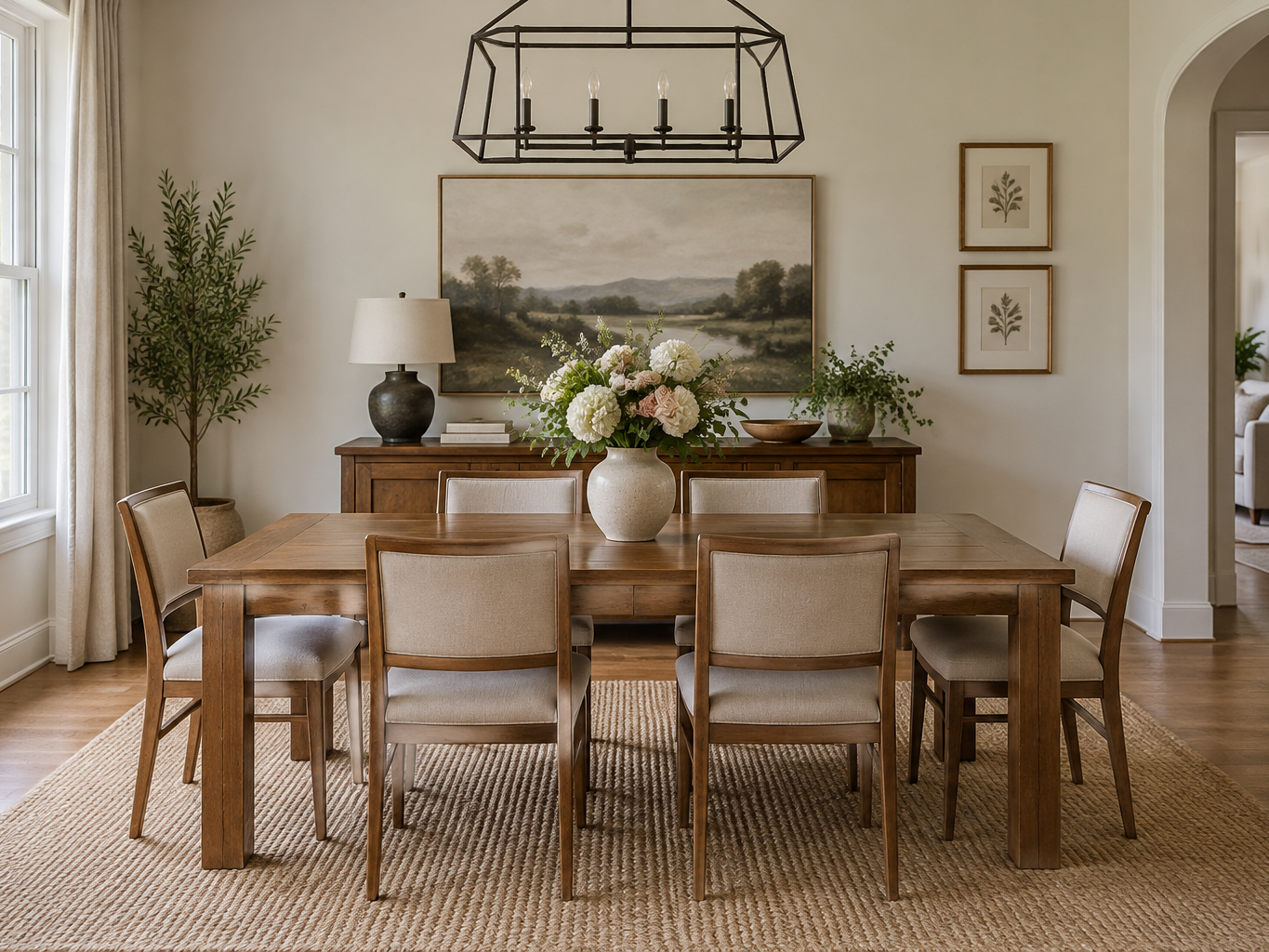
- Guests will touch it or stand within a meter (dining table, entryway, wedding work) → Tier 1, real-touch build, and budget for the greenery grade to match. Start with real-touch flowers.
- Seen across the room (shelves, console tables, powder-room vanity) → Tier 2 works and saves meaningfully; spend the difference on a better vase.
- Part of a large arrangement (floor arrangements, wall swags, holiday mantels) → Tier 3 is exactly right; at density, simple flowers read as texture, and buying the top tier there is wasted money.
Keep Them That Way
Dust is what eventually strips the convincing-ness from any tier — a monthly soft-brush or cool-air hairdryer pass is the whole maintenance routine, detailed in how to clean artificial flowers. And when a stem’s greenery gives out before its bloom does, replacing just the greenery stems is cheaper than replacing the flower.
FAQ
What are the most realistic artificial flowers?
Real-touch peonies, garden roses, and ranunculus, followed by orchids and hydrangeas. The pattern: species with thick, layered, irregular petals imitate best; species with clean simple geometry (tulips, daisies) imitate worst. Build tier matters as much as species — see the table above.
What does “real-touch” mean?
A build method — a soft foam core with a latex-like skin over it — that gives petals the matte give of a live petal and passes touch and close viewing on the bloom itself. Standard silk builds get the look but not the feel; the material trade-offs are compared in our silk vs. latex vs. foam flowers guide.
How much should convincing artificial flowers cost?
For the top convincing tiers, roughly $4–15 per stem; solid mid tiers run $3–10 (US competitor ranges, as of October 2026). Per-stem price falls in bulk sleeves of 5–12, which is the standard way wedding-scale quantities are bought.
Do realistic artificial flowers fade?
All synthetic petals degrade under constant direct sun — UV exposure makes colors shift and petals brittle at a slower rate indoors than out, but “slower, not never” is the honest framing. Rotate stems out of direct windowsills, and use UV-rated builds for outdoor spots; the outdoor-specific picks are covered in our best fake flowers that look real ranking.
Where should I not spend on the top tier?
Anywhere the stem will be seen from three meters or absorbed into a large arrangement — filler tulips and daisies in mixed pieces read as texture, and the top-tier money is better concentrated on the two or three blooms guests will actually stand beside.
Next Steps
- The full species ranking with the four-spot recognition test: best artificial flowers that look real
- Shop the top tier: real-touch flowers — peonies, garden roses, and ranunculus stems
- Individual species pages: ranunculus · orchids · peony stems · hydrangeas
- Material deep-dive: silk vs. latex vs. foam flowers · Care: how to clean artificial flowers