
Blog
14 Wedding Color Palettes for 2026-2027, Each With the Faux Flowers That Build It

By Evercombe Team · Updated October 12, 2026 · 7-minute read
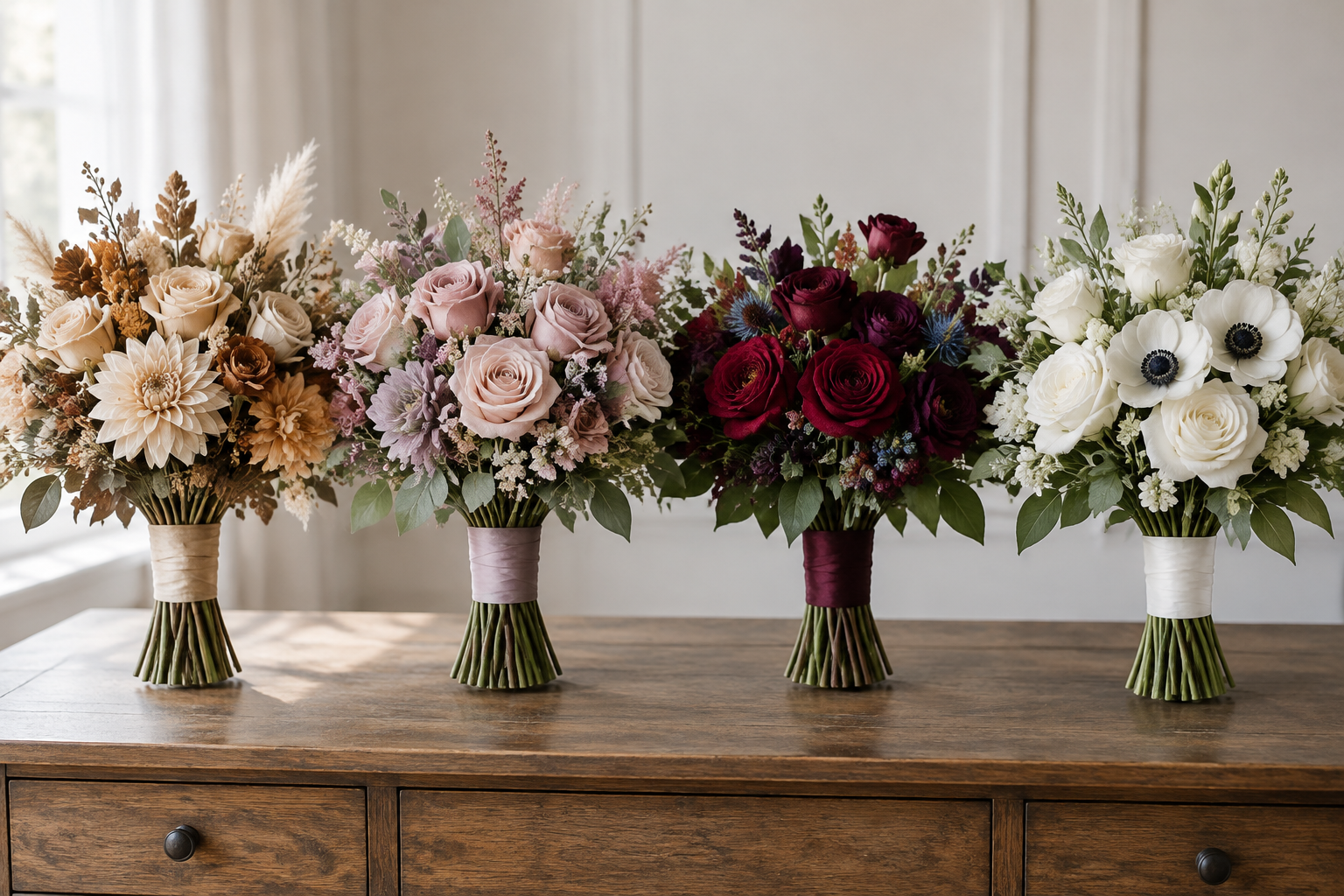
Quick answer: The wedding palettes carrying into 2026-2027: warm neutrals (ivory, sand, taupe), dusty pastels (blush, dusty blue, sage), moody jewel tones (burgundy, plum, terracotta), and high-contrast classic (black-and-white with greenery). Pick two main colors plus one metallic, not three equals. Every palette below names the flower types that carry it — faux versions of those flowers are how you keep the palette exact across bouquet, boutonnieres, and centerpieces without seasonal availability getting a vote.
Most palette roundups stop at swatches. But a palette only becomes a wedding through specific flowers, and specific flowers are where palettes quietly die — the “dusty rose” peony that arrives carnation-pink, the navy that photographs royal blue. Working in faux flowers solves the availability half of that problem (any bloom, any month) and makes the consistency half a shopping decision: order every palette component from the same shop’s color system, not one stem each from three shops. Each palette below lists the blooms that carry it and links to a matching collection.
The Warm Neutrals (Quiet Luxury, Estate Weddings)
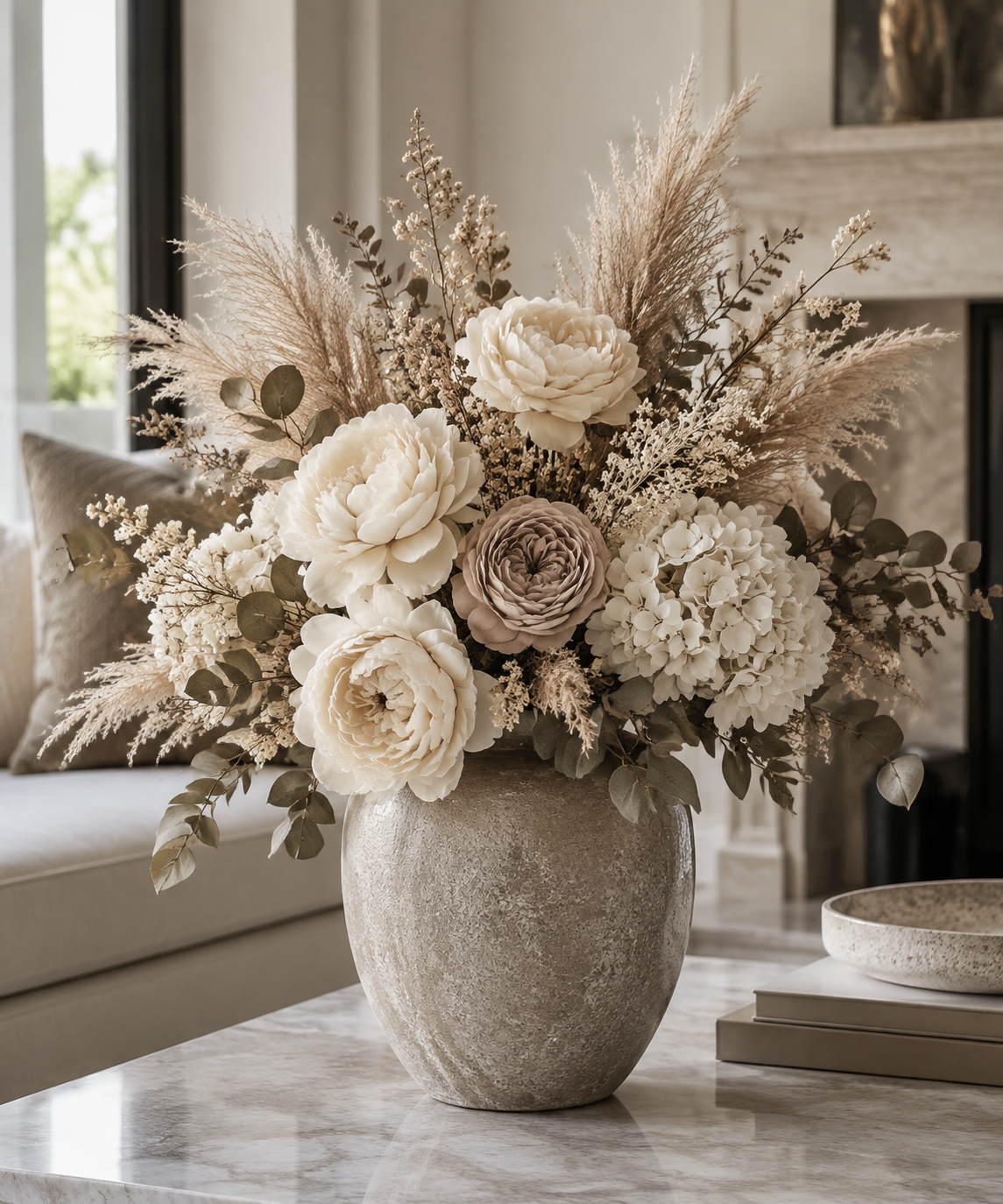
1. Ivory + Champagne + Greenery — the least-datable palette on this page; it photographs warm in golden hour and clean in ballroom light. Carried by ivory roses, champagne hydrangeas, seeded eucalyptus. Build it: white artificial flowers + artificial hydrangeas.
2. Sand + Taupe + Cream — tone-on-tone warmth for barn and desert venues. Carried by cream ranunculus, dried-style bunny tails, sand-hydrangea. Runs dusty rather than yellow when you hold the palette to two neutrals max — a third neutral is where “sand” starts reading beige.
3. All-White + Silver Eucalyptus — white peonies, white anemones (black centers kept — they’re the jewelry), silver-dollar eucalyptus. The most formal white; works at winter weddings where ivory reads soft.
The Dusty Pastels (Garden Weddings, 2026’s Center of Gravity)
4. Blush + Ivory + Sage — the workhorse of the last five seasons, still going because it flatters every skin tone in the photos. Carried by blush garden roses, ivory stock, sage eucalyptus. Collection: blush wedding flowers.
5. Dusty Blue + Cream + Greenery — the cool-side alternative for spring and coastal weddings. Carried by dusty-blue hydrangeas, cream roses, ruscus. The one rule: keep blue in the hydrangeas and linens, not the roses — blue roses read dyed, blue hydrangeas read natural. Collection: dusty blue wedding flowers.
6. Sage + Buttercream + White Anemone — the freshest of the pastel set; herbs-as-flowers (actual sage sprigs, olive branches) ground it. Collection: sage wedding flowers.
7. Lavender + Cream + Silver — lavender stems, cream lisianthus, dusty miller. The version that works at both garden and formal venues; skip the purple roses — this palette dies at “purple.”
The Moody Jewel Tones (Fall and Winter Weddings)
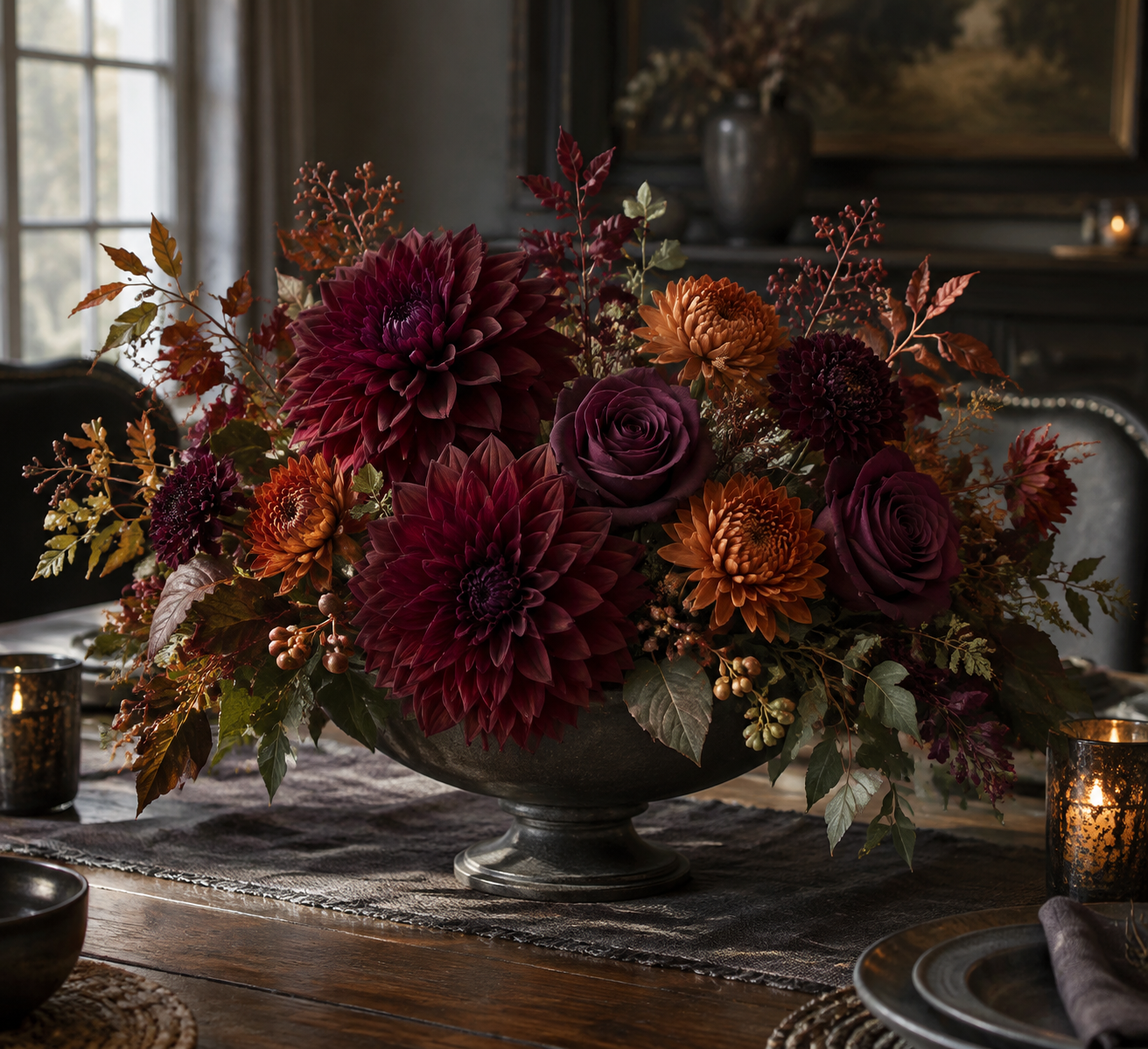
8. Burgundy + Blush + Greenery — the most-requested fall palette of the last three years. Carried by burgundy dahlias, blush roses, magnolia greenery. Burgundy is the #1 color to buy faux in one batch: across shops it’s a color often described as “darker in person”.
9. Terracotta + Rust + Cream — the warm jewel set for desert, barn, and September weddings. Carried by terracotta ranunculus, rust mums, cream astilge. Collection: burnt orange wedding flowers.
10. Plum + Dusty Rose + Gold — plum dahlias, dusty roses, gold-painted leaves. The richest cold-weather palette; one gold accent (ribbon or leaves), never gold flowers.
11. Deep Red + Noir + Cream — anemones with black centers, deep-red roses, cream accents. The high-drama winter option that stops short of holiday territory — retire it after the first week of December or you’re in Christmas.
High-Contrast Classic (City and Evening Weddings)
12. Black + White + Greenery — white roses, black ribbon and attire accents, heavy eucalyptus. Graphic and modern; the greenery does the softening. Carried by white artificial flowers and bold greenery stems.
13. Emerald + Ivory + Gold — emerald is the metallic-adjacent neutral of jewel palettes; carried mostly by linens and attire with ivory roses, orchids, and gold vessels.
14. Sunset Ombré (Coral → Gold → Wine) — the one gradient palette that works, because flowers do gradient naturally: coral ranunculus into gold roses into wine dahlias, arranged dark-to-light. The trick is shopping all three values from one color system — gradient palettes expose mismatched dye lots fastest.
The Palette-to-Flowers Cheat Sheet
| Palette | Hero flower | Filler/texture | Greenery | Avoid |
|---|---|---|---|---|
| Ivory + champagne | Ivory roses | Champagne hydrangea | Seeded eucalyptus | Yellow-toned creams |
| Blush + sage | Blush garden roses | Ivory stock | Sage eucalyptus | Pink peonies (too sweet) |
| Dusty blue + cream | Dusty-blue hydrangea | Cream roses | Ruscus | Blue roses |
| Burgundy + blush | Burgundy dahlias | Blush roses | Magnolia | Purple “burgundy” mixes |
| Terracotta + rust | Terracotta ranunculus | Rust chrysanthemums | Olive | True orange (Halloween drift) |
| Black + white | White roses | Black ribbon | Heavy eucalyptus | Black flowers (read goth) |
| Sunset ombré | Ranunculus (3 values) | Roses (gold value) | Minimal | Mixing shops across values |
Keeping the Palette Exact (The Part Nobody Budgets For)
Three practical notes from the faux-flower wedding world:
- Order one batch, not one stem at a time. Dye lots vary between production runs; a single order shipped together is the closest thing to a color guarantee in this category. This matters most for burgundy, navy/dusty blue, and terracotta.
- Check names against swatches, not against other names. “Blush” spans from nearly-white to distinctly pink across the industry. Hold the shop’s own color chart against your fabric swatch before ordering the full set — the reliable shops publish per-collection color charts.
- Faux flowers commonly photograph one stop cooler than they read in person. Slightly warmer-than-target purchases usually land right on camera.
Budget math for any palette above — fresh versus faux, per piece type — is in wedding flowers cost. Building the bouquet yourself: how to make an artificial wedding bouquet.
FAQ
What are the most popular wedding flower colors right now?
Blush-and-sage remains the volume leader; burgundy-and-blush is the strongest fall palette; all-white with textured greenery is the steady classic. Terracotta-and-rust has been growing quickly in recent seasons.
How many colors should a wedding palette have?
Two mains plus one metallic, or one main plus one neutral plus greenery. Three equal-weight colors is where photos start looking busy and décor shopping becomes three times the work.
How do I match faux flowers to my fabric swatches?
Order from one shop’s color system, request or consult its color chart against your swatch in daylight, and buy the full set in one order so everything ships from the same batch. Our palette collections are built to be shopped this way — see wedding color collections.
Do faux flowers look right in photos?
At bouquet distance, quality faux (layered-petal roses, hydrangeas, ranunculus) photographs as real — photographers’ close-up petal studies are where budget faux gets caught. The same distance-based realism logic applies as in our best fake flowers that look real guide.
When should I order faux wedding flowers?
Two to three months out for full collections (batch availability plus time to arrange and fluff), with a sample stem or sample box first if the palette has a finicky color in it — navy, dusty blue, and terracotta especially. Keepsake logic (you keep the bouquet forever, no preservation needed) in how to preserve a wedding bouquet.
More Wedding Flower Guides
- Wedding Flowers Cost — fresh vs faux, per piece, with three sample budgets
- How to Make an Artificial Wedding Bouquet — the DIY route, step by step
- Shop wedding color collections · blush · dusty blue · sage · burnt orange