
Blog
How to Fluff an Artificial Christmas Tree: 5 Steps, a Time Chart by Size, and Fixes for Thin Spots

By Evercombe Team · Updated October 12, 2026 · 5-minute read
Quick answer: Fluffing is two passes, not artistry. Pass one: bend every branch down and out from the trunk. Pass two: pull the branch tips apart so each stem separates. A 2–3 ft tabletop tree takes about five minutes; a 4–4.5 ft tree about ten; full-size floor trees run 30–60 minutes (typical market times). Year two is a touch-up, not a redo.
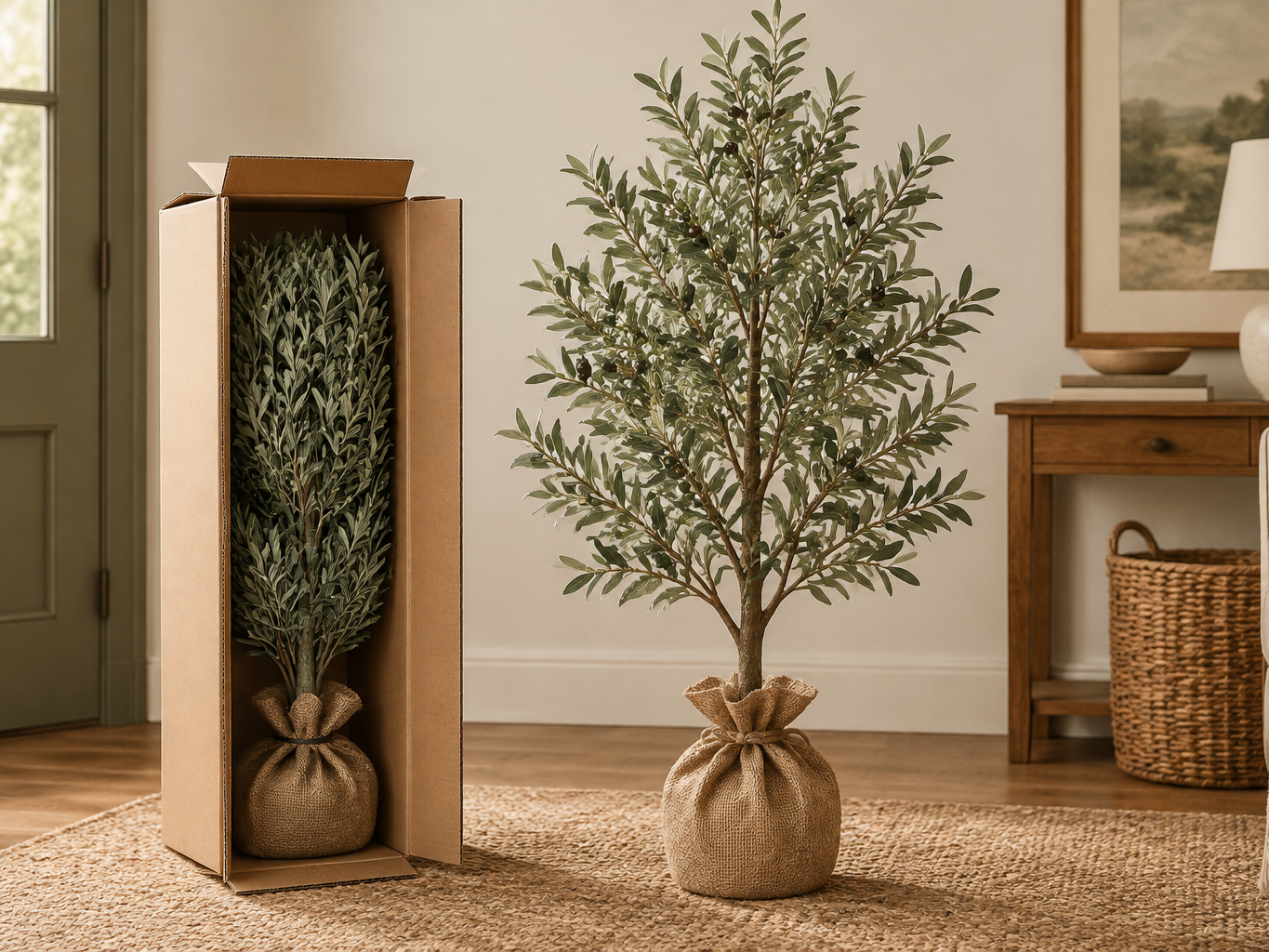
Every artificial tree ships compressed — the $29 desk mini and the specialty 9-footer ride the same truck squashed, because flat-packed branches are how branch goods travel. Fluffing is just the unpacking of that compression: five moves, no tools worth naming, and a shipped cone becomes a tree again. Here is the method, the honest time by size, and the fix for the thin spot every first fluff leaves somewhere.
What You’re Actually Doing (and Why Every Listing Says So)
A factory-shaped tree ships with its branches folded up along the trunk. Sparse and sad at first is not a cheap tree — it is a compressed tree. Bending each branch back to its set angle, then separating the tips so light passes through, restores the silhouette the tree was designed to have. That is why honest listings state the fluff step instead of promising a display-piece arrival.
Before You Start: The 60-Second Setup
- Position first, fluff second. Set the tree where it will stand (or its final spot within reach) — a fluffed tree is wider than a boxed one and hates being carried by its branches.
- Gloves, optional but smart. A thin pair saves your fingertips on wire branch ends, and keeps flocking powder from working into your skin on flocked styles.
- Scissors or clippers for packaging ties only — never cut anything on the tree itself.
- Lights ready, if you run your own. On unlit trees you will light each section right after fluffing it, so have the strands unboxed.
How to Fluff an Artificial Christmas Tree, Step by Step
Step 1: Stand It and Let It Settle
Assemble the tree — sections stacked, pot or stand set — and give it ten seconds. Branches relax slightly on their own, which shows you where the real work is. Work bottom to top.
Step 2: First Pass — Bend Every Branch Down and Out
Start at the bottom section. Take each branch where it meets the trunk and bend it down and out — most branches want to sit between 45 and 90 degrees from the trunk. Work one full ring around the tree before moving up. This pass does about 70% of the transformation; the classic mistake is stopping at a lazy half-angle because the tree already “looks fuller.” Remember: the branch was shaped at the factory to live at its final angle — you are not styling it, you are returning it.
Step 3: Second Pass — Separate the Tips
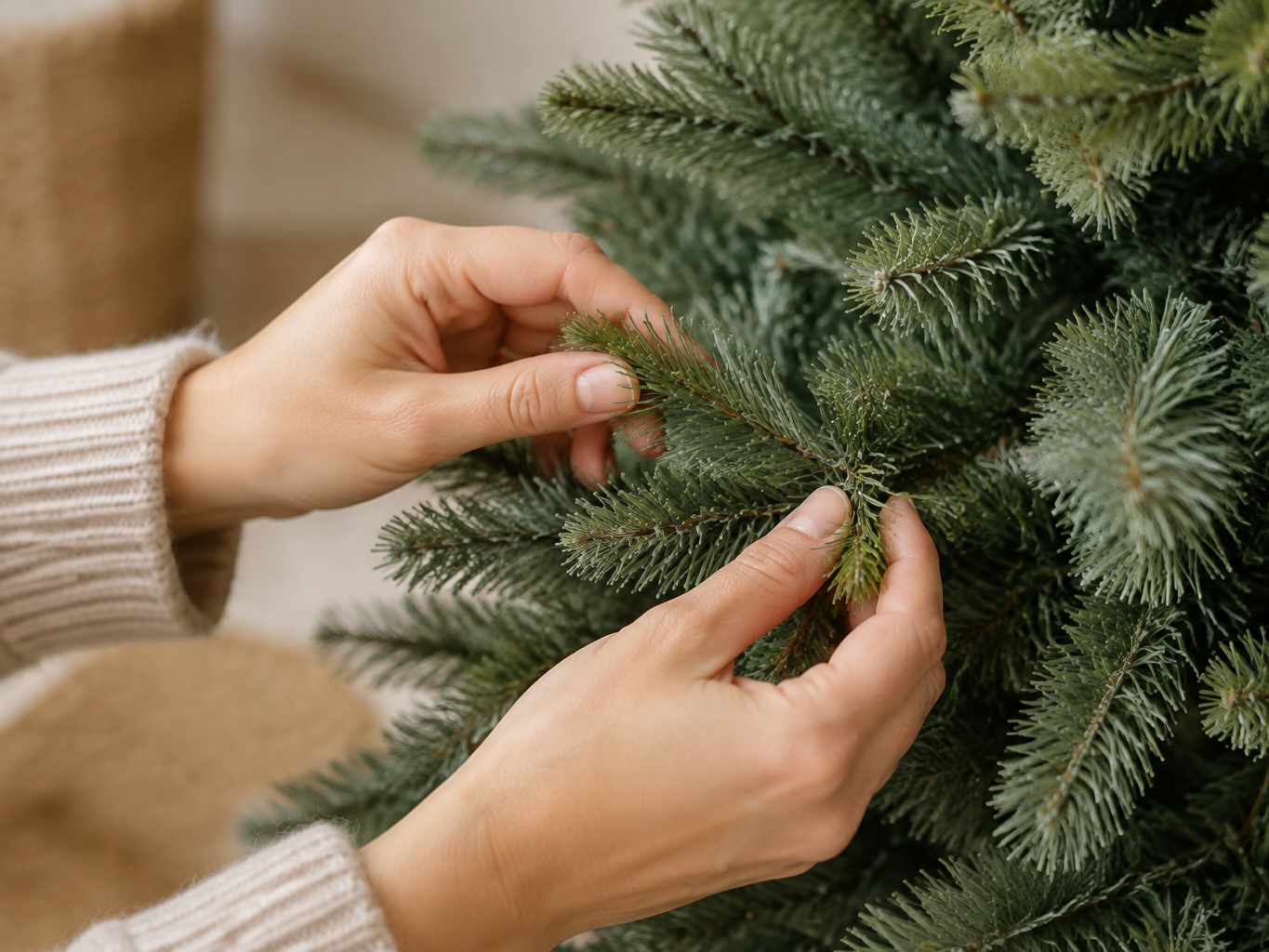
Now go back over the same ground with your fingers in the foliage: each branch carries multiple stems along its length, and they ship pressed together. Pull them apart so each stem fans away from its neighbor, alternating upward and downward slightly. This is what lets light through the tree and kills the “solid plastic cone” look. Two passes — angle, then separation — is the entire professional method.
Step 4: Fill the Gaps from Inside
Step back and turn the tree slowly (or walk around it). Where you see daylight through the silhouette, reach inside and pull an interior branch forward and slightly up, twisting it toward the gap. On pre-lit trees, work around the light strands rather than through them — the wiring stays put, the branches move.
Step 5: The Across-the-Room Check
View the tree from three or four steps back — decorating distance, not inspection distance. Minor asymmetry reads natural; forests do not grow in rows. If you run your own lights, wrap each section’s strand right after fluffing it instead of fighting a fully shaped tree afterward.
How Long Fluffing Takes, by Tree Size
| Tree size | First fluff (typical) | Year-two touch-up |
|---|---|---|
| 2–3 ft tabletop | ~5 minutes | 1–2 minutes |
| 4–4.5 ft small floor tree | ~10 minutes | 2–3 minutes |
| 6–7.5 ft full-size tree | 30–60 minutes (typical market times) | 10–15 minutes |
| 9 ft and up | 1–2 hours (typical market times) | 15–30 minutes |
Small-tree times are the listed spec on our small artificial Christmas trees; floor-tree times are typical market figures that vary with branch count — more branches, longer first fluff, fuller result.
Troubleshooting: Thin Spots, Gaps, and Flocked Trees
- “My tree looks sparse.” Nine times out of ten the branches are still at half-angle — repeat Step 2 with more courage, then do Step 3 properly. Branch count is the listed spec worth checking when buying: more branches, fuller tree after the same fluffing.
- A visible hole that won’t close. Pull an interior branch forward and up into it (Step 4). If the hole faces a wall, rotate the tree.
- Flocked or frosted styles. Fluff with a lighter hand: ease tips apart rather than combing. Flocking is a surface finish; aggressive handling shakes it loose.
- Bent or kinked branches. Wire-core branches re-shape by hand — bend gently past the kink and settle it back, at room temperature.
- Pre-lit section that went dark mid-season. Check the section-to-section connections first — the usual culprit, and the reason some households choose unlit.
The Year-Two Secret
Stored dry, cool, and unstressed — a bin or the original box, nothing on top — the tree comes out next December needing a touch-up, not a redo. That repeats for years: one purchase, an annual cost of roughly ten minutes. Weighed against a fresh tree’s yearly outlay, the full math is in our artificial vs. real Christmas tree cost comparison.
FAQ
How long does it take to fluff an artificial Christmas tree?
Five minutes at 2–3 ft, about ten at 4–4.5 ft, and 30–60 minutes for a typical 6–7.5 ft floor tree (typical market times). Budget the first-year fluff as part of setup day; every year after is a fraction of it.
Do pre-lit trees need fluffing too?
Yes — pre-lit refers to the lights, not the branches. The foliage ships compressed either way. Work around the strands rather than through them, and never cut a light clip to “free” a branch.
Can you fluff a flocked or frosted tree?
Yes, gently — same two passes, but ease tips apart instead of combing. Overworking flocked branches sheds the finish.
Why does my artificial tree still look thin after fluffing?
Usually one of three things: branches left at half-angle (redo pass one), tips never separated (redo pass two), or a low branch-count tree at its ceiling — the buying spec, not the fluffing, is the limit.
Do I have to re-fluff every year?
A touch-up, yes; a full fluff, no. Branches hold their shape in storage — a few minutes restoring angles is the normal year-two job.
Related Guides
- Shop the range: artificial Christmas trees and small & tabletop trees — free US shipping over $200
- Ideas for where the small ones go: small Christmas tree ideas
- The money side: artificial vs. real Christmas tree cost
- Same ritual, other decorations: how to clean artificial flowers and how to store wreaths